When it comes to heart health, misinformation can be dangerous. Believing myths might delay essential care or prevent people from making the lifestyle changes that could save their lives. In this post, we’ll bust five of the most common heart health myths and share the truth that everyone—regardless of age—should know.
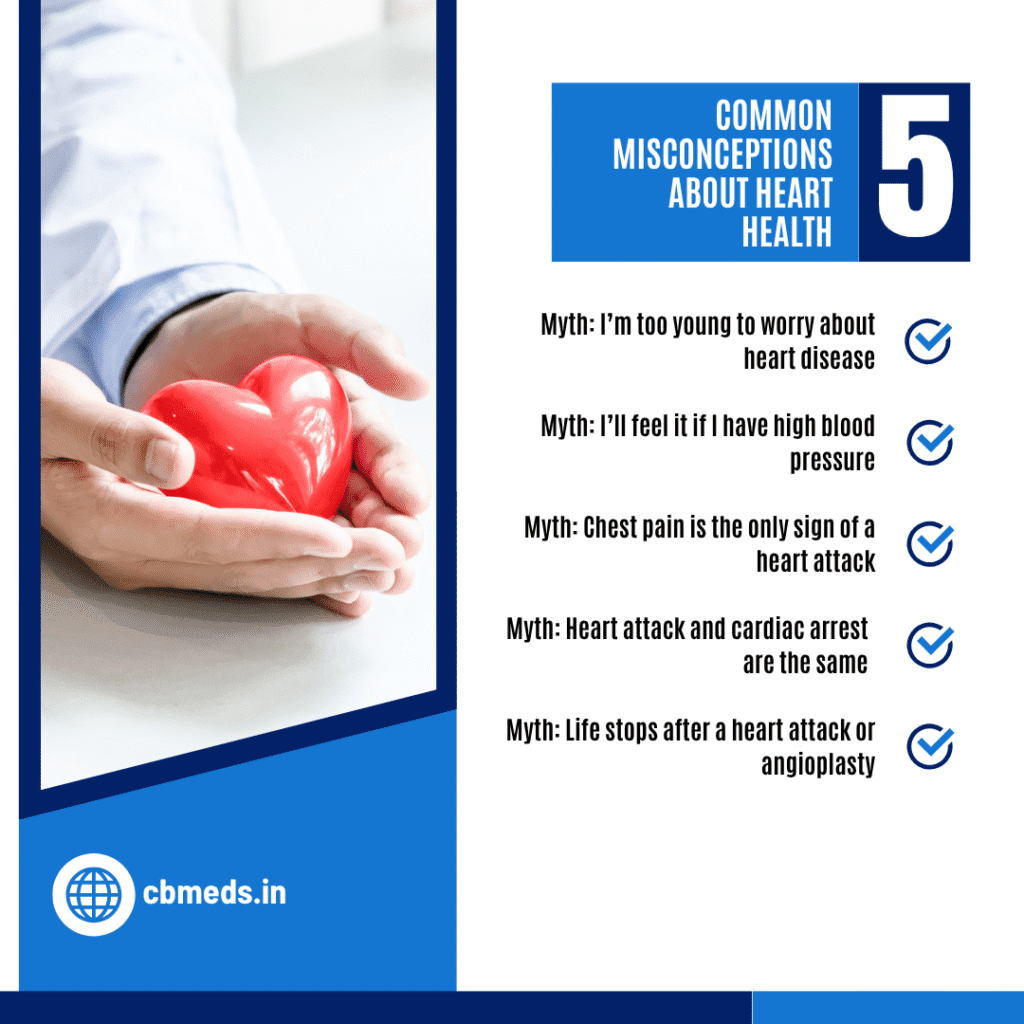
Myth 1: “I’m too young to worry about heart disease.”
Fact: Heart disease can affect people of all ages, especially with the rise in sedentary lifestyles, unhealthy diets, stress, smoking, and diabetes among younger populations.
According to the American Heart Association, heart problems are increasingly being diagnosed in individuals under 40. Prevention should start early with regular checkups, exercise, and heart-healthy choices.
Myth 2: “I’ll feel it if I have high blood pressure.”
Fact: High blood pressure is often called the “silent killer” because it usually has no noticeable symptoms until significant damage has occurred.
You might feel completely fine while your arteries are under dangerous pressure. The only reliable way to detect high blood pressure is with regular monitoring. Uncontrolled hypertension can lead to heart attacks, strokes, kidney failure, and vision loss.
Myth 3: “Chest pain is the only sign of a heart attack.”
Fact: While chest pain is a common symptom, heart attacks can present in many different ways—especially in women.
Symptoms can include:
- Shortness of breath
- Fatigue
- Dizziness or lightheadedness
- Pain in the jaw, back, or arms
- Nausea or cold sweat
Understanding these less obvious signs can save lives by encouraging faster medical intervention.
Myth 4: “Heart attack and cardiac arrest are the same.”
Fact: These are two distinct medical emergencies.
- A heart attack occurs when blood flow to a part of the heart is blocked, usually by a clot. The heart usually continues to beat.
- Cardiac arrest is when the heart suddenly stops beating, often due to an electrical issue. It causes immediate loss of consciousness and requires CPR or defibrillation to restart the heart.
Both require urgent medical attention, but their causes and treatments differ significantly.
Myth 5: “Life stops after a heart attack or angioplasty.”
Fact: With proper care and lifestyle changes, many people live long, healthy lives after a heart event or angioplasty (a procedure to restore blood flow).
Cardiac rehabilitation, a heart-healthy diet, medication, regular exercise, and stress management can greatly improve quality of life and prevent future complications.
💡 Takeaway
Don’t let myths shape your understanding of heart health. Early detection, awareness, and prevention are your best weapons against heart disease.
✅ Regular health checkups
✅ Know your blood pressure and cholesterol levels
✅ Eat balanced meals
✅ Stay active
✅ Avoid smoking and excessive alcohol
✅ Manage stress
🔗 Stay informed and take charge of your heart health at cbmeds.in.
#HeartHealth #MythBusting #HealthyHeart #cbmeds #CardiacAwareness #LiveWell


