
Introduction
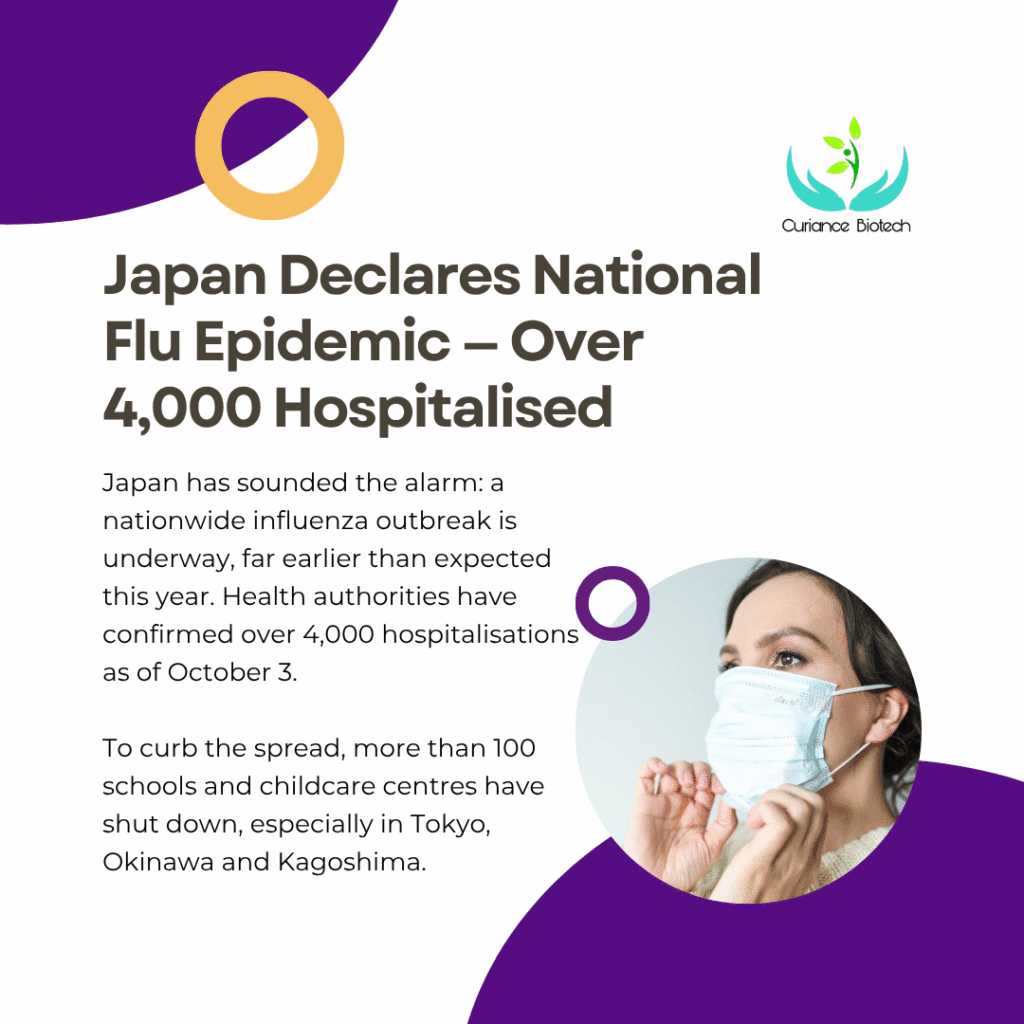
Japan has officially declared a nationwide flu epidemic, triggered by a wave of hospitalisations arriving far earlier than usual. More than 4,000 people have already been admitted, and over 100 schools and childcare institutions have temporarily closed to slow the spread.
This sharp spike has raised alarm among health experts, who fear the influenza virus may be mutating and that seasonal patterns could be shifting globally.
The Surge: What’s Happening
According to Japan’s health authorities, the country has surpassed the epidemic threshold, marking widespread infection. Between late September and early October, cases surged dramatically, quadrupling within a week.
Regions including Tokyo, Okinawa, Kagoshima, and Yamagata have reported the highest case numbers. In some schools, more than half of the students developed flu symptoms, prompting emergency closures.
The most concerning factor is timing — this outbreak began five weeks earlier than Japan’s typical flu season.
Why This Outbreak Is So Early
- Possible Virus Mutation
Researchers suspect the flu strain could be evolving to spread more easily or to bypass existing immune protection. - Increased Global Travel
Post-COVID travel has reintroduced new virus strains into circulation, allowing faster transmission across regions. - Weakened Population Immunity
With reduced flu exposure during the pandemic years, general immunity levels may be lower, increasing vulnerability. - Climate and Lifestyle Shifts
Changing weather patterns and more time spent indoors can accelerate transmission, even outside the traditional flu season.
Public Health Challenges
Hospitals across Japan are facing rising patient loads, stretching healthcare resources and staff. School closures are disrupting education and family routines, while the government is urging citizens to adopt voluntary preventive measures.
Experts warn that unpredictable outbreaks like this may become more frequent — not just in Japan, but worldwide.
How to Stay Safe
| Preventive Step | Why It Matters |
|---|---|
| Get vaccinated early | The best protection, especially for seniors, children, and those with chronic illness |
| Wear masks & maintain hygiene | Limits person-to-person transmission |
| Avoid crowded indoor areas | Reduces risk of airborne spread |
| Stay home if you’re unwell | Prevents infecting others |
| Boost immunity naturally | Eat well, rest, and stay hydrated |
Authorities have also encouraged schools and workplaces to adopt flexible attendance and work-from-home policies where possible.
What This Means for the World
Japan’s early flu epidemic might signal a broader shift in how influenza behaves globally. As climate and social patterns evolve, experts predict flu may no longer be confined to traditional “seasons.”
That means year-round vigilance will be key — both in vaccination drives and in public health preparedness.
Conclusion
Japan’s early flu outbreak — with over 4,000 hospitalisations and rising — serves as a warning for the rest of the world. Influenza may be adapting to new realities, and so must we.
Getting vaccinated, maintaining hygiene, and staying informed are small but powerful steps to protect ourselves and our communities.


