
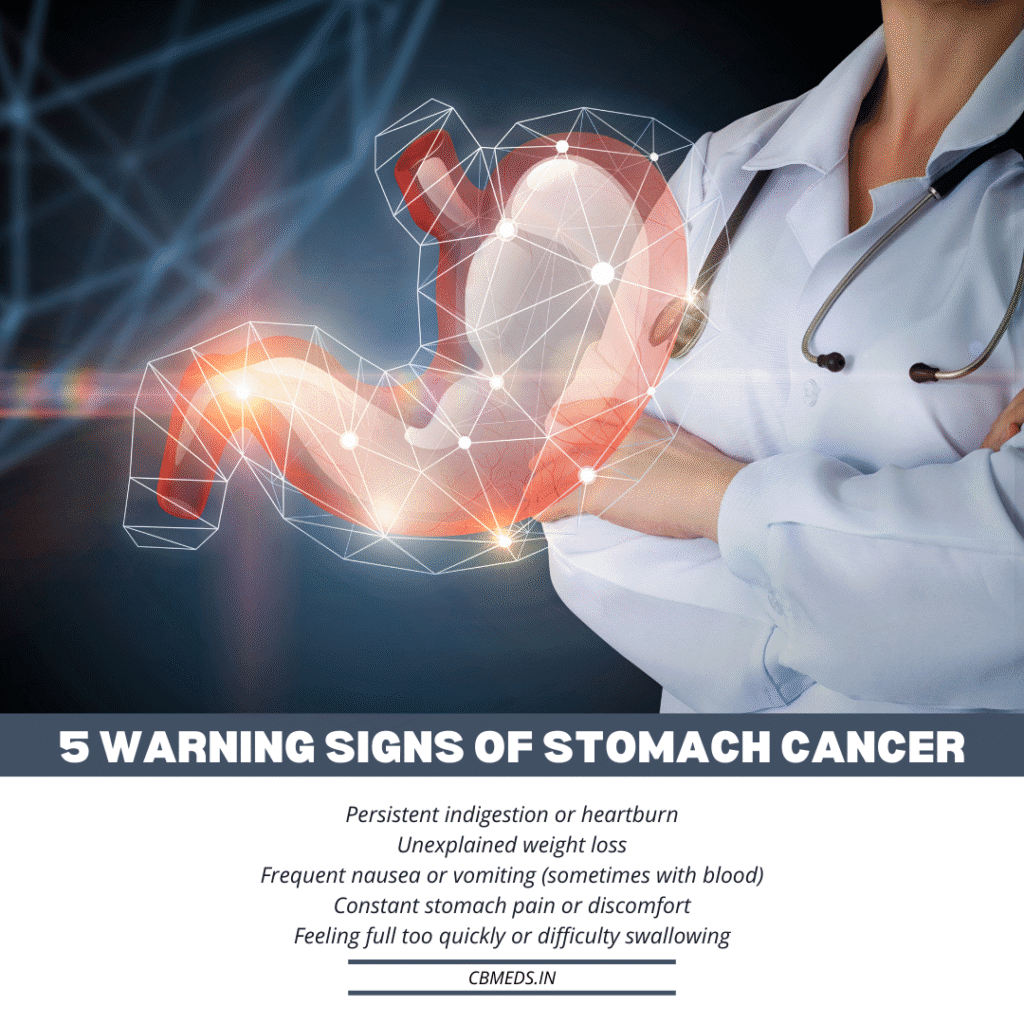
Stomach cancer, also known as gastric cancer, is one of the most dangerous cancers because it often shows very subtle symptoms in the beginning. Many people mistake these early signs for acidity, gastritis, gas, or normal digestive discomfort. By the time the symptoms become severe, the cancer may have already progressed.
This makes awareness and early detection extremely important. Recognising early warning signs can save lives, improve treatment outcomes, and prevent the disease from reaching an advanced stage.
In this article, we will explore the top five warning signs of stomach cancer, why they occur, and when you should seek medical help.
1. Persistent Indigestion or Heartburn
Almost everyone experiences indigestion occasionally, especially after eating oily or spicy food. But persistent indigestion that keeps coming back—even after medication—can be an early red flag.
Why it happens:
As a tumour begins to grow in the stomach lining, it can disrupt digestion, causing symptoms such as:
- Bloating
- Burning sensation in the chest
- Acidity that doesn’t improve
- Frequent burping
- Discomfort after eating small meals
When to worry:
If indigestion lasts more than 2–3 weeks or keeps returning, you should consult a gastroenterologist. Chronic indigestion does not always mean cancer, but it should be evaluated.
2. Unexplained Weight Loss
Sudden weight loss without trying is one of the most common early signs of many cancers, including stomach cancer.
Why it happens:
Stomach cancer can affect appetite and digestion due to:
- Reduced absorption of nutrients
- Body burning more calories to fight disease
- Loss of appetite or discomfort after meals
When to worry:
If you lose more than 5% of your body weight within 1–2 months without dieting or exercising, it’s a sign you need medical evaluation.
3. Persistent Nausea and Vomiting
Feeling nauseous once in a while is normal, but frequent nausea or vomiting, especially after meals, can be a warning sign.
Potential cancer-related causes:
- A tumour blocking part of the stomach
- Irritation of the stomach lining
- Inflammation inside the digestive tract
Vomiting blood or coffee-coloured material is a serious symptom that needs immediate medical attention.
When to worry:
If nausea or vomiting happens daily or several times a week, you should get tested.
4. Constant Stomach Pain or Discomfort
Many people ignore abdominal pain, thinking it’s gas, food poisoning, or acidity. But persistent or unexplained stomach pain can be an important sign.
Common types of cancer-related stomach pain:
- Dull, constant ache in the upper abdomen
- Pain after eating
- Feeling of pressure or heaviness
- Pain radiating to the back
When to worry:
If stomach pain lasts longer than a week, becomes worse over time, or occurs frequently after meals, consult a doctor.
5. Feeling Full Too Quickly or Difficulty Swallowing
If you suddenly feel full after eating a small amount of food, it may indicate a tumour occupying space inside the stomach.
Why it happens:
- Tumour growth reduces the stomach’s capacity
- Food cannot pass normally
- Swallowing becomes difficult if the upper part of the stomach is affected
This symptom is especially noticeable in older adults.
When to worry:
If early fullness happens often for more than a week, it needs evaluation.
Who Is at Higher Risk of Stomach Cancer?
You may have a higher risk if you have:
- Long-term acidity or gastritis
- Helicobacter pylori (H. pylori) infection
- Family history of stomach cancer
- Smoking or heavy alcohol use
- High-salt or processed food diet
- Obesity
If you fall into any of these categories, regular screening is recommended.
When Should You See a Doctor?
You should seek medical advice if:
- Symptoms last longer than 2–3 weeks
- Pain is getting worse
- You observe blood in vomit or stool
- You experience severe weakness or fatigue
- You have sudden unexplained weight loss
Conclusion
Stomach cancer can be silent, but your body gives small signals long before the condition becomes serious. Recognising these early warning signs—persistent indigestion, weight loss, nausea, stomach pain, and early fullness—can lead to early diagnosis and more effective treatment.
If you or someone you know is experiencing these symptoms, don’t ignore them. Get a medical evaluation as soon as possible. Early detection saves lives.


