
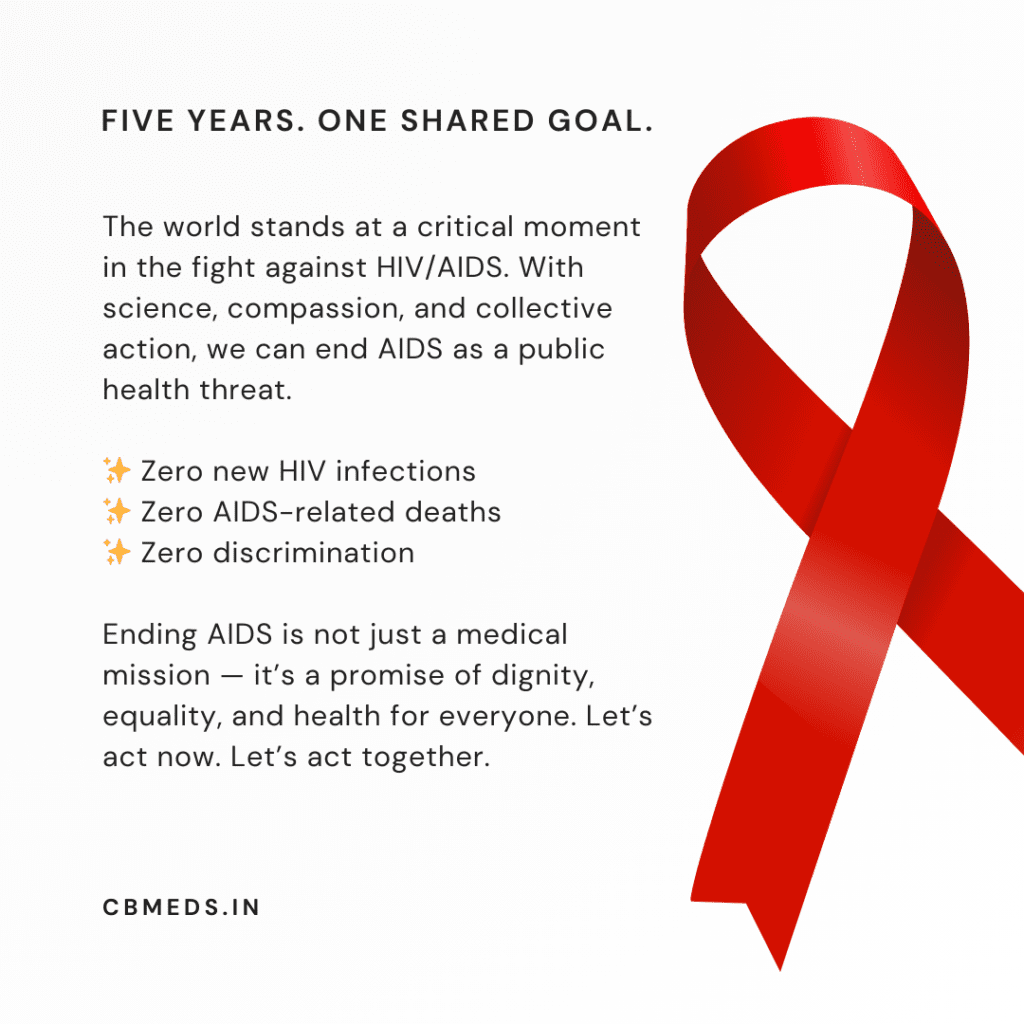
The world is at a historic turning point in the fight against HIV/AIDS. After decades of scientific breakthroughs, community activism, and global cooperation, we now face an extraordinary opportunity — to end AIDS as a public health threat within the next five years. This goal is ambitious, yet achievable, if we commit to ensuring zero new HIV infections and guaranteeing that all people living with HIV can lead long, healthy, and dignified lives.
Ending AIDS is not just about medicine. It is about equity, access, education, and human rights. It is about reaching the most vulnerable, removing stigma, and transforming healthcare systems to leave no one behind.
Understanding the Current Reality
HIV remains one of the world’s most significant public health challenges. Millions of people globally are living with HIV, and while treatment has advanced tremendously, new infections still occur every day. These infections are often concentrated among key populations, including young people, marginalised communities, and those with limited access to healthcare.
The good news is that we now possess the tools required to change this reality. According to global health bodies such as UNAIDS and World Health Organization, effective prevention strategies, early testing, and lifelong treatment can dramatically reduce transmission and mortality rates.
The challenge is no longer what to do, but how quickly and equitably we can do it.
Zero New Infections: Prevention Is the Key
Preventing new HIV infections lies at the heart of the #EndAIDS mission. Modern prevention strategies are highly effective when implemented correctly and consistently.
1. Education and Awareness
Accurate information saves lives. Comprehensive sex education, awareness about safe practices, and open conversations about HIV help dismantle myths and reduce fear. When people understand how HIV is transmitted — and how it is not — they are empowered to protect themselves and others.
2. HIV Testing and Early Diagnosis
Knowing one’s HIV status is the gateway to prevention and care. Regular and accessible testing ensures early diagnosis, which benefits both individuals and communities. Early detection allows immediate initiation of treatment, reducing viral load and preventing further transmission.
3. Pre-Exposure and Post-Exposure Prophylaxis
Preventive medications such as PrEP (Pre-Exposure Prophylaxis) and PEP (Post-Exposure Prophylaxis) have revolutionised HIV prevention. When taken correctly, they significantly reduce the risk of acquiring HIV, especially for individuals at higher risk.
4. Community-Led Prevention
Community organisations play a vital role in reaching people often excluded from mainstream healthcare systems. Peer-led initiatives build trust, deliver culturally sensitive education, and ensure prevention services reach those who need them most.
Healthy Lives for All People Living with HIV
Ending AIDS does not mean eliminating HIV overnight. It means ensuring that HIV is no longer a life-limiting condition.
1. Universal Access to Treatment
Antiretroviral therapy (ART) has transformed HIV from a fatal illness into a manageable chronic condition. When taken consistently, ART suppresses the virus to undetectable levels, allowing individuals to live long, healthy lives and eliminating the risk of sexual transmission — a concept known as Undetectable = Untransmittable (U=U).
2. Strengthening Healthcare Systems
Strong healthcare systems ensure uninterrupted access to medication, routine monitoring, and integrated care for mental and physical health. People living with HIV should not face barriers such as cost, distance, or discrimination when seeking care.
3. Mental Health and Emotional Well-being
Living with HIV can affect mental health due to stigma, fear, and isolation. Ending AIDS means addressing psychological well-being through counselling, support groups, and inclusive healthcare environments that treat people with dignity.
Breaking the Barriers: Stigma and Discrimination
One of the greatest obstacles to ending AIDS is stigma. Fear, misinformation, and discrimination prevent people from seeking testing, treatment, and support. In many societies, people living with HIV still face social exclusion, job loss, and denial of services.
Ending AIDS requires:
- Strong legal protections for people living with HIV
- Inclusive policies that protect key populations
- Public narratives that replace fear with empathy
When stigma ends, access begins.
Equity: Reaching the Most Vulnerable
The AIDS epidemic has always been shaped by inequality. Poverty, gender inequality, migration, and lack of education increase vulnerability to HIV.
To truly end AIDS, strategies must prioritise:
- Adolescents and young people
- Women and girls
- LGBTQ+ communities
- Migrants and marginalised populations
Equity-focused programmes ensure resources go where the need is greatest, not just where delivery is easiest.
Innovation and the Power of Science
Scientific innovation continues to push the boundaries of what is possible. Long-acting HIV treatments, injectable prevention methods, and vaccine research offer hope for the future. However, innovation alone is not enough. New tools must be affordable, accessible, and adapted to real-world conditions.
Global investment in research, combined with fair distribution, will determine whether innovation becomes impact.
The Role of Governments and Global Partnerships
Ending AIDS within five years demands political commitment at every level. Governments must:
- Increase funding for HIV programmes
- Integrate HIV services into universal healthcare
- Support data-driven, community-led solutions
International cooperation remains crucial. Global partnerships have already saved millions of lives, and sustained collaboration will be essential to finish the fight.
What Can Individuals Do?
Ending AIDS is a collective responsibility. Every individual has a role to play:
- Get tested and encourage others to do the same
- Share accurate information and challenge stigma
- Support organisations working on HIV prevention and care
- Advocate for inclusive and equitable health policies
Small actions, multiplied across communities, create powerful change.
A Future Without AIDS
Five years may seem short, but history shows what humanity can achieve when united by purpose. Ending AIDS is not a distant dream — it is a realistic, measurable goal within our reach.
A world with zero new HIV infections and healthy lives for all people living with HIV is possible. The science is ready. The strategies are clear. What remains is the will to act.
⏳ The clock is ticking — but hope is stronger than ever.
Together, we can end AIDS.


