
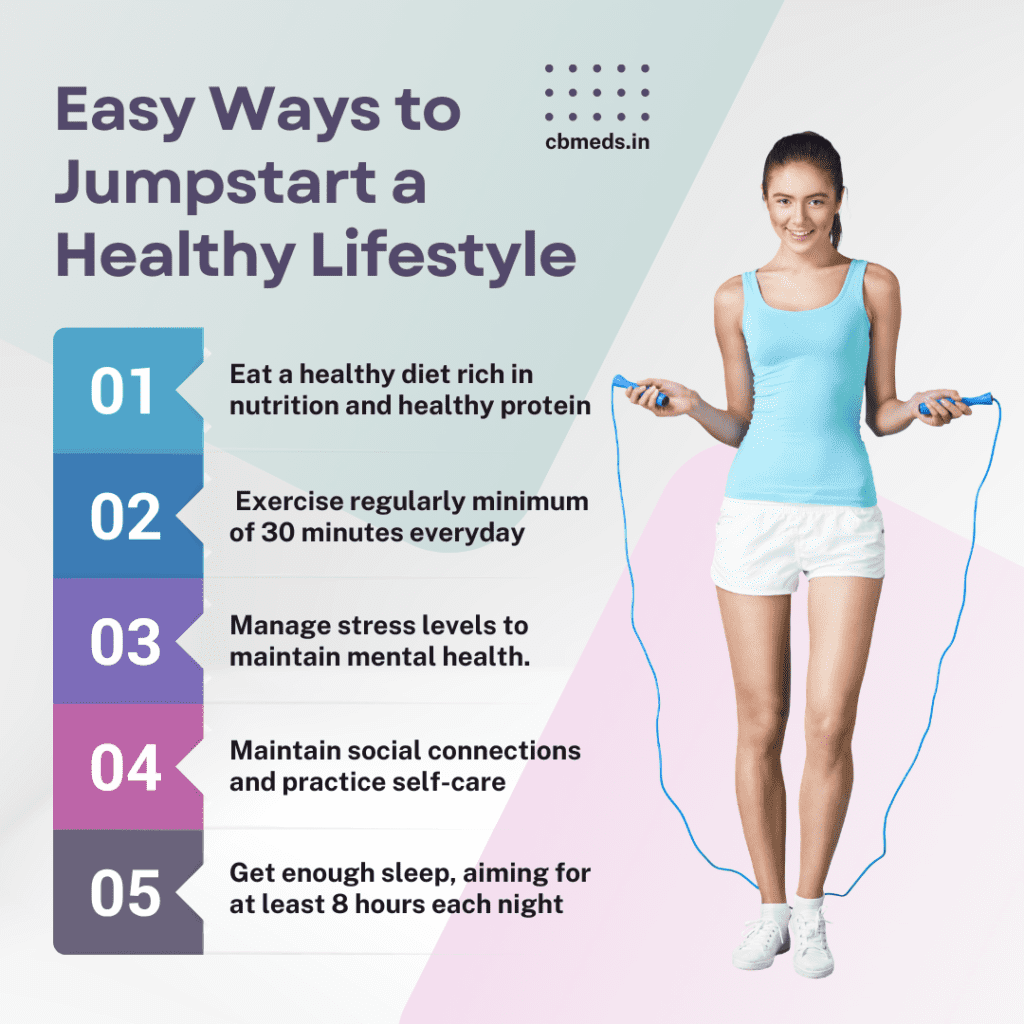
In today’s fast-paced world, maintaining a healthy lifestyle can feel overwhelming. Between work commitments, family responsibilities, social obligations, and digital distractions, health often becomes an afterthought. However, living a healthier life doesn’t require drastic changes or extreme diets. It begins with small, consistent habits that build a strong foundation over time.
Here are five practical and powerful ways to jumpstart your journey toward better physical and mental well-being.
1. Eat a Healthy Diet Rich in Nutrition and Protein
Nutrition is the cornerstone of good health. The food you consume directly impacts your energy levels, immunity, metabolism, mood, and long-term disease risk.
Why It Matters
A balanced diet helps:
- Strengthen the immune system
- Maintain healthy weight
- Support muscle growth and repair
- Improve brain function
- Reduce the risk of chronic diseases
What to Focus On
Instead of restrictive dieting, focus on adding nutritious foods:
- Protein-rich foods: Lentils, beans, eggs, paneer, tofu, chicken, fish
- Whole grains: Brown rice, oats, whole wheat, millets
- Healthy fats: Nuts, seeds, olive oil
- Fruits and vegetables: At least 4–5 servings daily
- Hydration: 2–3 litres of water per day
Small swaps like replacing fried snacks with roasted nuts or sugary drinks with water can make a big difference over time.
2. Exercise Regularly – Minimum 30 Minutes Daily
You don’t need a gym membership to stay active. Movement is medicine.
Benefits of Daily Exercise
- Improves heart health
- Boosts metabolism
- Enhances mood
- Reduces stress
- Improves sleep quality
- Strengthens bones and muscles
Simple Ways to Stay Active
- Brisk walking
- Cycling
- Skipping rope
- Yoga
- Bodyweight exercises at home
- Dancing
Consistency is more important than intensity. Even 30 minutes of moderate activity daily can significantly improve your overall health.
3. Manage Stress to Maintain Mental Health
Stress is unavoidable, but unmanaged stress can lead to anxiety, high blood pressure, sleep problems, and weakened immunity.
Signs of Unhealthy Stress
- Constant fatigue
- Irritability
- Headaches
- Sleep disturbances
- Difficulty concentrating
Healthy Stress-Management Techniques
- Deep breathing exercises
- Meditation or mindfulness
- Journaling
- Spending time in nature
- Limiting social media
- Practicing gratitude
Taking 10–15 minutes daily to slow down and reset your mind can improve mental clarity and emotional resilience.
4. Maintain Social Connections and Practice Self-Care
Humans are social beings. Strong relationships improve emotional well-being and reduce the risk of depression.
Why Social Health Matters
Studies show that people with strong social support:
- Live longer
- Experience lower stress levels
- Recover faster from illness
- Have better mental health
Ways to Strengthen Connections
- Call a friend regularly
- Spend quality time with family
- Join community groups
- Participate in hobbies
At the same time, self-care is essential. Make time for yourself. Whether it’s reading, exercising, skincare, music, or simply resting — self-care is not selfish; it’s necessary.
5. Get Enough Sleep – Aim for 7–8 Hours
Sleep is often sacrificed, but it is one of the most important pillars of health.
What Happens When You Don’t Sleep Enough?
- Weakened immunity
- Weight gain
- Poor concentration
- Mood swings
- Increased risk of chronic illness
Tips for Better Sleep
- Maintain a fixed sleep schedule
- Avoid screens 1 hour before bed
- Reduce caffeine intake after evening
- Keep your room dark and cool
- Avoid heavy meals late at night
Sleep is when your body repairs itself. Prioritizing sleep can improve productivity, focus, and overall health.
Building Long-Term Healthy Habits
The secret to a healthy lifestyle isn’t perfection — it’s consistency.
Start small:
- Replace one unhealthy meal per day.
- Walk for 20 minutes.
- Drink one extra glass of water.
- Sleep 30 minutes earlier.
These small habits compound over time. Within weeks, you’ll notice more energy, better mood, improved digestion, and enhanced mental clarity.
Final Thoughts
A healthy lifestyle is not a short-term challenge. It’s a lifelong commitment to your well-being. By focusing on nutrition, exercise, stress management, social connection, and proper sleep, you create a balanced foundation for physical and mental health.
Remember — you don’t have to change everything overnight. Take one step today. Your future self will thank you.


