
Introduction
Ebola virus disease (EVD), commonly known as Ebola, is a severe and often fatal illness that affects humans and other primates. The disease gained worldwide attention during major outbreaks in Africa, especially the 2014–2016 West Africa outbreak, which caused thousands of deaths and created a global public health emergency.
Ebola is caused by the Ebola virus, a member of the Filoviridae family. The disease spreads through direct contact with bodily fluids of infected individuals or contaminated surfaces and materials. Because Ebola progresses rapidly and can lead to severe complications, recognising its symptoms early is extremely important.
Understanding the symptoms of Ebola can help individuals seek timely medical care, reduce transmission, and protect communities from outbreaks.
What Is Ebola?
Ebola is a viral haemorrhagic fever that causes severe illness in humans. The virus was first identified in 1976 near the Ebola River in what is now the Democratic Republic of Congo.
There are several strains of the Ebola virus, including:
- Zaire ebolavirus
- Sudan ebolavirus
- Bundibugyo ebolavirus
- Tai Forest ebolavirus
- Reston ebolavirus
- Bombali ebolavirus
Among these, the Zaire strain has caused the deadliest outbreaks.
How Ebola Spreads
Ebola spreads through direct contact with:
- Blood or body fluids of an infected person
- Vomit, saliva, urine, sweat, semen, or breast milk
- Contaminated needles or medical equipment
- Infected animals such as bats or primates
The virus does not spread through air like common flu or COVID-19.
People become contagious only after symptoms begin.
Incubation Period
The incubation period is the time between infection and the appearance of symptoms.
For Ebola, this period usually ranges from:
- 2 to 21 days
Most people develop symptoms within 8 to 10 days after exposure.
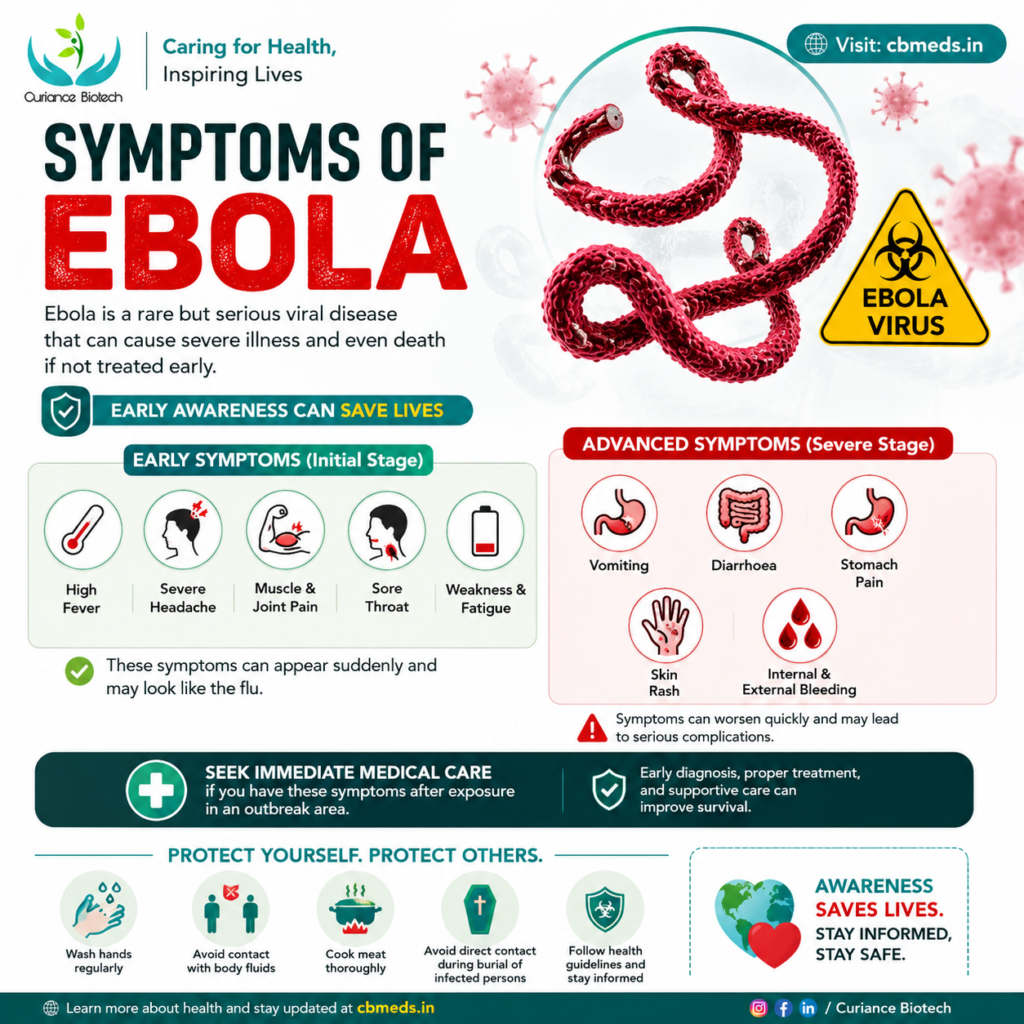
Early Symptoms of Ebola
The early symptoms of Ebola often resemble common viral illnesses such as flu, malaria, or typhoid. This makes early diagnosis difficult in many cases.
1. High Fever
One of the first signs of Ebola is a sudden high fever.
Patients may experience:
- Body temperature above 38.6°C
- Chills
- Sweating
The fever often appears abruptly and becomes severe quickly.
2. Severe Headache
A persistent and intense headache is another common early symptom.
Patients often describe:
- Pressure around the forehead
- Pain behind the eyes
- Difficulty concentrating
3. Muscle and Joint Pain
Ebola frequently causes intense body aches and weakness.
Symptoms include:
- Muscle pain
- Joint stiffness
- Extreme fatigue
- Difficulty moving
Many patients feel exhausted even after resting.
4. Sore Throat
A sore throat may develop during the initial stages.
Patients may notice:
- Pain while swallowing
- Dry throat
- Irritation and coughing
5. Weakness and Fatigue
Severe weakness is one of the hallmark symptoms of Ebola.
The body loses energy rapidly due to:
- Viral infection
- Fever
- Fluid loss
Patients often become bedridden.
Advanced Symptoms of Ebola
As the disease progresses, symptoms become more severe and dangerous.
6. Vomiting
Frequent vomiting is common in moderate to severe Ebola cases.
This leads to:
- Dehydration
- Electrolyte imbalance
- Weakness
7. Diarrhoea
Severe diarrhoea is another major symptom.
Patients may experience:
- Watery stools
- Abdominal cramps
- Rapid fluid loss
Dehydration becomes life-threatening if untreated.
8. Stomach Pain
Many patients complain of:
- Severe abdominal pain
- Tenderness
- Digestive discomfort
This may be accompanied by nausea and vomiting.
9. Skin Rash
A rash can appear several days after symptoms begin.
The rash may:
- Spread across the body
- Cause redness
- Lead to peeling skin later
10. Internal and External Bleeding
In severe cases, Ebola can cause bleeding problems.
Possible signs include:
- Bleeding gums
- Blood in vomit
- Blood in stool
- Nosebleeds
- Bruising
This is why Ebola is sometimes called a haemorrhagic fever.
However, not all patients experience heavy bleeding.
Severe Complications of Ebola
Without proper treatment, Ebola can cause life-threatening complications.
Organ Failure
The virus may damage:
- Liver
- Kidneys
- Lungs
This can lead to multiple organ failure.
Shock
Severe fluid loss can cause shock.
Symptoms include:
- Low blood pressure
- Rapid heartbeat
- Confusion
- Cold skin
Shock requires emergency medical treatment.
Neurological Problems
Some patients develop:
- Seizures
- Delirium
- Confusion
- Coma
Who Is Most at Risk?
People at higher risk include:
- Healthcare workers
- Family members caring for patients
- Individuals attending unsafe burials
- Laboratory workers
- People exposed to infected animals
How Ebola Is Diagnosed
Doctors diagnose Ebola using:
Laboratory Tests
- PCR testing
- Antigen detection
- Blood tests
Because symptoms resemble other diseases, laboratory confirmation is essential.
Treatment for Ebola
There is no simple cure for Ebola, but early supportive treatment greatly improves survival.
Supportive Care Includes:
- Intravenous fluids
- Oxygen therapy
- Blood pressure support
- Electrolyte correction
- Treatment for infections
Approved Treatments
Some medications and antibody therapies have shown effectiveness against Ebola.
These treatments are usually given in specialised healthcare facilities.
Vaccines for Ebola
Vaccines have played a major role in controlling outbreaks.
The Ebola vaccine helps:
- Reduce spread
- Protect healthcare workers
- Prevent severe outbreaks
Vaccination campaigns are commonly used in outbreak regions.
Prevention Tips
Preventing Ebola requires strong public health measures.
Avoid Direct Contact
Avoid contact with:
- Blood
- Body fluids
- Contaminated materials
Practise Good Hygiene
- Wash hands regularly
- Use sanitisers
- Wear protective equipment
Safe Burial Practices
Traditional burial rituals involving contact with the body can spread Ebola.
Safe handling procedures are extremely important.
Cook Animal Products Properly
Avoid handling sick or dead wild animals.
Cook meat thoroughly before consumption.
Ebola Survivors and Long-Term Effects
Some Ebola survivors continue experiencing health problems even after recovery.
These may include:
- Joint pain
- Vision problems
- Weakness
- Mental health challenges
Recovery may take months.
Importance of Early Detection
Recognising Ebola symptoms early is crucial because:
- Early isolation reduces spread
- Treatment works better when started quickly
- Outbreaks can be controlled faster
Public awareness saves lives during outbreaks.
Global Impact of Ebola
Ebola outbreaks have affected several African countries and challenged healthcare systems worldwide.
The disease highlighted the importance of:
- Rapid response
- International cooperation
- Vaccine research
- Public health education
Global organisations continue monitoring Ebola outbreaks to prevent future crises.
Conclusion
Ebola is a dangerous viral disease that can progress rapidly and become fatal if untreated. Early symptoms such as fever, headache, muscle pain, weakness, vomiting, and diarrhoea should never be ignored, especially in outbreak areas.
Awareness, early medical care, proper hygiene, vaccination, and strong healthcare systems remain the best defence against Ebola.
Understanding the symptoms of Ebola not only protects individuals but also helps communities prevent the spread of this deadly disease.


