
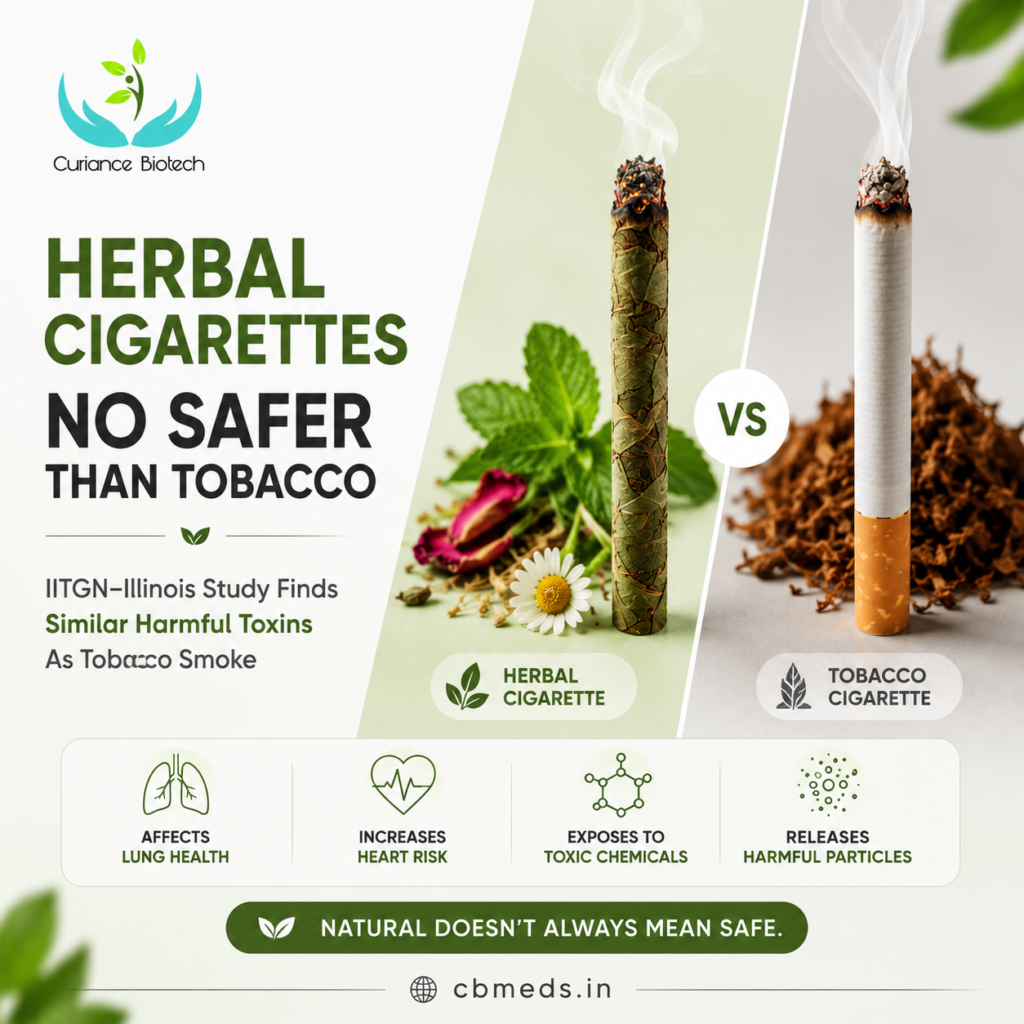
In recent years, herbal cigarettes have gained popularity among smokers looking for what they believe to be a healthier alternative to conventional tobacco products. Marketed as natural, nicotine-free, and less harmful, these products often attract people trying to quit smoking or reduce their exposure to tobacco-related risks.
However, a groundbreaking study conducted by researchers from the Indian Institute of Technology Gandhinagar (IITGN) and the University of Illinois has challenged this perception. The findings suggest that herbal cigarettes may not be safer than tobacco cigarettes and can expose users to many of the same harmful chemicals and health risks.
This research serves as an important reminder that “natural” does not always mean “safe,” especially when combustion and inhalation are involved.
What Are Herbal Cigarettes?
Herbal cigarettes are smoking products made from various plant materials instead of tobacco. Manufacturers commonly use ingredients such as:
- Rose petals
- Mint leaves
- Clove
- Basil
- Tea leaves
- Lotus leaves
- Other medicinal herbs
Most herbal cigarettes do not contain nicotine, which is the addictive substance found in tobacco. Because of this, they are often marketed as aids for smoking cessation or as safer alternatives to regular cigarettes.
The packaging frequently highlights terms like:
- Tobacco-free
- Nicotine-free
- Organic
- Natural
- Herbal
These claims can create a perception that herbal cigarettes are harmless or significantly less dangerous than traditional smoking products.
The IITGN–Illinois Research
Researchers from IIT Gandhinagar and the University of Illinois conducted an extensive analysis to compare emissions from herbal cigarettes with those from conventional tobacco cigarettes.
The study focused on examining the smoke produced during combustion and identifying the presence of harmful substances that could affect human health.
Their findings revealed that burning herbal materials produces a complex mixture of toxic chemicals similar to those generated by burning tobacco.
The study found that herbal cigarettes can emit:
- Carbon monoxide
- Fine particulate matter
- Volatile organic compounds (VOCs)
- Polycyclic aromatic hydrocarbons (PAHs)
- Other potentially harmful toxic substances
These pollutants are known to contribute to respiratory diseases, cardiovascular problems, and various long-term health complications.
Why Burning Any Plant Material Is Risky
One of the most important lessons from the study is that the danger does not come solely from tobacco itself.
When any plant material burns, it undergoes combustion. This process creates smoke that contains thousands of chemical compounds.
Many of these compounds can:
- Irritate the lungs
- Damage airway tissues
- Trigger inflammation
- Reduce oxygen delivery
- Increase oxidative stress
Whether the source is tobacco, herbs, wood, or other plant matter, inhaling combustion products exposes the respiratory system to harmful substances.
This means that even nicotine-free cigarettes can still pose significant health risks.
The Myth of “Natural Equals Safe”
Consumers often associate natural products with health benefits.
While some herbs may have medicinal properties when consumed appropriately, smoking them is an entirely different matter.
For example:
- Herbal teas may offer benefits when brewed and consumed.
- Medicinal herbs may help in certain traditional treatments.
- Aromatic plants may provide pleasant fragrances.
However, once these plants are burned and inhaled, their chemical composition changes dramatically.
The smoke generated can contain toxins that were not present in the original plant material.
Therefore, the safety of an herb cannot be judged based on its natural origin alone.
Harmful Chemicals Found in Smoke
Smoke from herbal cigarettes may contain numerous harmful compounds.
Carbon Monoxide
Carbon monoxide is a poisonous gas that reduces the blood’s ability to carry oxygen.
Excessive exposure can lead to:
- Fatigue
- Dizziness
- Headaches
- Heart strain
Long-term exposure may increase cardiovascular risks.
Fine Particulate Matter
Tiny airborne particles can penetrate deep into the lungs and even enter the bloodstream.
These particles are linked to:
- Asthma
- Chronic bronchitis
- Lung irritation
- Heart disease
Volatile Organic Compounds (VOCs)
VOCs are chemicals that evaporate easily and can contribute to respiratory irritation and other health problems.
Some VOCs are considered potentially carcinogenic.
Polycyclic Aromatic Hydrocarbons (PAHs)
PAHs are formed during incomplete combustion and are among the most concerning components of cigarette smoke.
Several PAHs have been associated with cancer development.
Impact on Lung Health
The lungs are particularly vulnerable to smoke exposure.
Repeated inhalation of herbal cigarette smoke may lead to:
Airway Inflammation
Smoke irritates the lining of the respiratory tract, causing inflammation and discomfort.
Reduced Lung Function
Long-term exposure can gradually impair the lungs’ ability to exchange oxygen efficiently.
Increased Respiratory Symptoms
Users may experience:
- Persistent coughing
- Wheezing
- Shortness of breath
- Chest discomfort
Elevated Risk of Chronic Disease
Continuous smoke exposure may contribute to chronic respiratory conditions over time.
Can Herbal Cigarettes Help People Quit Smoking?
Some smokers turn to herbal cigarettes in hopes of quitting tobacco.
While herbal cigarettes eliminate nicotine exposure, they do not eliminate the act of smoking.
In fact, they may reinforce smoking-related habits such as:
- Hand-to-mouth movements
- Inhalation routines
- Psychological dependence on smoking rituals
As a result, herbal cigarettes may not be the most effective strategy for smoking cessation.
Evidence-based alternatives include:
- Nicotine replacement therapy
- Behavioural counselling
- Smoking cessation programmes
- Prescription medications under medical supervision
These approaches have stronger scientific support and do not expose users to harmful smoke.
Public Health Concerns
The study raises important public health questions.
Many consumers may purchase herbal cigarettes believing they are making a healthier choice.
Without clear awareness of the risks, people may:
- Delay quitting smoking altogether
- Increase usage due to perceived safety
- Expose themselves to harmful toxins unknowingly
Health experts argue that better education and transparency are needed to help consumers make informed decisions.
Understanding the Difference Between Nicotine-Free and Risk-Free
A critical distinction highlighted by researchers is that nicotine-free does not mean risk-free.
Removing nicotine eliminates addiction-related concerns, but it does not remove toxic smoke exposure.
Users can still inhale harmful chemicals that affect:
- The lungs
- The heart
- Blood vessels
- Overall respiratory health
This distinction is essential for anyone considering herbal cigarettes as a safer option.
Healthier Alternatives to Smoking
Individuals seeking alternatives to smoking may benefit from options that avoid combustion entirely.
Potential alternatives include:
Professional Smoking Cessation Support
Healthcare providers can offer personalised guidance and treatment plans.
Nicotine Replacement Therapy
Products such as patches, gum, and lozenges can help reduce withdrawal symptoms.
Behavioural Therapy
Counselling can address psychological and behavioural aspects of smoking addiction.
Physical Activity
Exercise can reduce cravings and improve overall health.
Stress Management Techniques
Methods such as meditation, yoga, and mindfulness can support quitting efforts.
What Consumers Should Remember
The IITGN–Illinois study delivers a clear message: herbal cigarettes should not automatically be considered safe simply because they are natural or nicotine-free.
Key takeaways include:
- Burning herbs produces harmful smoke.
- Herbal cigarettes can emit toxic chemicals.
- Natural ingredients do not guarantee safety.
- Smoke inhalation remains a health concern regardless of the source.
- Evidence-based smoking cessation methods are safer and more effective.
Conclusion
The belief that herbal cigarettes are a harmless alternative to tobacco has been challenged by scientific evidence. Research from IIT Gandhinagar and the University of Illinois indicates that herbal cigarettes can expose users to many of the same harmful pollutants associated with traditional cigarette smoke.
While these products may lack nicotine, they still involve inhaling combustion-generated toxins that can negatively affect lung and cardiovascular health.
For individuals looking to improve their health or quit smoking, the safest approach remains avoiding smoke exposure altogether and seeking proven cessation strategies supported by healthcare professionals.
As consumers become increasingly health-conscious, studies like this underscore the importance of relying on scientific evidence rather than marketing claims. Understanding the true risks of herbal cigarettes can help people make better-informed decisions and take meaningful steps toward protecting their long-term health.


