
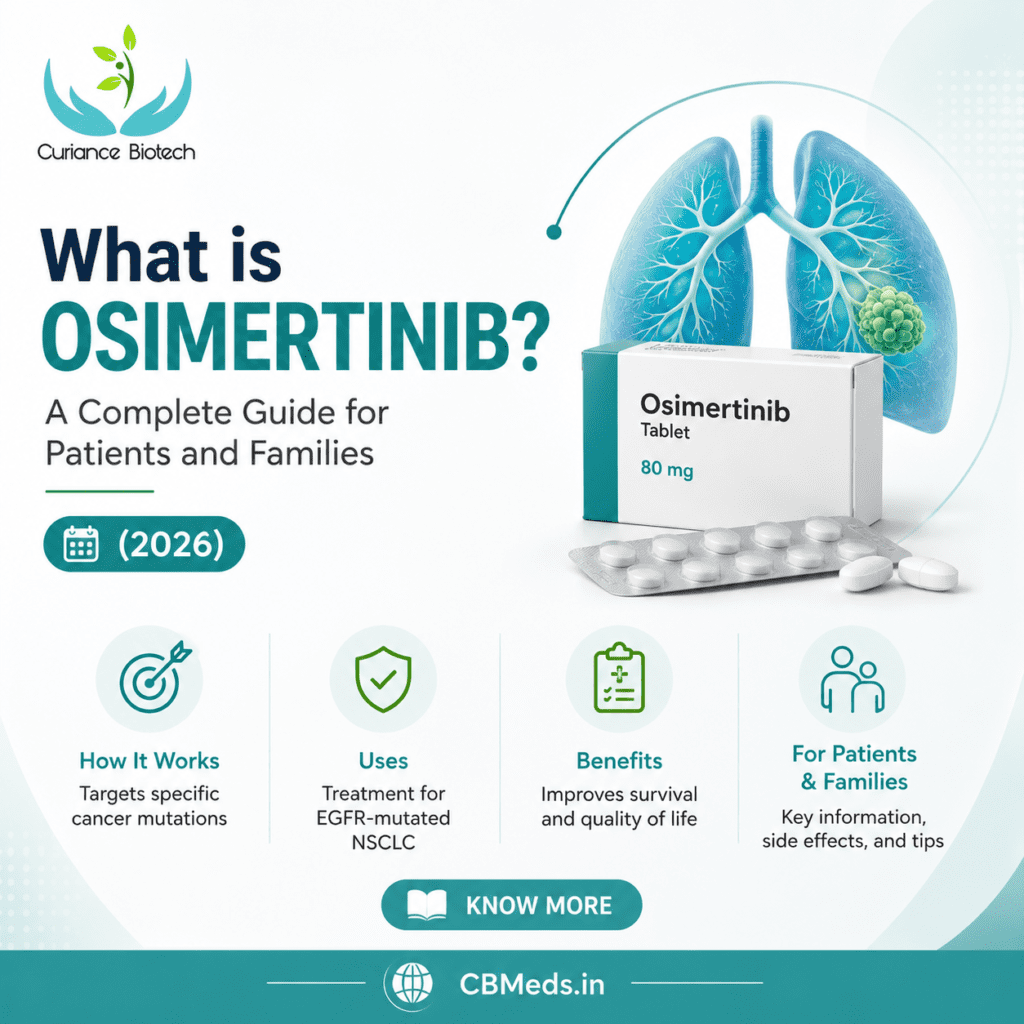
If your oncologist has prescribed Osimertinib, or if you have recently been diagnosed with EGFR-positive lung cancer, you may be wondering what this medicine is, how it works, and whether it is the right treatment for you.
This guide explains Osimertinib in simple terms, covering its uses, benefits, side effects, dosage, and the latest clinical evidence available in 2026.
What is Osimertinib?
Osimertinib is a targeted therapy used to treat certain types of non-small cell lung cancer (NSCLC) that carry specific EGFR (Epidermal Growth Factor Receptor) mutations.
Unlike traditional chemotherapy, which attacks both healthy and cancerous cells, Osimertinib specifically targets cancer cells that depend on abnormal EGFR signals to grow and spread.
The medicine is marketed under the brand name Tagrisso and is available in 40 mg and 80 mg tablet strengths. It is taken once daily and is currently considered the standard first-line treatment for eligible patients with EGFR-mutated NSCLC.
How Does Osimertinib Work?
EGFR is a protein found on the surface of many cells in the body. Its normal role is to regulate cell growth and division.
In some lung cancer patients, mutations in the EGFR gene cause the protein to remain permanently activated. This creates continuous growth signals that allow cancer cells to multiply uncontrollably.
Osimertinib works by blocking these abnormal EGFR signals. By targeting the mutated protein directly, it helps slow or stop tumour growth while causing less damage to healthy cells than conventional chemotherapy.
Why Osimertinib is Different
Earlier EGFR-targeted medicines such as Erlotinib, Gefitinib, and Afatinib were effective initially but often stopped working because cancer cells developed resistance mutations, particularly the T790M mutation.
Osimertinib was specifically designed to overcome this problem. It targets both the common activating EGFR mutations and the T790M resistance mutation.
Another important advantage is its ability to cross the blood-brain barrier, allowing it to treat or prevent cancer spread to the brain more effectively than older EGFR inhibitors.
Who Can Benefit from Osimertinib?
Osimertinib is prescribed only for patients whose tumours contain specific EGFR mutations. Eligibility is confirmed through genetic testing performed on tumour tissue or blood samples.
Approved Uses in 2026
1. First-Line Treatment for Advanced or Metastatic NSCLC
Patients with newly diagnosed EGFR-mutated NSCLC are often prescribed Osimertinib as their initial treatment.
2. Treatment of T790M-Positive Resistant Disease
Patients whose cancer has progressed after treatment with earlier EGFR inhibitors may benefit from Osimertinib if testing confirms a T790M mutation.
3. Adjuvant Therapy After Surgery
For patients whose EGFR-mutated tumour has been surgically removed, Osimertinib can significantly reduce the risk of recurrence and improve long-term outcomes.
4. Locally Advanced Stage III Disease
Recent clinical evidence has expanded the role of Osimertinib for selected patients with unresectable Stage III EGFR-mutated NSCLC following chemoradiotherapy.
EGFR Mutations That Respond to Osimertinib
Exon 19 Deletion
The most common EGFR mutation and highly responsive to Osimertinib.
Exon 21 L858R Mutation
Another common mutation that responds well to treatment.
T790M Resistance Mutation
A mutation that often develops after earlier EGFR therapies and remains a key indication for Osimertinib.
Exon 20 Insertions
These mutations generally do not respond well to Osimertinib and may require alternative treatments.
Osimertinib vs Tagrisso: What’s the Difference?
Many patients assume Osimertinib and Tagrisso are different medicines. They are not.
Osimertinib is the active pharmaceutical ingredient.
Tagrisso is the brand name under which AstraZeneca markets the medicine.
Generic versions contain the same active ingredient and are manufactured according to pharmaceutical quality standards. The primary differences are cost, manufacturer, and market availability.
Recommended Dosage
Osimertinib is available as:
- 40 mg tablets
- 80 mg tablets
For most patients, the recommended dose is:
80 mg once daily
Some patients may require dose adjustments to 40 mg daily depending on side effects, treatment goals, or individual clinical circumstances.
The tablet may be taken with or without food and should be taken at approximately the same time every day.
Patients should never change their dose without medical advice.
Common Side Effects
Most patients tolerate Osimertinib significantly better than chemotherapy.
Common side effects include:
- Diarrhoea
- Skin rash
- Dry skin
- Itching
- Nail changes
- Mouth sores
- Reduced appetite
- Fatigue
- Mild cough
These side effects are usually manageable and often improve over time.
Serious Side Effects Requiring Medical Attention
Although uncommon, patients should seek immediate medical advice if they experience:
- New or worsening breathing difficulties
- Persistent cough with fever
- Irregular heartbeat
- Severe dizziness
- Eye pain or vision changes
- Signs of liver problems
Regular monitoring by your oncology team helps identify potential complications early.
Latest Research and Clinical Updates (2026)
FLAURA2 Study
Updated data released in 2026 showed that combining Osimertinib with platinum-based chemotherapy improved overall survival compared with Osimertinib alone in selected patients with advanced EGFR-mutated NSCLC.
The combination achieved a median overall survival of approximately 47.5 months compared with 37.6 months for Osimertinib monotherapy.
LAURA Study
The LAURA trial demonstrated substantial benefits for patients with unresectable Stage III EGFR-mutated NSCLC following chemoradiotherapy.
These findings have expanded treatment options and reinforced Osimertinib’s role across multiple stages of lung cancer care.
Frequently Asked Questions
Is Osimertinib Chemotherapy?
No. Osimertinib is a targeted therapy known as an EGFR tyrosine kinase inhibitor (TKI). It specifically targets cancer cells with EGFR mutations.
How Long Do Patients Stay on Osimertinib?
Treatment typically continues as long as the medicine remains effective and side effects remain manageable.
In the adjuvant setting after surgery, treatment is commonly prescribed for three years.
Can Osimertinib Cure Lung Cancer?
For advanced disease, Osimertinib is generally used to control cancer rather than cure it.
For early-stage disease following surgery, it can significantly reduce the risk of recurrence and improve long-term outcomes.
What Happens if Osimertinib Stops Working?
Over time, cancer cells may develop additional resistance mechanisms. Your oncologist may recommend further testing to identify the cause and determine the most appropriate next treatment option.
Can Osimertinib Be Taken With Food?
Yes. The medicine can be taken with or without food.
Is Osimertinib Safe During Pregnancy?
No. Osimertinib may harm an unborn baby. Effective contraception is required during treatment and for the recommended period after treatment ends.
Key Takeaways
- Osimertinib is a third-generation EGFR tyrosine kinase inhibitor used to treat EGFR-mutated non-small cell lung cancer.
- It is marketed as Tagrisso and is also available in generic formulations.
- It is considered the preferred first-line treatment for many patients with EGFR-positive NSCLC.
- The medicine effectively treats both primary EGFR mutations and the T790M resistance mutation.
- Osimertinib can penetrate the blood-brain barrier, making it effective against brain metastases.
- Treatment is typically given as an oral tablet once daily.
- Most side effects are manageable and less severe than those associated with traditional chemotherapy.
- Ongoing research continues to expand its role across multiple stages of lung cancer treatment.
Need Help Accessing Osimertinib?
Access to cancer treatment can vary depending on location, availability, and affordability. Patients should always obtain Osimertinib through licensed healthcare providers and use it only under the supervision of a qualified oncologist.
If you have questions about treatment options, speak with your oncology team, who can provide guidance based on your individual diagnosis and medical history.


