
Introduction
When people think of foods that damage the heart, they usually imagine burgers, fries, or sugary desserts. While these certainly deserve attention, some everyday foods that appear harmless can also contribute to poor heart health when consumed regularly.
Cardiologists emphasize that cardiovascular disease develops over many years, and small dietary choices made every day can have a significant impact on blood pressure, cholesterol levels, and overall heart function.
At Curiance Biotech, we believe that awareness is the first step toward prevention. Understanding which foods to limit can help you make healthier choices for lifelong heart health.
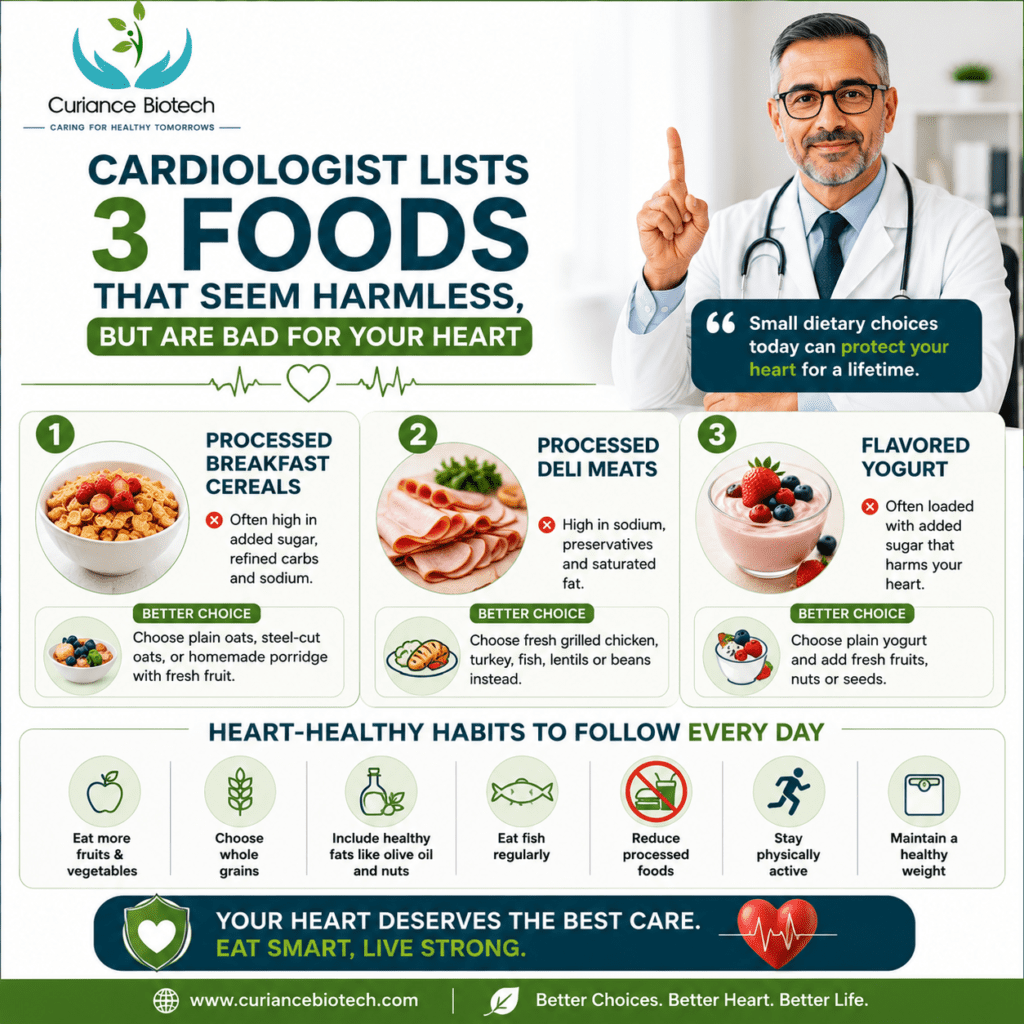
1. Processed Breakfast Cereals
Many breakfast cereals are marketed as healthy because they contain whole grains or added vitamins.
However, some varieties are also high in:
- Added sugars
- Refined carbohydrates
- Sodium
These ingredients may contribute to blood sugar spikes and weight gain when consumed regularly.
Healthier Alternatives
- Plain oats
- Unsweetened muesli
- Steel-cut oats
- Fresh fruit with yogurt
- Homemade porridge
2. Processed Deli Meats
Foods like:
- Sausages
- Salami
- Bacon
- Ham
may appear convenient but are often high in sodium, preservatives, and saturated fat.
Regular consumption has been associated with increased cardiovascular risk.
Better Choices
- Fresh grilled chicken
- Turkey breast
- Fish
- Lentils
- Beans
Choose minimally processed protein sources whenever possible.
3. Flavored Yogurt
Yogurt is generally considered a healthy food.
However, many flavored yogurts contain surprisingly high amounts of added sugar.
Excess sugar intake may contribute to:
- Weight gain
- Insulin resistance
- Type 2 diabetes
- Increased cardiovascular risk
Better Choice
Choose plain yogurt and add:
- Fresh berries
- Banana slices
- Nuts
- Seeds
This provides natural sweetness without excessive added sugar.
Why Small Dietary Changes Matter
Heart disease rarely develops overnight.
Healthy daily habits can help:
- Maintain healthy cholesterol levels
- Control blood pressure
- Support healthy weight
- Reduce inflammation
- Improve long-term cardiovascular health
Replacing highly processed foods with whole, minimally processed options is one of the simplest ways to support heart health.
Heart-Healthy Eating Tips
Cardiologists commonly recommend:
❤️ Eat more fruits and vegetables
❤️ Choose whole grains
❤️ Include healthy fats like olive oil and nuts
❤️ Eat fish regularly
❤️ Reduce processed foods
❤️ Limit sugary beverages
❤️ Watch portion sizes
❤️ Stay physically active
Frequently Asked Questions
Are these foods harmful if eaten occasionally?
No.
Occasional consumption is unlikely to cause harm for most healthy individuals. The concern is frequent, long-term intake as part of an overall unhealthy diet.
Is all yogurt unhealthy?
No.
Plain, unsweetened yogurt is a nutritious option that provides protein and calcium.
Should I completely avoid processed foods?
Not necessarily.
The goal is moderation and choosing minimally processed foods whenever possible.
Can diet alone prevent heart disease?
Diet plays a major role, but exercise, sleep, stress management, and regular health check-ups are equally important.
Final Thoughts
Many foods marketed as “healthy” may still contain excessive amounts of sugar, sodium, or unhealthy fats.
Reading nutrition labels, choosing whole foods, and eating a balanced diet are simple but powerful ways to protect your heart.
At Curiance Biotech, we believe that prevention begins with informed choices. Small improvements in your daily diet today can contribute to better heart health for years to come.
Medical Disclaimer
This article is for educational purposes only and should not replace professional medical advice. Consult a qualified healthcare professional or registered dietitian for personalized dietary guidance.


