
Introduction
Polycystic Ovary Syndrome (PCOS) is one of the most common hormonal disorders affecting women of reproductive age. It can impact menstrual cycles, fertility, metabolism, weight, skin health, and emotional well-being.
While medical treatment remains the cornerstone of PCOS management, lifestyle modifications play a vital role in controlling symptoms. Among these, yoga has gained increasing attention as a gentle yet effective practice that supports both physical and mental health.
At Curiance Biotech, we believe that managing PCOS requires a holistic approach that combines medical care, healthy nutrition, regular physical activity, and stress management. Yoga can be an excellent complementary practice to help women improve their overall quality of life.
What is PCOS?
Polycystic Ovary Syndrome (PCOS) is a hormonal condition characterized by an imbalance in reproductive hormones.
Common symptoms include:
- Irregular menstrual cycles
- Acne
- Excess facial or body hair
- Weight gain
- Difficulty losing weight
- Hair thinning
- Ovarian cysts
- Fertility challenges
PCOS is also associated with insulin resistance and an increased risk of type 2 diabetes and cardiovascular disease.
Can Yoga Help Manage PCOS?
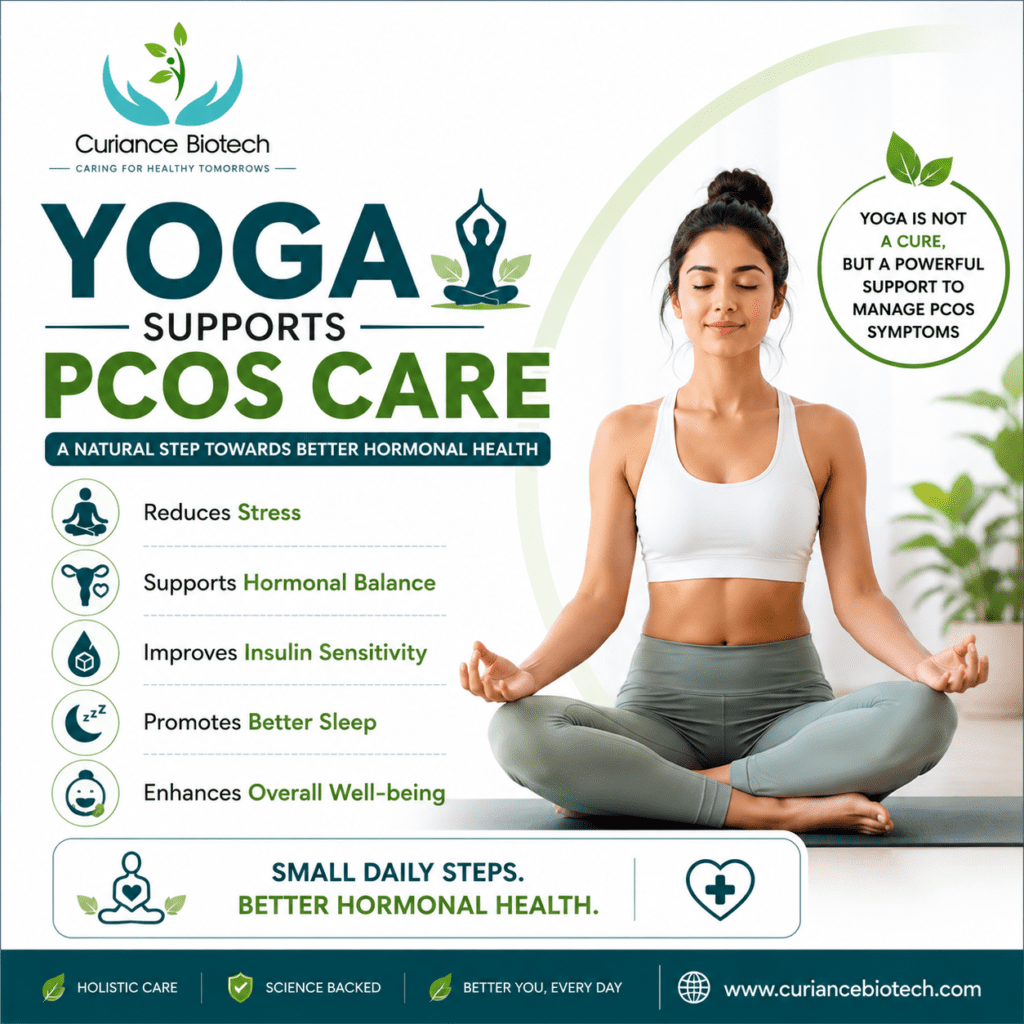
Yoga is not a cure for PCOS, but research suggests it may help improve several symptoms when combined with medical treatment and healthy lifestyle habits.
Regular yoga practice may help:
- Reduce stress levels
- Improve insulin sensitivity
- Support healthy body weight
- Improve flexibility and strength
- Promote better sleep
- Enhance emotional well-being
- Support hormonal balance
Why Stress Matters in PCOS
Stress plays a significant role in hormonal health.
Chronic stress increases cortisol levels, which may worsen insulin resistance and contribute to hormonal imbalance.
Yoga combines:
- Controlled breathing
- Gentle movement
- Meditation
- Mindfulness
Together, these practices help calm the nervous system and reduce stress.
Yoga and Hormonal Balance
Although yoga does not directly regulate hormones, it may support healthier endocrine function by improving overall metabolic health and reducing chronic stress.
Regular practice has been associated with:
- Better menstrual regularity
- Improved mood
- Reduced anxiety
- Increased energy
- Improved quality of life
Yoga May Improve Insulin Sensitivity
Many women with PCOS experience insulin resistance.
Exercise—including yoga—helps muscles use glucose more efficiently, which may improve insulin sensitivity over time.
Improved insulin function may also help:
- Support healthy weight management
- Improve menstrual cycles
- Reduce androgen levels
- Lower the risk of type 2 diabetes
Best Yoga Poses for Women with PCOS
While yoga should be tailored to individual fitness levels, commonly recommended poses include:
Butterfly Pose (Baddha Konasana)
Helps improve flexibility around the hips and pelvic region.
Cobra Pose (Bhujangasana)
Strengthens the back and improves posture.
Child’s Pose (Balasana)
Promotes relaxation and reduces stress.
Cat-Cow Stretch (Marjaryasana-Bitilasana)
Improves spinal flexibility and encourages gentle movement.
Bridge Pose (Setu Bandhasana)
Strengthens core muscles and supports pelvic health.
Legs-Up-the-Wall Pose (Viparita Karani)
Encourages relaxation and helps reduce stress after a long day.
Other Lifestyle Habits That Support PCOS Care
Yoga works best when combined with healthy lifestyle habits.
These include:
Eat a Balanced Diet
Focus on:
- Whole grains
- Lean proteins
- Fruits
- Vegetables
- Healthy fats
Limit processed foods and sugary beverages.
Exercise Regularly
Aim for at least 150 minutes of moderate physical activity each week.
Maintain a Healthy Weight
Even modest weight loss can improve insulin sensitivity and hormone balance.
Sleep Well
Getting 7–9 hours of quality sleep each night supports hormonal regulation.
Manage Stress
In addition to yoga, mindfulness, meditation, and spending time outdoors can improve mental well-being.
When Should You See a Doctor?
Lifestyle changes are important, but they do not replace professional medical care.
Consult a healthcare provider if you experience:
- Irregular or absent periods
- Difficulty becoming pregnant
- Excessive hair growth
- Severe acne
- Rapid weight gain
- Persistent pelvic pain
Early diagnosis allows for timely management and helps reduce long-term health risks.
The Role of Medical Treatment
Depending on your symptoms, your doctor may recommend:
- Lifestyle modifications
- Hormonal therapy
- Insulin-sensitizing medications
- Fertility treatments
- Regular monitoring
Treatment plans are personalized based on individual needs and reproductive goals.
How Curiance Biotech Supports Women’s Health
At Curiance Biotech, we are committed to improving health awareness through reliable educational resources.
We encourage women with PCOS to work closely with qualified healthcare professionals and adopt evidence-based lifestyle habits that support long-term wellness.
Yoga, balanced nutrition, regular exercise, and medical care can work together to help women better manage PCOS and improve their quality of life.
Frequently Asked Questions
Can yoga cure PCOS?
No.
Yoga is not a cure but may help manage symptoms when combined with medical treatment and healthy lifestyle habits.
How often should women with PCOS practice yoga?
Many experts recommend practicing yoga 3–5 times per week, depending on individual fitness and medical advice.
Is yoga better than other forms of exercise?
Yoga provides unique benefits for stress reduction and flexibility, but combining it with aerobic exercise and strength training often provides the greatest health benefits.
Can yoga improve fertility in PCOS?
Yoga may reduce stress and improve overall health, but fertility depends on multiple factors. Women trying to conceive should consult their gynecologist or fertility specialist.
Is yoga safe for everyone?
Most women can safely practice yoga, but beginners or those with medical conditions should seek guidance from a qualified instructor and healthcare provider.
Final Thoughts
Living with PCOS can be challenging, but small lifestyle changes can make a meaningful difference.
Regular yoga practice supports stress management, improves flexibility, promotes better sleep, and complements medical treatment for PCOS.
Combined with healthy eating, regular exercise, and ongoing medical care, yoga can become an important part of a long-term PCOS management plan.
At Curiance Biotech, we encourage women to take a holistic approach to hormonal health by combining evidence-based medicine with healthy daily habits that support overall well-being.


