
Introduction
For decades, Hepatitis B has been considered a lifelong viral infection that could be controlled but rarely cured. While antiviral medications have helped millions of people reduce viral replication and protect the liver, completely eliminating the virus has remained one of medicine’s greatest challenges.
Today, that outlook is beginning to change.
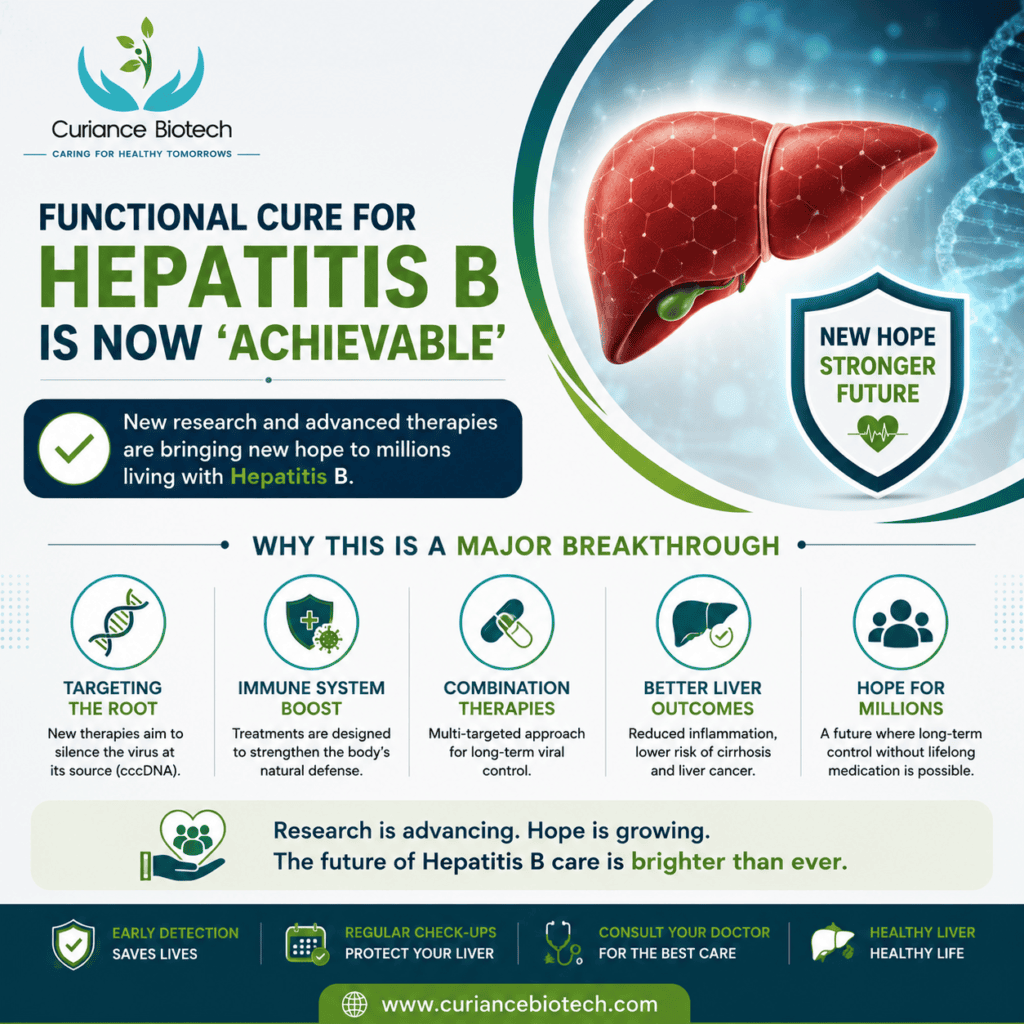
Recent advances in immunology, antiviral therapies, and combination treatment strategies have led many liver disease experts to describe a functional cure for Hepatitis B as an achievable goal rather than a distant dream.
Although more research is still needed before these therapies become widely available, the progress represents one of the most promising developments in liver disease treatment in recent years.
At Curiance Biotech, we believe that keeping patients informed about emerging medical breakthroughs helps them have meaningful conversations with their healthcare providers.
Understanding Hepatitis B
Hepatitis B is a viral infection caused by the Hepatitis B Virus (HBV).
The virus primarily attacks the liver and may lead to:
- Chronic liver disease
- Liver cirrhosis
- Liver failure
- Hepatocellular carcinoma (liver cancer)
According to the World Health Organization (WHO), nearly 254 million people worldwide are living with chronic Hepatitis B infection.
Many individuals remain unaware they have the infection because symptoms may not appear until significant liver damage has occurred.
What Is a Functional Cure?
A functional cure does not mean that every trace of the virus disappears from the body.
Instead, it means:
- Hepatitis B surface antigen (HBsAg) becomes undetectable.
- Viral replication remains suppressed without ongoing treatment.
- Liver inflammation is controlled.
- The risk of liver complications is significantly reduced.
In other words, the virus is effectively controlled by the body’s immune system even after treatment stops.
This differs from a complete sterilizing cure, where the virus is entirely eliminated from every liver cell—a goal that remains much more challenging.
Why Has Hepatitis B Been So Difficult to Cure?
HBV is unique because it forms a stable structure inside liver cells called cccDNA (covalently closed circular DNA).
This acts like a long-term blueprint that allows the virus to restart replication even after antiviral treatment suppresses circulating virus levels.
Current antiviral medicines effectively reduce viral activity but generally do not remove cccDNA completely.
This has been the biggest obstacle in achieving a cure.
Why Experts Are Optimistic
Several promising developments are changing the outlook for Hepatitis B treatment.
Researchers are now studying combination therapies that target the virus from multiple directions simultaneously.
These include:
Novel Antiviral Drugs
New antiviral agents are being developed to reduce viral replication more effectively than existing therapies.
Immune-Based Therapies
Scientists are investigating treatments designed to strengthen the body’s immune response against infected liver cells.
The goal is to help the immune system regain control over the virus.
RNA-Based Therapies
RNA interference (RNAi) therapies work by reducing the production of viral proteins, including HBsAg.
Lower antigen levels may allow the immune system to recognize and attack infected cells more effectively.
Capsid Assembly Modulators
These investigational medicines interfere with the virus’s ability to assemble new viral particles.
Several candidates are currently being evaluated in clinical trials.
Combination Therapy Is the Future
Many liver specialists now believe that no single medicine will provide a functional cure.
Instead, future treatment will likely involve combinations of:
- Antiviral medications
- Immune therapies
- RNA-targeted treatments
- Novel antiviral agents
This multi-target approach is similar to successful treatment strategies already used for HIV and hepatitis C.
What Does This Mean for Patients?
Although these treatments are still under investigation, the progress is encouraging.
Patients currently receiving antiviral therapy should:
- Continue taking medication exactly as prescribed.
- Attend regular liver monitoring appointments.
- Discuss new clinical trials with their hepatologist if appropriate.
- Never stop treatment without medical advice.
Current therapies remain highly effective at preventing liver damage and reducing complications.
Hope for the Future
Experts increasingly believe that functional cure rates could improve significantly over the next decade as new therapies receive regulatory approval.
While challenges remain, scientific progress has accelerated rapidly.
This gives hope to millions of people living with chronic Hepatitis B around the world.
Frequently Asked Questions
Is Hepatitis B curable today?
Current treatments usually suppress the virus rather than eliminate it completely.
However, research is making functional cure an increasingly realistic goal.
What is the difference between a functional cure and a complete cure?
A functional cure means the virus remains controlled without ongoing treatment.
A complete cure would remove every trace of the virus from the body.
Should patients stop taking current medication?
No.
Patients should continue prescribed treatment unless advised otherwise by their healthcare provider.
Are new treatments available now?
Some investigational therapies are available through clinical trials, while others remain under development and regulatory review.
Final Thoughts
The phrase “functional cure for Hepatitis B is now achievable” reflects one of the most exciting developments in liver disease research.
Although current therapies remain the standard of care, advances in antiviral science, immunotherapy, and combination treatment strategies are bringing researchers closer than ever to long-term viral control without lifelong medication.
At Curiance Biotech, we remain committed to sharing credible medical updates that empower patients and healthcare professionals through education and awareness.
Medical Disclaimer
This article is intended for educational purposes only and should not replace professional medical advice. Patients should always consult a qualified healthcare provider regarding diagnosis, treatment, or participation in clinical trials.


