
Introduction
Receiving a lung cancer diagnosis can be overwhelming. For many patients, the next challenge is not choosing a treatment—it’s finding access to the medicine their oncologist has prescribed.
In many parts of the world, targeted lung cancer medicines may not yet be available, may be temporarily out of stock, or may be priced beyond the reach of many patients. These challenges have made international medicine access an important part of modern oncology care.
Fortunately, legal pathways exist that allow eligible patients to obtain prescribed medicines from qualified international suppliers.
At Curiance Biotech, we help patients and healthcare professionals understand these pathways while improving access to quality oncology medicines worldwide.
Why Do Patients Need International Access?
Access to cancer medicines varies significantly between countries.
Common reasons include:
- Delayed regulatory approvals
- Limited local availability
- Medicine shortages
- High treatment costs
- Small pharmaceutical markets
- Import restrictions
As a result, patients may need to obtain medicines from internationally recognized suppliers.
How to Access Osimertinib in India Legally — A Step-by-Step Guide
What Is the Named Patient Medicine Framework?
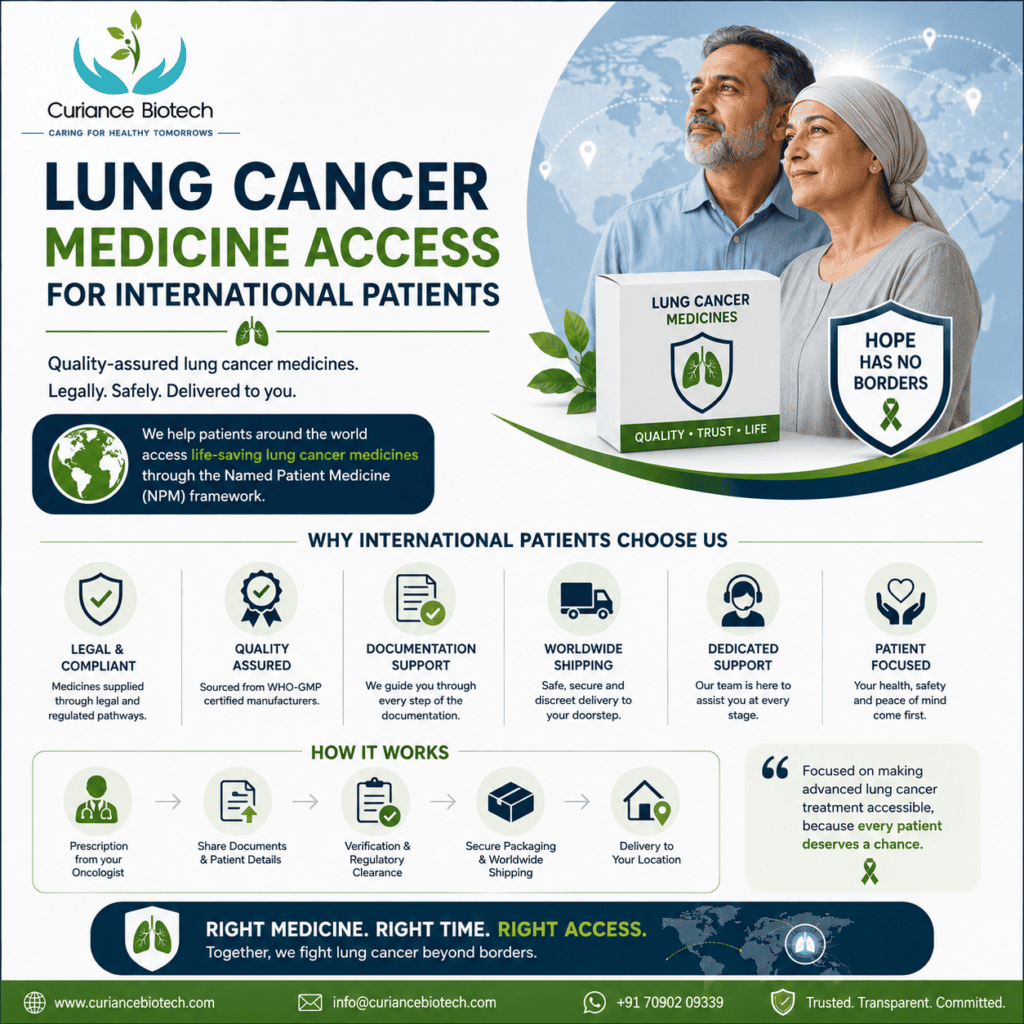
One of the most widely accepted legal pathways is the Named Patient Medicine (NPM) framework.
This allows an individual patient to receive a prescribed medicine that may not be commercially available in their country.
The medicine is supplied:
- For one identified patient
- Against a valid physician prescription
- Under applicable national regulations
- With appropriate documentation
This framework exists in many countries under different regulatory names.
Which Lung Cancer Medicines Can Be Accessed?
Depending on local regulations and physician prescription, international access may be available for several targeted oncology medicines, including:
- Osimertinib
- EGFR-targeted therapies
- ALK inhibitors
- ROS1 inhibitors
- Other precision oncology medicines
Eligibility depends on the patient’s diagnosis, prescription, and destination country’s regulations.
Who Can Request Medicine?
Typically, requests may come from:
- Patients
- Family members
- Treating oncologists
- Hospitals
- Cancer centers
- Procurement teams
All requests require appropriate medical documentation.
Documents Usually Required
Most international medicine requests require:
- Valid oncologist prescription
- Patient identification
- Medical diagnosis
- Delivery information
- Country-specific import documentation (where applicable)
Additional documentation may be requested depending on destination country requirements.
Why Quality Assurance Matters
When sourcing medicines internationally, patients should choose suppliers committed to quality and regulatory compliance.
Important considerations include:
- WHO-GMP compliant manufacturing
- Verified supply chain
- Proper storage conditions
- Batch traceability
- Regulatory documentation
- Professional customer support
Quality assurance helps protect patient safety throughout the supply process.
How Long Does the Process Take?
Delivery timelines vary depending on:
- Destination country
- Customs clearance
- Documentation requirements
- Medicine availability
- Shipping method
In many cases, international delivery can be completed within 15–20 working days after documentation is finalized.
Patients are encouraged to begin the process early to avoid interruptions in treatment.
Working With Your Oncologist
Your treating oncologist remains the most important person in your treatment journey.
They will determine:
- Which medicine is appropriate
- The correct dosage
- Treatment duration
- Monitoring schedule
- Follow-up care
International suppliers do not replace your oncology team—they simply help patients obtain medicines prescribed by their physician.
Why Early Planning Is Important
Cancer treatment often follows a carefully planned schedule.
Ordering medicines in advance helps reduce the risk of delays caused by:
- International shipping
- Customs procedures
- Documentation review
- Public holidays
- Local regulations
Planning ahead supports continuity of care.
How Curiance Biotech Supports International Patients
Curiance Biotech works with patients, physicians, hospitals, and procurement teams to facilitate access to oncology medicines under applicable regulatory pathways.
Our support includes:
- Patient assistance
- Regulatory guidance
- Documentation support
- International shipping
- Quality-assured sourcing
- Responsive customer service
Our goal is to simplify access while maintaining compliance with international regulations.
Frequently Asked Questions
Is international medicine access legal?
In many countries, yes.
Legal access is typically provided through regulated frameworks such as Named Patient Medicine, subject to local regulations.
Do I need a prescription?
Yes.
A valid prescription from a licensed physician is generally required.
Can anyone order lung cancer medicines?
No.
Medicines supplied through patient access programs are intended only for individual patients with appropriate medical documentation.
How long does delivery take?
Timelines vary, but many international deliveries are completed within 15–20 working days, depending on customs and destination requirements.
Can my oncologist coordinate the process?
Yes.
Many oncologists work directly with international medicine suppliers to ensure appropriate documentation and continuity of care.
Final Thoughts
Access to life-saving lung cancer medicines should not depend solely on geography.
As precision oncology continues to advance, international medicine access programs play an increasingly important role in helping eligible patients receive the treatments prescribed by their healthcare providers.
Understanding the legal pathways, preparing documentation early, and working with experienced suppliers can help simplify the process.
At Curiance Biotech, we remain committed to improving global access to quality oncology medicines while supporting patients, physicians, and healthcare institutions through reliable information and responsible medicine supply.
Medical Disclaimer
This article is intended for educational purposes only and should not replace professional medical advice. Patients should always consult their treating oncologist regarding diagnosis, treatment, and medicine access.


