
Introduction
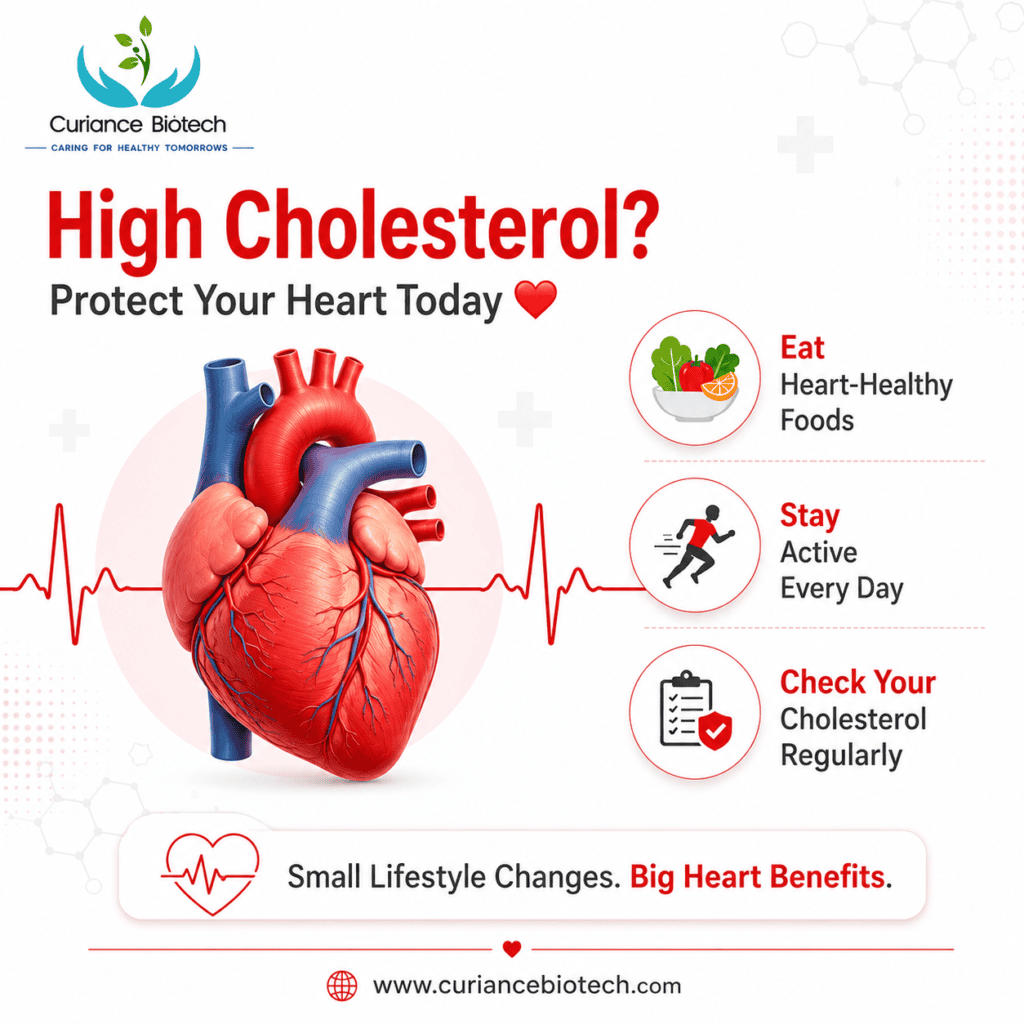
High cholesterol is often called a “silent condition” because it usually causes no noticeable symptoms until serious complications develop. Left unmanaged, high cholesterol can contribute to the buildup of plaque inside arteries, increasing the risk of heart attack, stroke, and other cardiovascular diseases.
Fortunately, cholesterol levels can often be improved through healthy lifestyle choices, regular medical check-ups, and appropriate treatment when required.
Inspired by evidence-based preventive cardiology practices followed by leading healthcare institutions such as AIIMS (All India Institute of Medical Sciences), this guide shares practical tips that can help support a healthier heart.
At Curiance Biotech, we believe that prevention begins with awareness, education, and informed healthcare decisions.
What Is Cholesterol?
Cholesterol is a waxy, fat-like substance found in every cell of the body. It is essential for producing hormones, vitamin D, and substances that help digest food.
There are two main types:
LDL (Low-Density Lipoprotein)
Often called “bad cholesterol,” LDL can build up inside arteries, narrowing blood vessels and reducing blood flow.
HDL (High-Density Lipoprotein)
Known as “good cholesterol,” HDL helps remove excess cholesterol from the bloodstream and transports it back to the liver.
Maintaining a healthy balance between LDL and HDL is important for heart health.
Why High Cholesterol Is Dangerous
When LDL cholesterol becomes too high, fatty deposits may gradually accumulate inside artery walls.
Over time, this can lead to:
- Coronary artery disease
- Heart attack
- Stroke
- Peripheral artery disease
- Reduced blood circulation
Because this process develops slowly over many years, regular cholesterol screening is important—even if you feel healthy.
Expert Tips for a Healthy Heart
1. Choose Heart-Healthy Foods
A nutritious diet is one of the most effective ways to improve cholesterol levels.
Include:
- Fresh fruits
- Green leafy vegetables
- Whole grains
- Oats
- Beans and lentils
- Nuts
- Fatty fish
- Olive oil
Limit foods high in:
- Saturated fat
- Trans fat
- Excess sugar
- Highly processed foods
Small dietary changes made consistently can have a meaningful impact on heart health.
2. Exercise Regularly
Physical activity helps:
- Raise HDL (“good”) cholesterol
- Improve blood circulation
- Maintain healthy weight
- Lower blood pressure
Aim for at least 150 minutes of moderate exercise each week, such as brisk walking, cycling, swimming, or jogging.
3. Maintain a Healthy Weight
Excess body weight is associated with:
- Higher LDL cholesterol
- Lower HDL cholesterol
- Increased blood pressure
- Greater risk of diabetes
Even modest weight loss may improve cardiovascular health.
4. Quit Smoking
Smoking damages blood vessels and accelerates plaque buildup inside arteries.
Quitting smoking can:
- Improve circulation
- Raise HDL cholesterol
- Reduce heart disease risk
- Improve lung function
5. Limit Alcohol Consumption
Excessive alcohol intake may contribute to:
- High triglycerides
- High blood pressure
- Weight gain
If you drink alcohol, do so in moderation according to your healthcare provider’s advice.
6. Manage Stress
Long-term stress may negatively affect heart health by contributing to unhealthy lifestyle habits and elevated blood pressure.
Helpful stress-management techniques include:
- Meditation
- Yoga
- Deep breathing
- Walking
- Spending time with family
- Adequate sleep
7. Get Regular Cholesterol Testing
Since high cholesterol usually causes no symptoms, routine blood tests are essential.
Adults should discuss cholesterol screening with their healthcare provider based on:
- Age
- Family history
- Diabetes
- Blood pressure
- Overall cardiovascular risk
Foods That Support Healthy Cholesterol
Heart-friendly foods include:
🥣 Oats
🥜 Almonds and walnuts
🐟 Salmon and other oily fish
🥬 Spinach and leafy greens
🫘 Lentils and beans
🍎 Apples
🥑 Avocados
🫒 Olive oil
A balanced diet supports overall cardiovascular health.
When Is Medication Needed?
Lifestyle changes remain the foundation of cholesterol management.
However, some individuals may also require cholesterol-lowering medication, particularly if they have:
- Very high LDL cholesterol
- Diabetes
- Existing heart disease
- Previous stroke
- Strong family history of cardiovascular disease
Treatment decisions should always be made in consultation with a qualified healthcare professional.
Frequently Asked Questions
Can high cholesterol be reduced naturally?
Healthy eating, regular exercise, weight management, and quitting smoking can significantly improve cholesterol levels for many people.
Does high cholesterol cause symptoms?
Usually not.
This is why routine screening is important.
Which foods should I avoid?
Limit:
- Fried foods
- Processed meats
- Sugary beverages
- Bakery products made with trans fats
- Excess saturated fat
Is cholesterol only a problem for older adults?
No.
High cholesterol can affect younger adults as well, especially those with obesity, diabetes, or a family history of cardiovascular disease.
Final Thoughts
High cholesterol is one of the most important—but also one of the most manageable—risk factors for heart disease.
Simple lifestyle changes such as eating a balanced diet, staying physically active, maintaining a healthy weight, and getting regular health check-ups can significantly improve cardiovascular health over time.
Early detection and appropriate treatment help reduce the risk of serious complications while supporting a longer, healthier life.
At Curiance Biotech, we are committed to promoting preventive healthcare through trusted, evidence-based education that empowers individuals to take charge of their heart health.
Medical Disclaimer
This article is intended for educational purposes only and should not replace professional medical advice. Always consult a qualified healthcare professional regarding cholesterol management, diagnosis, or treatment.


