
Introduction
The treatment of EGFR-mutated non-small cell lung cancer (NSCLC) has evolved significantly over the past two decades. Targeted therapies known as EGFR inhibitors have transformed patient outcomes by specifically blocking cancer cells with EGFR mutations while minimizing damage to healthy cells.
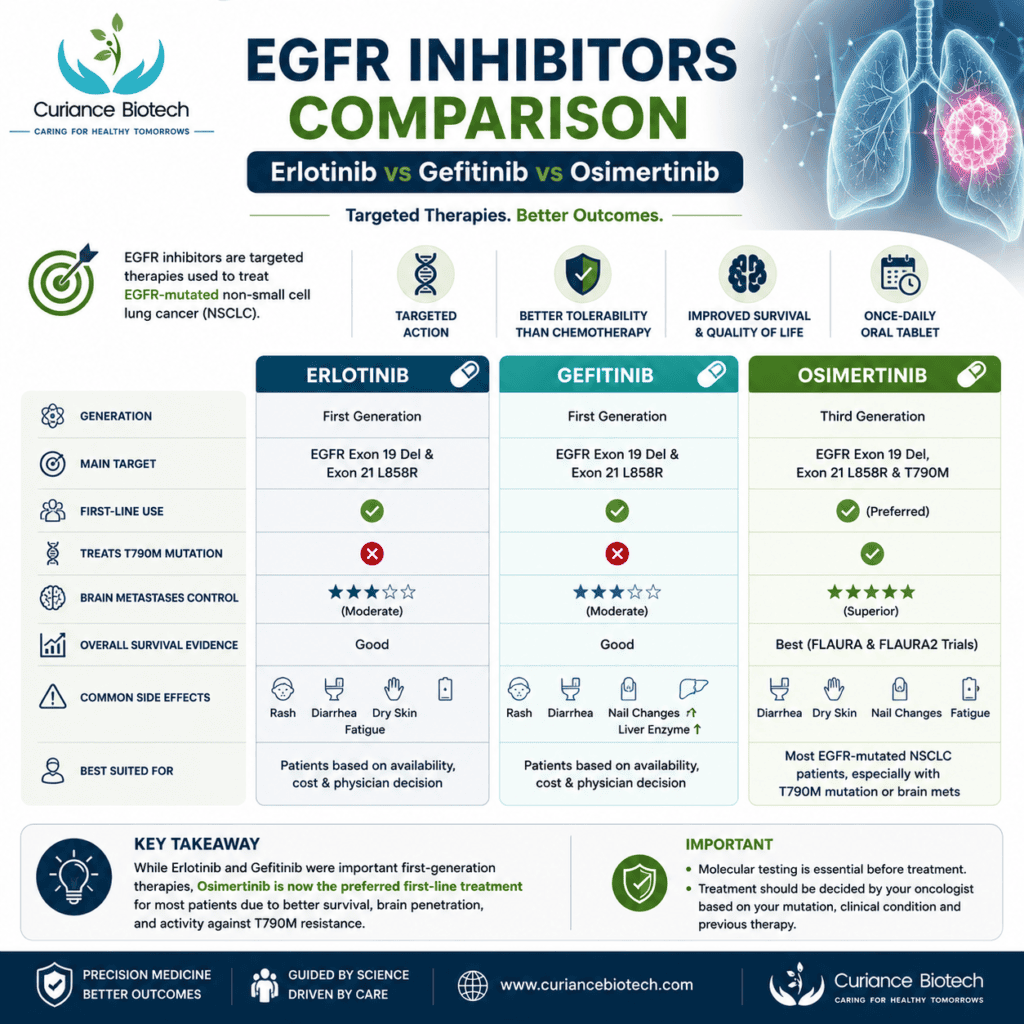
Among the most commonly used EGFR inhibitors are Erlotinib, Gefitinib, and Osimertinib. While all three target EGFR-positive lung cancer, they differ in effectiveness, resistance patterns, ability to treat brain metastases, and side effect profiles.
This guide compares these therapies to help patients and caregivers better understand their differences.
At Curiance Biotech, we are committed to improving awareness of precision oncology and supporting access to quality cancer medicines worldwide.
What Are EGFR Inhibitors?
EGFR inhibitors are targeted therapies that block abnormal signaling caused by mutations in the Epidermal Growth Factor Receptor (EGFR) gene.
These medicines help:
- Slow cancer growth
- Shrink tumors
- Delay disease progression
- Improve quality of life
They are prescribed only after molecular testing confirms an eligible EGFR mutation.
First-, Second-, and Third-Generation EGFR Inhibitors
First Generation
- Erlotinib
- Gefitinib
These reversibly bind to the EGFR receptor and were the first targeted therapies widely used for EGFR-mutated NSCLC.
Third Generation
- Osimertinib
Osimertinib was developed to overcome common resistance mutations (particularly T790M) while also improving brain penetration and reducing certain side effects.
Quick Comparison
| Feature | Erlotinib | Gefitinib | Osimertinib |
|---|---|---|---|
| Generation | First | First | Third |
| First-line EGFR NSCLC | ✅ | ✅ | ✅ Preferred |
| Treats T790M mutation | ❌ | ❌ | ✅ |
| Crosses Blood-Brain Barrier | Limited | Limited | Excellent |
| Brain Metastases Control | Moderate | Moderate | Superior |
| Overall Survival | Good | Good | Best clinical evidence |
| Once Daily Tablet | ✅ | ✅ | ✅ |
Brain Metastases: A Major Difference
One of the biggest advantages of Osimertinib is its ability to cross the blood-brain barrier.
Patients with EGFR-mutated NSCLC have a relatively high risk of developing brain metastases.
Compared with Erlotinib and Gefitinib, Osimertinib achieves:
- Higher concentrations in brain tissue
- Better CNS disease control
- Lower risk of new brain metastases
- Improved progression-free survival in patients with brain involvement
This is one of the key reasons why many international guidelines now recommend Osimertinib as the preferred first-line treatment.
Resistance: Why Treatment Changes
Most patients eventually develop resistance to first-generation EGFR inhibitors.
One of the most common resistance mechanisms is the T790M mutation.
Erlotinib
Many patients eventually develop T790M-mediated resistance.
Gefitinib
Resistance patterns are similar to Erlotinib.
Osimertinib
Designed specifically to overcome T790M resistance while also targeting common activating EGFR mutations.
Side Effects
Erlotinib
Common side effects include:
- Skin rash
- Diarrhea
- Dry skin
- Fatigue
Gefitinib
Often produces:
- Rash
- Diarrhea
- Nail changes
- Elevated liver enzymes
Osimertinib
Generally well tolerated.
Common side effects include:
- Mild diarrhea
- Dry skin
- Nail changes
- Fatigue
Serious side effects are uncommon but require medical monitoring.
Clinical Evidence
Erlotinib & Gefitinib
These medicines represented major advances when first introduced and significantly improved outcomes compared with chemotherapy.
However, resistance usually developed over time.
Osimertinib
The FLAURA trial demonstrated:
- Longer progression-free survival
- Improved overall survival
- Better brain metastases control
- Improved quality of life
More recent FLAURA2 data further strengthened its role in first-line treatment.
Which Patients Benefit Most?
Erlotinib
May be considered where appropriate based on local availability, clinical circumstances, and physician judgment.
Gefitinib
Still used in some regions depending on treatment availability and healthcare systems.
Osimertinib
Preferred for most patients with:
- EGFR Exon 19 deletion
- EGFR Exon 21 L858R mutation
- T790M-positive disease after earlier EGFR therapy
- Brain metastases
Treatment decisions should always be individualized by an oncologist.
Importance of EGFR Mutation Testing
Before prescribing any EGFR inhibitor, oncologists perform molecular testing using:
- Tissue biopsy
- Liquid biopsy (circulating tumor DNA)
Accurate testing ensures patients receive the therapy most likely to benefit them.
Accessing Osimertinib Through Curiance Biotech
If your oncologist has prescribed Osimertinib, Curiance Biotech helps patients access quality-assured oncology medicines through the Named Patient Medicine framework.
Our support includes:
- Regulatory guidance
- International documentation
- Worldwide shipping
- Patient support
- Healthcare professional assistance
We are committed to improving global access to advanced oncology therapies.
Frequently Asked Questions
Is Osimertinib better than Erlotinib?
Clinical evidence suggests Osimertinib provides longer disease control, improved overall survival, and better brain metastases management for many eligible patients.
Can Erlotinib still be used?
Yes.
Treatment depends on mutation status, previous therapies, availability, and physician recommendation.
Why is Osimertinib preferred today?
Because it:
- Targets common EGFR mutations
- Treats T790M resistance
- Better penetrates the brain
- Demonstrates improved survival outcomes
Are all EGFR inhibitors chemotherapy?
No.
All three medicines are targeted therapies, not chemotherapy.
Final Thoughts
The introduction of EGFR inhibitors transformed the treatment of EGFR-mutated lung cancer.
While Erlotinib and Gefitinib were important first-generation therapies, Osimertinib has become the preferred first-line option for many patients due to its ability to overcome resistance, treat brain metastases, and improve survival outcomes.
Every patient’s treatment journey is unique, making molecular testing and individualized oncology care essential.
At Curiance Biotech, we remain committed to supporting patients and healthcare professionals through education and improved access to quality oncology medicines worldwide.
Medical Disclaimer
This article is for educational purposes only and should not replace professional medical advice. Always consult a qualified oncologist before making treatment decisions.


