
Introduction
When people hear the words lung cancer, smoking is often the first thing that comes to mind. While smoking remains the leading risk factor, it is not the only cause of lung cancer.
In recent years, doctors and researchers have observed an increasing number of lung cancer cases among people who have never smoked. This has highlighted the important role of other risk factors, including air pollution, genetic changes, occupational exposures, radon gas, and second-hand smoke.
Understanding these lesser-known causes is essential because lung cancer can develop silently, often without noticeable symptoms in its early stages.
At CBMeds, a division of Curiance Biotech, we believe that awareness and early diagnosis play a vital role in improving outcomes for people living with lung cancer.
Smoking Remains the Biggest Risk—But Not the Only One
Cigarette smoking continues to be the leading cause of lung cancer worldwide.
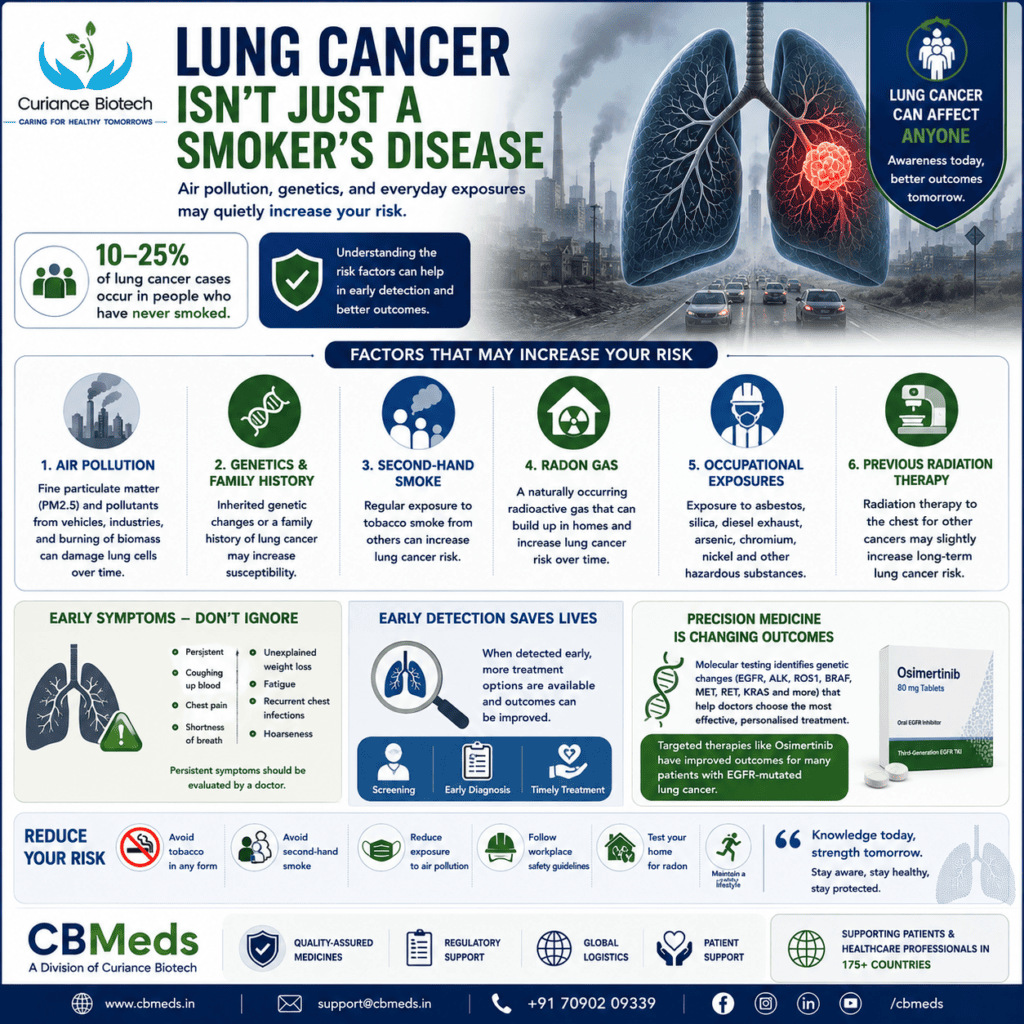
However, studies estimate that 10–25% of lung cancer cases occur in people who have never smoked, depending on the population studied.
This means that non-smokers are not immune to the disease.
Understanding additional risk factors can help individuals recognise their risk and seek medical advice when appropriate.
1. Air Pollution
Air pollution has become a growing public health concern.
Fine particulate matter (PM2.5) and other pollutants released from:
- Vehicle exhaust
- Industrial emissions
- Construction activities
- Burning of biomass and waste
can be inhaled deep into the lungs.
Long-term exposure to polluted air has been associated with an increased risk of lung cancer, particularly among non-smokers.
Reducing exposure whenever possible and supporting cleaner air initiatives are important public health measures.
2. Genetics and Family History
Some people inherit genetic variations that may increase their susceptibility to certain cancers.
A family history of lung cancer does not mean someone will definitely develop the disease, but it may contribute to overall risk.
In addition, certain genetic mutations—such as EGFR mutations—can occur within tumour cells and help guide treatment decisions after diagnosis.
This is why molecular testing has become an essential part of modern lung cancer care.
3. Second-Hand Smoke
Even if you have never smoked, regular exposure to tobacco smoke from others can increase lung cancer risk.
Second-hand smoke contains many of the same harmful chemicals inhaled by smokers.
Reducing exposure at home and in public spaces is an important preventive step.
4. Radon Gas
Radon is a naturally occurring radioactive gas that can accumulate inside homes and buildings.
It is:
- Colourless
- Odourless
- Invisible
Long-term exposure to high radon levels has been linked to an increased risk of lung cancer.
In some regions, home radon testing may be recommended.
5. Occupational Exposures
Certain workplaces expose employees to substances that may increase lung cancer risk over time.
Examples include:
- Asbestos
- Silica dust
- Diesel exhaust
- Arsenic
- Chromium compounds
- Nickel compounds
Following workplace safety regulations and using protective equipment can help reduce exposure.
6. Previous Radiation Therapy
People who have received radiation therapy to the chest for other cancers may have a slightly increased long-term risk of developing lung cancer.
The overall benefits of radiation therapy usually outweigh this risk, but ongoing follow-up remains important.
Recognising Early Symptoms
Lung cancer often develops quietly.
Symptoms may include:
- Persistent cough
- Coughing up blood
- Chest pain
- Shortness of breath
- Unexplained weight loss
- Fatigue
- Recurrent chest infections
- Hoarseness
These symptoms can have many causes, but persistent symptoms should always be evaluated by a healthcare professional.
The Importance of Early Detection
When lung cancer is detected early, treatment options are often broader and outcomes may be improved.
Depending on the stage and tumour characteristics, treatment may include:
- Surgery
- Radiation therapy
- Chemotherapy
- Immunotherapy
- Targeted therapy
Regular medical evaluation is particularly important for people at increased risk.
Precision Medicine Has Changed Lung Cancer Care
One of the biggest advances in oncology has been the use of molecular testing to identify genetic alterations that drive tumour growth.
Patients with advanced non-small cell lung cancer (NSCLC) are often tested for biomarkers such as:
- EGFR
- ALK
- ROS1
- BRAF
- MET
- RET
- KRAS
These results help oncologists select the most appropriate personalised treatment.
Targeted Therapy for EGFR-Mutated Lung Cancer
For eligible patients with EGFR-mutated NSCLC, targeted therapies such as Osimertinib have transformed treatment by offering:
- Longer progression-free survival
- Better control of brain metastases
- Improved overall outcomes in many patients
- Convenient oral treatment
Treatment decisions should always be based on molecular testing and the advice of a qualified oncologist.
Can Lung Cancer Be Prevented?
Although not every case can be prevented, individuals can reduce risk by:
- Avoiding tobacco use
- Limiting exposure to second-hand smoke
- Reducing exposure to air pollution where possible
- Following workplace safety guidelines
- Maintaining a healthy lifestyle
- Seeking medical evaluation for persistent respiratory symptoms
Prevention and early detection work together to improve outcomes.
How CBMeds Supports Patients Worldwide
CBMeds, a division of Curiance Biotech, supports healthcare professionals, hospitals, and eligible patients by facilitating responsible international access to prescribed oncology medicines.
Our services include:
- Quality-assured medicine sourcing
- Regulatory documentation guidance
- International logistics support
- Patient assistance
- Healthcare professional coordination
- Support across 175+ countries
Our commitment is to improve access to quality oncology medicines while maintaining the highest standards of safety, transparency, and regulatory compliance.
Frequently Asked Questions
Can non-smokers get lung cancer?
Yes. Although smoking is the leading risk factor, lung cancer can also occur in people who have never smoked due to factors such as air pollution, genetics, radon exposure, and occupational hazards.
Does air pollution cause lung cancer?
Long-term exposure to air pollution has been associated with an increased risk of lung cancer, particularly exposure to fine particulate matter (PM2.5).
Why is molecular testing important?
Molecular testing identifies genetic alterations that may make patients eligible for targeted therapies such as Osimertinib.
Should non-smokers worry about lung cancer?
While the overall risk is lower than for smokers, non-smokers should still seek medical evaluation if they develop persistent respiratory symptoms or have significant environmental or occupational exposures.
Final Thoughts
Lung cancer is not just a smoker’s disease.
Environmental pollution, genetic factors, workplace exposures, radon gas, and second-hand smoke all contribute to lung cancer risk, reminding us that awareness must extend beyond smoking alone.
Understanding these risk factors, recognising early symptoms, and embracing advances in molecular testing and targeted therapy can help improve outcomes for patients around the world.
At CBMeds, a division of Curiance Biotech, we remain committed to supporting healthcare professionals and patients through education, responsible medicine access, and global oncology care.
About CBMeds
CBMeds, a division of Curiance Biotech, facilitates responsible international access to quality-assured oncology medicines. Supporting patients, hospitals, and healthcare professionals in 175+ countries, CBMeds is dedicated to improving access to prescribed cancer treatments through compliant regulatory pathways and trusted global logistics.
Medical Disclaimer
This article is intended for educational purposes only and should not replace professional medical advice. Always consult a qualified healthcare professional regarding lung cancer symptoms, diagnosis, screening, or treatment.


