Introduction
Your liver is one of the hardest-working organs in your body. Every day, it performs hundreds of essential functions—from filtering toxins and producing proteins to regulating metabolism and storing nutrients.
Despite its remarkable ability to regenerate, the liver is vulnerable to damage caused by unhealthy lifestyle habits. The good news is that many liver diseases can be prevented or slowed through simple daily choices.
Whether you’re looking to improve your overall health or reduce your risk of liver disease, understanding what helps—and what harms—your liver is the first step.
At Curiance Biotech, we believe that prevention through education is one of the most powerful tools in healthcare.
Why Is Liver Health So Important?
The liver plays a vital role in keeping the body healthy by:
- Filtering toxins from the blood
- Processing nutrients from food
- Producing bile for digestion
- Regulating cholesterol
- Storing vitamins and minerals
- Helping control blood sugar
- Producing proteins needed for blood clotting
When the liver becomes damaged, many of these functions can be affected.
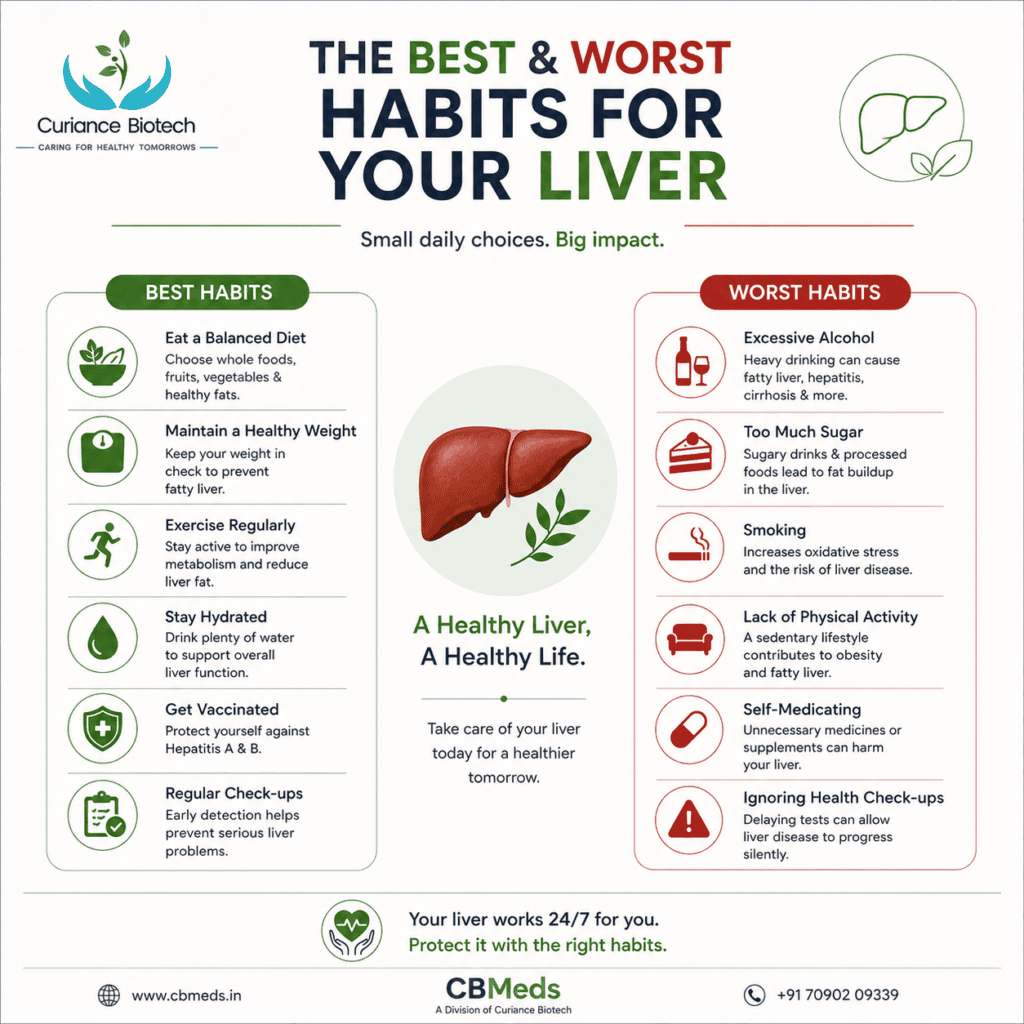
The Best Habits for a Healthy Liver
1. Eat a Balanced Diet
A nutritious diet supports liver function and helps prevent fatty liver disease.
Include:
🥦 Green vegetables
🍎 Fresh fruits
🌾 Whole grains
🐟 Lean proteins
🥜 Nuts and seeds
🫒 Healthy fats like olive oil
Limiting processed foods and added sugars can also benefit liver health.
2. Maintain a Healthy Weight
Excess body fat—especially around the abdomen—increases the risk of Non-Alcoholic Fatty Liver Disease (NAFLD).
Even modest weight loss may improve liver health in overweight individuals.
3. Exercise Regularly
Physical activity helps:
- Reduce liver fat
- Improve insulin sensitivity
- Maintain healthy weight
- Lower inflammation
Aim for at least 150 minutes of moderate exercise per week.
4. Stay Hydrated
Drinking enough water supports many normal bodily functions, including overall metabolic health.
While water doesn’t “detox” the liver directly, staying hydrated supports healthy body function.
5. Get Vaccinated
Vaccines are available for:
- Hepatitis A
- Hepatitis B
Vaccination is an effective way to reduce the risk of viral liver infections.
6. Use Medicines Responsibly
Always follow your healthcare provider’s instructions.
Some medicines—including over-the-counter pain relievers—can cause liver damage if taken incorrectly or in excessive amounts.
Never exceed recommended doses.
7. Get Regular Health Check-ups
Routine medical examinations and blood tests can help identify liver problems before symptoms appear.
Early detection often leads to better outcomes.
The Worst Habits for Your Liver
1. Excessive Alcohol Consumption
Heavy alcohol use remains one of the leading causes of liver disease.
Long-term excessive drinking may lead to:
- Fatty liver
- Alcoholic hepatitis
- Cirrhosis
- Liver failure
If you drink alcohol, do so responsibly and follow your healthcare provider’s guidance.
2. Eating Too Much Sugar
High intake of sugary beverages and processed foods may contribute to fatty liver disease.
Excess sugar can be converted into fat and stored in the liver.
3. Smoking
Smoking increases oxidative stress throughout the body and has been linked to several liver diseases.
Quitting smoking benefits both liver and overall health.
4. Lack of Physical Activity
A sedentary lifestyle contributes to:
- Obesity
- Insulin resistance
- Fatty liver disease
Regular movement is essential for long-term liver health.
5. Self-Medicating
Taking herbal supplements or medications without medical advice may damage the liver.
“Natural” does not always mean safe.
Always consult a healthcare professional before starting supplements.
6. Ignoring Routine Health Screenings
Many liver conditions cause few or no symptoms in their early stages.
Delaying medical evaluation may allow liver disease to progress unnoticed.
Signs That Should Not Be Ignored
Consult a healthcare professional if you experience:
- Persistent fatigue
- Yellowing of the skin or eyes (jaundice)
- Dark urine
- Abdominal swelling
- Persistent nausea
- Unexplained weight loss
- Pain in the upper right abdomen
These symptoms may have many causes and require proper medical evaluation.
Foods That Support Liver Health
Foods commonly included in a liver-friendly diet include:
🥬 Leafy green vegetables
🫐 Berries
🥜 Walnuts
☕ Coffee (in moderation, if appropriate)
🐟 Fatty fish rich in omega-3 fatty acids
🌾 Whole grains
🍊 Citrus fruits
A balanced diet remains the most important nutritional strategy.
Frequently Asked Questions
Can the liver repair itself?
Yes.
The liver has a remarkable ability to regenerate, particularly when damage is detected early and the underlying cause is addressed.
Is fatty liver reversible?
In many cases, early-stage fatty liver disease can improve through weight management, healthy eating, and regular exercise.
Treatment depends on the underlying cause.
Does drinking lots of water detox the liver?
The liver naturally detoxifies the body.
Drinking enough water supports overall health but does not directly “cleanse” the liver.
Should healthy people have liver tests?
Routine health check-ups may include liver function tests depending on age, medical history, medications, and individual risk factors.
Discuss screening with your healthcare provider.
Final Thoughts
Your liver quietly performs hundreds of essential functions every day, yet it often receives little attention until problems develop.
Fortunately, many liver diseases are influenced by lifestyle choices. Eating a balanced diet, staying active, maintaining a healthy weight, limiting alcohol, and attending regular health check-ups can make a significant difference in protecting liver health.
Small daily habits, practiced consistently, often have the greatest long-term impact.
At Curiance Biotech, we are committed to promoting preventive healthcare through reliable, evidence-based medical education that empowers individuals to make informed decisions about their health.
Medical Disclaimer
This article is intended for educational purposes only and should not replace professional medical advice. Always consult a qualified healthcare professional regarding liver disease, diagnosis, treatment, or medical concerns.


