
Introduction
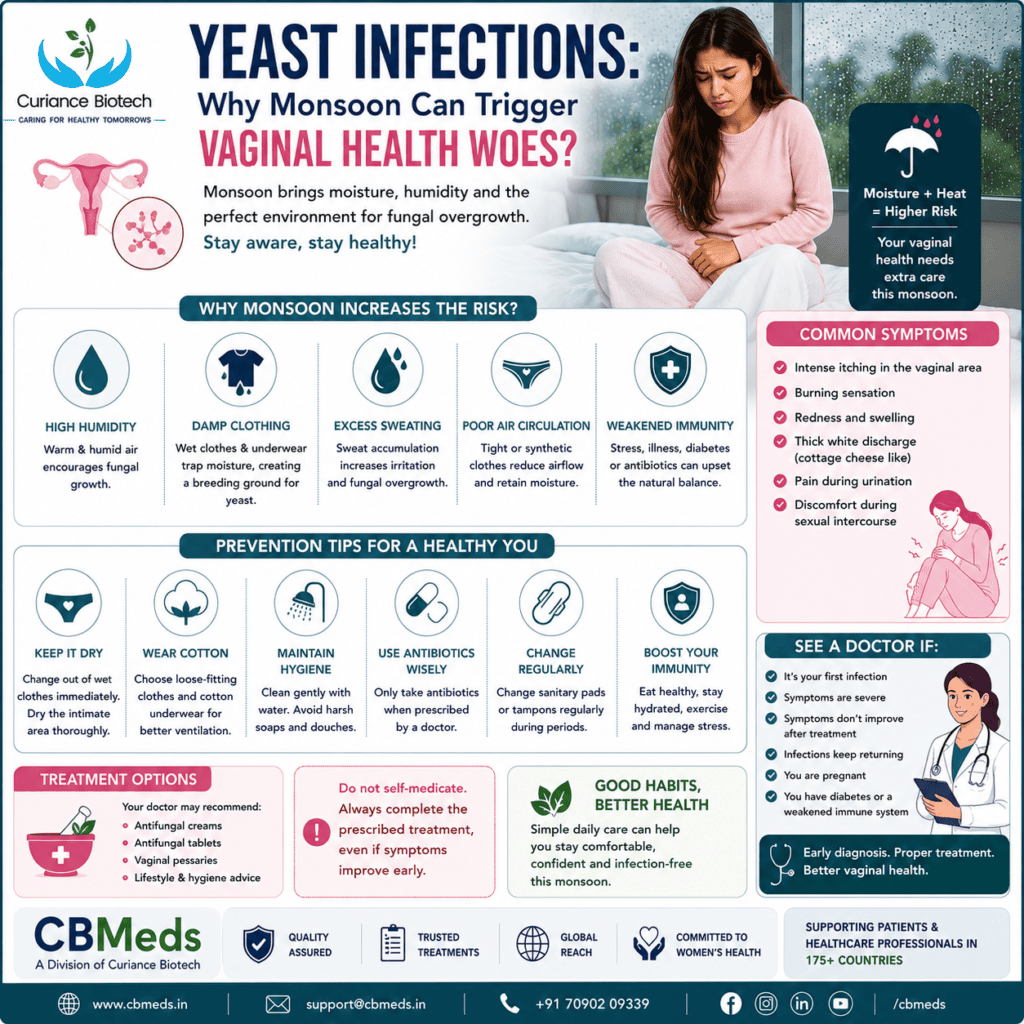
The monsoon season brings welcome relief from the summer heat, but it also creates the perfect environment for fungal infections. Increased humidity, damp clothing, excessive sweating, and poor ventilation can disrupt the natural balance of the vaginal environment, making vaginal yeast infections more common.
While yeast infections are usually treatable, they can cause significant discomfort if ignored. Understanding why they occur during the rainy season—and how to prevent them—can help women maintain better intimate health.
At Curiance Biotech, we believe that awareness and early care are key to supporting women’s health throughout every season.
What Is a Vaginal Yeast Infection?
A vaginal yeast infection, also known as vaginal candidiasis, is a common fungal infection caused by an overgrowth of Candida, a type of yeast that naturally lives in the body.
Under normal conditions, healthy bacteria keep Candida under control. However, certain factors can disturb this balance, allowing the fungus to multiply and cause infection.
Why Are Yeast Infections More Common During Monsoon?
1. High Humidity
The rainy season creates warm and humid conditions that encourage fungal growth.
Excess moisture around the intimate area can make it easier for yeast to multiply.
2. Damp Clothing
Remaining in wet clothes after getting caught in the rain or wearing damp underwear for long periods can increase moisture around the genital area.
This creates an environment where fungi thrive.
3. Excessive Sweating
High humidity often causes increased sweating.
If sweat remains trapped in tight clothing, irritation and fungal overgrowth may occur.
4. Poor Air Circulation
Tight jeans, synthetic underwear, or non-breathable fabrics reduce airflow and retain moisture.
Cotton underwear allows better ventilation and helps keep the area dry.
5. Weakened Immunity
Individuals with weakened immune systems or chronic conditions such as diabetes may be more susceptible to yeast infections.
Common Symptoms
Symptoms may include:
- Intense vaginal itching
- Burning sensation
- Redness or swelling
- Thick white discharge resembling cottage cheese
- Pain during urination
- Discomfort during sexual intercourse
Symptoms can vary in severity, and similar symptoms may occur with other vaginal infections.
Who Is at Higher Risk?
You may have a higher chance of developing a yeast infection if you:
- Have uncontrolled diabetes
- Recently used antibiotics
- Are pregnant
- Have a weakened immune system
- Frequently wear tight or synthetic clothing
- Stay in damp clothes for long periods
How to Prevent Yeast Infections During Monsoon
Keep the Area Dry
Always change out of wet clothes as soon as possible.
Dry yourself thoroughly after bathing or getting caught in the rain.
Wear Breathable Fabrics
Choose loose-fitting clothing and cotton underwear that allow proper airflow.
Avoid wearing tight leggings or jeans for extended periods.
Maintain Good Hygiene
Wash the external genital area gently with water.
Avoid excessive washing or using harsh soaps, as these may disturb the natural vaginal balance.
Avoid Unnecessary Antibiotics
Antibiotics can reduce beneficial bacteria that help control yeast growth.
Only take antibiotics when prescribed by a healthcare professional.
Change Sanitary Products Regularly
During menstruation, change sanitary pads or tampons regularly to maintain hygiene and reduce prolonged moisture.
Support Overall Health
Maintaining a balanced diet, staying hydrated, exercising regularly, and managing chronic conditions like diabetes can support overall immune health.
When Should You See a Doctor?
Consult a healthcare professional if:
- It is your first suspected yeast infection
- Symptoms are severe
- Symptoms do not improve after treatment
- Infections keep returning
- You are pregnant
- You have diabetes or a weakened immune system
A proper diagnosis is important because bacterial vaginosis, sexually transmitted infections (STIs), and other conditions can produce similar symptoms.
Treatment Options
Treatment depends on the severity and cause of the infection.
Your doctor may recommend:
- Antifungal vaginal creams
- Antifungal tablets
- Vaginal pessaries
- Lifestyle and hygiene advice
Always complete the prescribed treatment even if symptoms improve early.
Common Myths
Myth: Poor hygiene is the only cause.
Fact: Yeast infections can occur even in women with good hygiene due to humidity, antibiotics, hormonal changes, or other factors.
Myth: Yeast infections are always sexually transmitted.
Fact: Yeast infections are generally not considered sexually transmitted infections (STIs), although sexual activity may contribute to irritation or symptom recurrence in some individuals.
Myth: Home remedies always work.
Fact: Some home remedies lack strong scientific evidence. Persistent symptoms should always be evaluated by a healthcare professional.
Frequently Asked Questions
Can monsoon weather really increase yeast infections?
Yes. Warm, humid conditions can create an environment that promotes fungal growth.
Can I prevent yeast infections completely?
Not always, but maintaining good hygiene, wearing breathable clothing, and avoiding prolonged moisture can reduce the risk.
Is a yeast infection dangerous?
Most yeast infections are not serious and respond well to appropriate treatment. However, recurrent or severe infections should be medically evaluated.
Should I self-medicate?
It is best to consult a healthcare professional, especially if it is your first infection or symptoms recur frequently.
Final Thoughts
Monsoon brings beautiful weather, but it also increases the risk of fungal infections due to excess moisture and humidity.
Simple habits—such as wearing breathable clothing, staying dry, maintaining intimate hygiene, and seeking timely medical advice—can significantly reduce your risk of vaginal yeast infections.
If symptoms persist or return frequently, consult a qualified healthcare professional for an accurate diagnosis and appropriate treatment.
At Curiance Biotech, we are committed to promoting women’s health through trusted medical education and awareness.
Medical Disclaimer
This article is intended for educational purposes only and should not replace professional medical advice. Always consult a qualified healthcare professional regarding diagnosis, treatment, or persistent vaginal symptoms.


