
Introduction
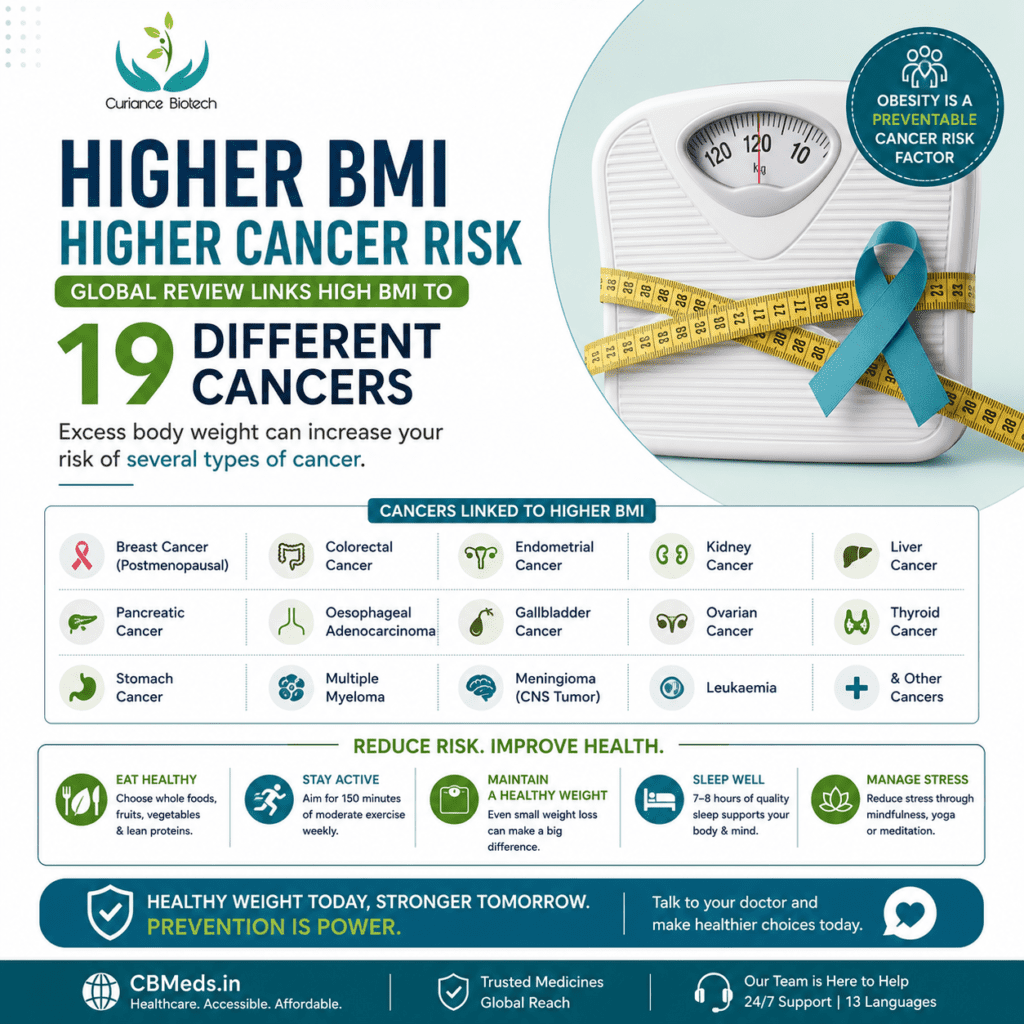
A growing body of scientific evidence continues to reinforce a concerning reality: excess body weight is linked to an increased risk of cancer. A recent global review has expanded our understanding of this relationship, finding that a higher Body Mass Index (BMI) is associated with a greater risk of developing at least 19 different types of cancer.
While obesity has long been recognised as a major risk factor for conditions such as heart disease, diabetes, and hypertension, researchers are increasingly highlighting its role in cancer development. The findings add to mounting evidence that maintaining a healthy weight is not only important for metabolic health but may also play a critical role in cancer prevention.
As obesity rates continue to rise worldwide, understanding the connection between body weight and cancer has become an urgent public health priority.
Understanding BMI
Body Mass Index (BMI) is a simple measurement used to estimate whether a person’s weight falls within a healthy range for their height.
BMI is calculated by dividing weight in kilograms by the square of height in metres.
Generally:
- Underweight: BMI below 18.5
- Healthy weight: BMI 18.5–24.9
- Overweight: BMI 25–29.9
- Obesity: BMI 30 or higher
Although BMI does not directly measure body fat, it remains one of the most widely used tools for assessing population-level weight-related health risks.
What Did the Global Review Find?
The latest review analysed data from multiple international studies involving millions of participants across different populations and regions.
Researchers found strong evidence linking higher BMI to increased risk for 19 cancers, including:
- Breast cancer (postmenopausal)
- Colorectal cancer
- Endometrial cancer
- Kidney cancer
- Liver cancer
- Pancreatic cancer
- Oesophageal adenocarcinoma
- Gallbladder cancer
- Ovarian cancer
- Thyroid cancer
- Stomach cancer
- Multiple myeloma
- Meningioma
- Leukaemia
The findings suggest that the relationship between obesity and cancer may be broader than previously understood.
Why Does Excess Weight Increase Cancer Risk?
Scientists believe several biological mechanisms explain how obesity contributes to cancer development.
Chronic Inflammation
One of the most important factors is chronic low-grade inflammation.
Excess fat tissue produces inflammatory substances that remain elevated over long periods.
Persistent inflammation can:
- Damage DNA
- Promote abnormal cell growth
- Create conditions that support tumour development
Unlike short-term inflammation that helps the body heal, chronic inflammation may increase cancer risk over time.
Hormonal Changes
Body fat is not simply an energy storage tissue.
It also functions as an active endocrine organ that produces hormones.
Higher body fat levels can alter concentrations of:
- Estrogen
- Insulin
- Leptin
- Growth factors
These hormonal changes may stimulate cell growth and increase the likelihood of cancerous changes.
Estrogen and Cancer
Excess fat tissue can increase estrogen production, particularly after menopause.
Elevated estrogen levels have been linked to increased risk of:
- Breast cancer
- Endometrial cancer
- Ovarian cancer
This helps explain why obesity is strongly associated with several hormone-related cancers.
Insulin Resistance and Cancer
Obesity frequently leads to insulin resistance, a condition in which the body’s cells become less responsive to insulin.
As a result:
- Blood insulin levels rise
- Growth signals increase
- Cellular proliferation may accelerate
Researchers believe these effects can contribute to tumour growth and cancer progression.
Immune System Dysfunction
The immune system plays a critical role in identifying and destroying abnormal cells before they become cancerous.
Obesity can impair immune function by:
- Altering immune cell activity
- Increasing inflammatory responses
- Reducing surveillance against abnormal cells
This weakened defence system may allow cancer cells to survive and multiply.
The Growing Global Obesity Crisis
The significance of these findings becomes even greater when viewed alongside rising obesity rates worldwide.
According to international health organisations:
- Obesity rates have more than doubled in many countries over recent decades.
- Hundreds of millions of adults are now classified as obese.
- Childhood obesity continues to increase globally.
Public health experts warn that obesity-related cancers may become increasingly common if current trends continue.
Cancer Types Most Strongly Linked to Obesity
While obesity appears to influence many cancers, certain types show particularly strong associations.
Endometrial Cancer
Endometrial cancer has one of the strongest known links to obesity.
Research suggests that women with obesity may face several times the risk compared with women of healthy weight.
Oesophageal Adenocarcinoma
Excess weight significantly increases the risk of this cancer, partly due to increased acid reflux and inflammation.
Liver Cancer
Obesity contributes to fatty liver disease, which can progress to liver damage and increase cancer risk.
Kidney Cancer
Multiple studies have consistently shown a relationship between higher BMI and kidney cancer development.
Obesity and Breast Cancer
Breast cancer remains one of the most studied obesity-related cancers.
In postmenopausal women, obesity is associated with:
- Increased breast cancer risk
- Greater likelihood of recurrence
- Reduced treatment effectiveness in some cases
Weight management is increasingly recognised as an important component of breast cancer prevention strategies.
Can Weight Loss Reduce Cancer Risk?
One of the most encouraging findings from obesity research is that weight loss appears to provide health benefits.
Studies suggest that achieving and maintaining a healthier weight may:
- Reduce inflammation
- Improve insulin sensitivity
- Normalize hormone levels
- Lower cancer risk over time
Even modest weight loss can produce meaningful health improvements.
While no intervention can completely eliminate cancer risk, maintaining a healthy weight is considered one of the most effective preventive measures available.
Lifestyle Factors That Support Healthy Weight
Cancer prevention experts recommend focusing on sustainable lifestyle habits rather than short-term diets.
Balanced Nutrition
A healthy diet should emphasise:
- Fruits and vegetables
- Whole grains
- Lean proteins
- Healthy fats
Limiting processed foods and sugary beverages may help support healthy weight management.
Regular Physical Activity
Exercise contributes to:
- Weight control
- Improved metabolic health
- Reduced inflammation
- Better immune function
Most health organisations recommend at least 150 minutes of moderate physical activity each week.
Adequate Sleep
Poor sleep can influence:
- Appetite regulation
- Hormonal balance
- Weight gain
Maintaining healthy sleep habits is an often-overlooked component of long-term health.
Stress Management
Chronic stress may contribute to unhealthy eating patterns and weight gain.
Strategies such as:
- Meditation
- Yoga
- Walking
- Social support
can help improve overall well-being.
Public Health Implications
The expanding evidence linking obesity and cancer has important implications for healthcare systems worldwide.
Prevention efforts may need to focus not only on smoking cessation and cancer screening but also on:
- Healthy nutrition
- Physical activity promotion
- Obesity prevention
- Weight management support
Experts increasingly view obesity reduction as a key cancer prevention strategy.
The Role of Early Awareness
Many people remain unaware that obesity is linked to cancer.
Surveys consistently show that public awareness of obesity-related cancer risks is lower than awareness of smoking-related risks.
Educational initiatives can help individuals make informed lifestyle choices and understand the long-term health consequences of excess weight.
Future Research
Researchers continue investigating:
- How obesity influences specific cancer pathways
- Which patients face the highest risks
- Whether weight-loss interventions reduce cancer incidence
- The biological mechanisms connecting obesity and tumour growth
Future discoveries may help develop more targeted prevention and treatment approaches.
Conclusion
The latest global review provides compelling evidence that higher BMI is associated with increased risk for at least 19 different cancers. These findings reinforce the growing understanding that obesity is not only a metabolic condition but also a major contributor to cancer development.
Although cancer risk is influenced by many factors—including genetics, age, environment, and lifestyle—maintaining a healthy weight remains one of the most important steps individuals can take to protect their long-term health.
As obesity rates continue to rise worldwide, greater awareness, preventive strategies, and public health initiatives will be essential in reducing the future burden of obesity-related cancers.
The message from researchers is increasingly clear: healthy weight management is not just about appearance or fitness—it may be one of the most powerful tools available for cancer prevention.


