Protein is one of the most important nutrients your body needs, yet it’s often the most misunderstood. Many people think protein is only meant for bodybuilders or athletes, but in reality, every single cell in your body depends on protein.
From your muscles and skin to your hormones, enzymes, and immune system — protein plays a vital role in keeping you healthy and functioning properly. When your protein intake is low, your body starts showing warning signs. Unfortunately, most people ignore these signs or mistake them for stress, ageing, or lack of sleep.
Let’s break down 5 clear signs that you’re not getting enough protein, why they happen, and how you can fix them.
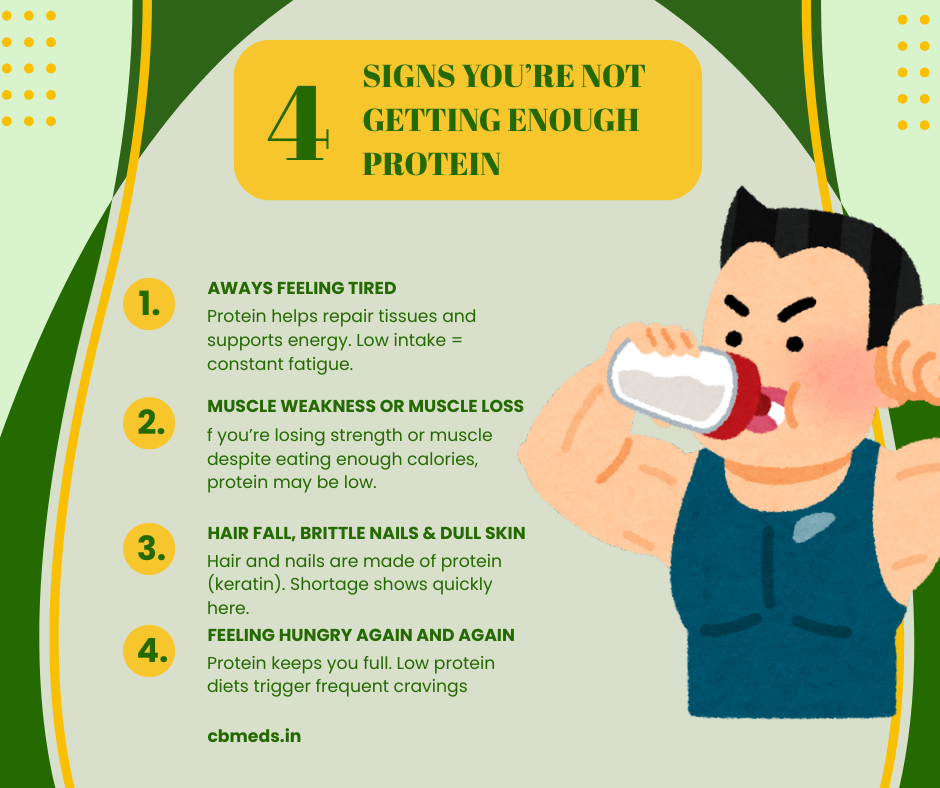
1️⃣ Constant Fatigue and Low Energy
Do you feel tired even after a full night’s sleep?
Do simple daily tasks feel exhausting?
This could be a protein problem.
Why it happens:
Protein helps your body:
- Maintain muscle mass
- Produce enzymes and hormones
- Stabilise blood sugar levels
When protein intake is low, your body struggles to maintain steady energy. Blood sugar levels fluctuate more, causing energy crashes and constant tiredness.
Over time, your body may even start breaking down muscle tissue to meet essential protein needs, making fatigue worse.
What to do:
Include a protein source in every major meal. Even small additions can make a big difference.
2️⃣ Muscle Weakness or Muscle Loss
If you’re feeling weaker than usual or noticing loss of muscle tone — even without weight loss — low protein could be the reason.
Why it happens:
Your muscles are made primarily of protein. When your diet doesn’t supply enough, your body enters a survival mode and starts breaking down muscle tissue to support vital functions like breathing and organ repair.
This can happen even if:
- You’re not working out
- You’re eating enough calories
- You feel “normal” otherwise
Loss of muscle doesn’t always show on the weighing scale, but it reduces strength, balance, and metabolism.
What to do:
Protein intake becomes even more important as we age, because muscle loss accelerates naturally over time.
3️⃣ Hair Fall, Brittle Nails & Dull Skin
One of the earliest visible signs of protein deficiency appears in your hair, skin, and nails.
Why it happens:
Hair and nails are made of keratin, a type of protein. When protein intake is insufficient, your body prioritises essential organs over hair and nails.
Common signs include:
- Excessive hair fall
- Thinning hair
- Brittle or peeling nails
- Dry, dull-looking skin
This is why many people experience hair fall even after using expensive shampoos or treatments — the issue is internal, not external.
What to do:
Nutrition always comes before cosmetics. No oil or serum can fix a protein deficiency.
4️⃣ Constant Hunger and Cravings
Do you feel hungry shortly after meals?
Do you crave snacks, sweets, or junk food often?
Low protein could be the hidden reason.
Why it happens:
Protein is the most satiating macronutrient. It slows digestion, stabilises blood sugar, and keeps you full for longer.
When your meals lack protein:
- You feel hungry quickly
- Cravings increase
- Overeating becomes common
This often leads to weight gain, even if total food quantity doesn’t seem excessive.
What to do:
Adding protein to meals naturally reduces unnecessary snacking and improves portion control — without dieting.
5️⃣ Slow Recovery from Workouts, Injury, or Illness
If your body takes longer to recover after:
- Exercise
- Injury
- Fever or illness
Protein intake may be insufficient.
Why it happens:
Protein is essential for:
- Tissue repair
- Muscle recovery
- Immune response
Without enough protein, healing slows down, soreness lasts longer, and immunity weakens. You may find yourself falling sick more often or feeling “not fully recovered” for days.
What to do:
Recovery is not just about rest — it’s about nutrition. Protein is the building block your body uses to heal itself.
🥗 How Much Protein Do You Actually Need?
Protein needs vary depending on:
- Age
- Activity level
- Body weight
- Health goals
A general guideline:
- Sedentary adults: 0.8 g per kg body weight
- Active individuals: 1.0–1.5 g per kg
- Muscle building or recovery: 1.5–2.0 g per kg
Many people consume far less than this without realising it.
🍽️ Easy Protein Sources to Add Daily
You don’t need fancy supplements. Simple foods work best:
Vegetarian options:
- Dal & lentils
- Paneer & curd
- Milk
- Soy, tofu
- Nuts & seeds
Non-vegetarian options:
- Eggs
- Chicken
- Fish
- Lean meat
👉 Tip: Try to include at least one protein source per meal.
🧩 Final Thoughts
Protein deficiency doesn’t happen overnight — it builds slowly and silently. The body gives signals, but we often ignore them until bigger problems arise.
If you’re experiencing:
- Low energy
- Hair fall
- Weakness
- Frequent hunger
- Slow recovery
It may be time to re-evaluate your protein intake.
Eating enough protein is not about dieting or bodybuilding — it’s about basic health, strength, and longevity.


