
For years, the idea of walking 10,000 steps a day has been promoted as the gold standard for good health. Fitness trackers buzz, smartphones celebrate milestones, and wellness challenges revolve around this single number. But have you ever stopped to wonder where this target came from — and whether it truly applies to everyone?
As our understanding of health and fitness evolves, so does the conversation around daily movement. Let’s explore the origins of the 10,000-step rule, what modern science says, and how you can set a step goal that actually works for your body and lifestyle.
The Origin of the 10,000-Step Goal
Interestingly, the 10,000-step benchmark didn’t originate from scientific research. It dates back to Japan in the 1960s, when a pedometer called Manpo-kei (meaning “10,000-step meter”) was launched as part of a marketing campaign. The number was easy to remember, sounded ambitious, and encouraged people to move more.
Over time, this catchy goal became deeply embedded in global fitness culture. While it certainly helped popularise walking as exercise, it wasn’t initially grounded in medical evidence.
What Does Science Say Today?
Modern research paints a more nuanced picture.
Multiple large-scale studies now suggest that health benefits begin well before 10,000 steps. In fact:
- Around 4,000 steps per day significantly reduce the risks associated with a sedentary lifestyle
- 6,000 to 8,000 steps are linked to improved heart health and lower risk of early mortality
- Beyond 8,000–10,000 steps, benefits tend to level off for most adults
This means you don’t need to reach 10,000 steps daily to see meaningful improvements in health. For many people, aiming lower — especially at the beginning — can still deliver powerful results.
Is 10,000 Steps Still a Good Goal?
Yes — but it’s not a universal requirement.
For active individuals, athletes, or people with physically demanding routines, 10,000 steps may feel natural and achievable. For others — particularly beginners, older adults, or those with health conditions — it can be unrealistic and even discouraging.
The best step goal depends on factors such as:
- Age
- Fitness level
- Occupation
- Daily routine
- Existing medical conditions
Rather than chasing a fixed number, it’s more effective to focus on progress and consistency.
Why Quality of Movement Matters More Than Quantity
Not all steps provide the same benefits.
A slow stroll while scrolling on your phone is very different from a brisk, intentional walk that raises your heart rate. Research shows that walking intensity plays a major role in improving cardiovascular health.
Adding even short periods of faster walking, gentle inclines, or purposeful movement can significantly enhance the impact of your daily steps.
Consistency is equally important. Walking 6,000 steps every day is far more beneficial than hitting 12,000 once a week and remaining inactive the rest of the time.
How Many Steps Should You Aim For?
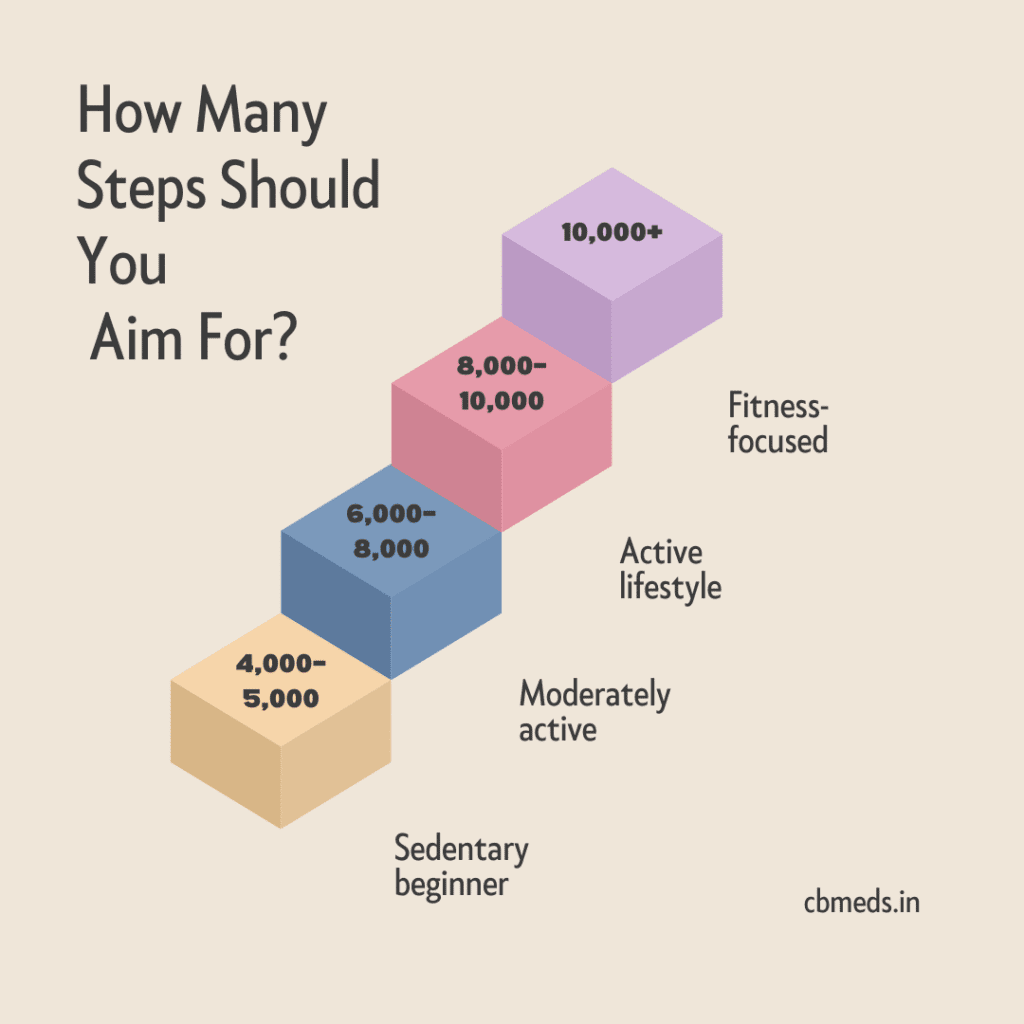
Instead of one-size-fits-all advice, consider these general ranges:
- Sedentary lifestyle: 4,000–5,000 steps/day
- Moderately active: 6,000–8,000 steps/day
- Active lifestyle: 8,000–10,000 steps/day
- Highly active or fitness-focused: 10,000+ steps/day
If you’re currently inactive, even adding 1,000 extra steps per day can lead to noticeable health improvements.
Health Benefits of Walking — Beyond Numbers
Regardless of the exact step count, regular walking offers a wide range of benefits:
- Improved heart and lung health
- Better blood sugar control
- Reduced stress and anxiety
- Improved digestion
- Better sleep quality
- Enhanced joint mobility
- Improved mood and mental clarity
Walking is low-impact, accessible, and sustainable — making it one of the best forms of exercise for long-term health.
Simple Ways to Increase Daily Steps Naturally
If hitting a step goal feels overwhelming, try integrating movement into your routine:
- Take short walks after meals
- Walk while talking on phone calls
- Use stairs instead of lifts
- Park farther from entrances
- Take a 10-minute evening walk
- Break long sitting periods with short movement breaks
These small habits accumulate over time and make staying active feel effortless.
The Final Verdict
So, is 10,000 steps really the magic number?
Not exactly.
The real magic lies in moving regularly, consistently, and mindfully. Whether your goal is 5,000 steps or 10,000, what matters most is that you’re reducing sedentary time and making movement a daily habit.
Instead of stressing over numbers, focus on this simple principle:
Move more than yesterday.
That’s where true health begins.


