
Cervical cancer is often described as one of the most preventable forms of cancer—and for good reason. With regular screening and early detection, the chances of preventing cervical cancer or catching it at an early, highly treatable stage are extremely high. Yet, many women delay or skip screening due to fear, misinformation, or the belief that it’s unnecessary if they feel healthy.
In reality, cervical cancer screening is surrounded by myths, half-truths, and outdated information. Understanding how screening works—and why it matters—can empower women to take control of their reproductive health.
Here are five important facts about cervical cancer screening that many people don’t know, but absolutely should.
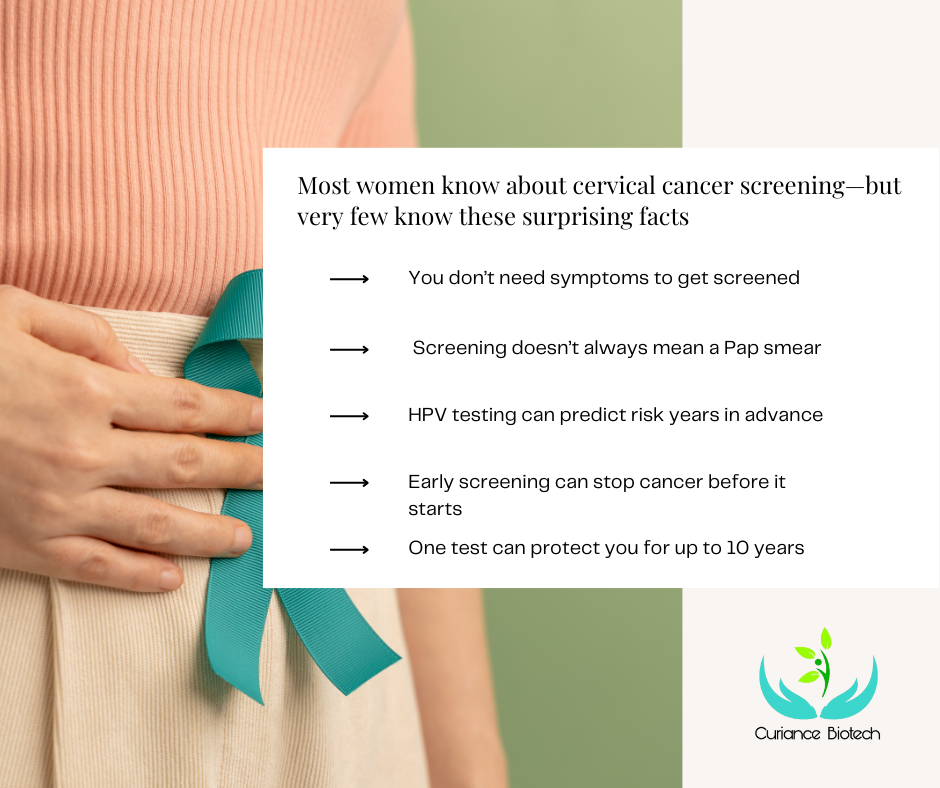
Fact 1: Cervical Cancer Screening Is About Prevention, Not Just Detection
One of the biggest misconceptions is that cervical cancer screening is designed only to detect cancer. In truth, its primary purpose is prevention.
Most cervical cancers develop slowly over many years. Before cancer forms, abnormal changes occur in the cervical cells. Screening tests are designed to identify these early cellular changes—long before they turn into cancer.
When these changes are found early:
- They can be monitored
- They can often be treated simply
- Cancer can be completely prevented
This is what makes cervical cancer screening so powerful. It doesn’t just save lives—it stops cancer before it begins.
Fact 2: You Don’t Need Symptoms to Get Screened
Many women assume screening is only necessary if they experience symptoms such as pain, abnormal bleeding, or discomfort. This belief is dangerous.
Early cervical changes rarely cause symptoms.
By the time symptoms appear, the disease may already be at an advanced stage.
Screening is recommended even if:
- You feel perfectly healthy
- You have no pain or discomfort
- Your periods are normal
- You are not sexually active anymore
Waiting for symptoms defeats the purpose of screening. Cervical cancer screening works best when done before anything feels wrong.
Fact 3: A Pap Test Is Not the Only Screening Option
For many years, the Pap smear was the standard screening test—and many people still believe it’s the only one available. Today, screening has evolved.
There are three main approaches used in different age groups and settings:
🔹 Pap Test (Pap Smear)
This test looks for abnormal cervical cells that may develop into cancer. It has been used for decades and remains effective.
🔹 HPV Test
This test checks for high-risk types of human papillomavirus (HPV), the virus responsible for most cervical cancers. It can detect risk years before abnormal cells appear.
🔹 Co-testing
This combines both the Pap test and HPV test for more comprehensive screening in certain age groups.
In many guidelines, HPV testing is now preferred for women over a certain age because it provides longer-lasting reassurance when results are negative.
Fact 4: A Negative Screening Test Can Protect You for Years
Another little-known fact is that you may not need screening every year, depending on your age and the type of test used.
If your screening result is normal:
- Pap tests may only be needed every few years
- HPV tests can offer protection for up to 5–10 years
This doesn’t mean screening is optional—it means modern screening is smarter, not more frequent.
Many women skip screening because they think it’s something they must do every year. In reality, following the correct interval makes screening easier, less stressful, and more accessible.
Fact 5: Screening Is Important Even After HPV Vaccination
The HPV vaccine is a major breakthrough in cervical cancer prevention—but it does not replace screening.
Here’s why:
- The vaccine does not cover all cancer-causing HPV types
- Some women may have been exposed to HPV before vaccination
- Screening detects existing cellular changes, not just infection
Even vaccinated women can benefit from regular screening. The combination of vaccination and screening offers the strongest protection against cervical cancer.
Why Many Women Avoid Screening—and Why They Shouldn’t
Despite its proven benefits, cervical cancer screening rates remain low in many regions. Common reasons include:
- Fear of pain or discomfort
- Embarrassment
- Lack of time
- Cultural stigma
- Fear of bad news
The truth is:
- Screening is usually quick and safe
- Discomfort is minimal and temporary
- Finding a problem early is far better than finding it late
Avoiding screening does not eliminate risk—it increases it.
Who Should Get Screened and When?
Screening recommendations vary by age, health history, and local guidelines, but general principles include:
- Begin screening in early adulthood
- Continue screening regularly through midlife
- Do not stop screening without medical advice
- Follow test intervals recommended for your age group
Individual risk factors—such as smoking, immune conditions, or family history—may influence screening needs.
The Bigger Picture: Screening Saves Lives
Countries with strong cervical cancer screening programs have seen dramatic reductions in:
- Cervical cancer cases
- Advanced-stage diagnoses
- Cervical cancer-related deaths
This proves one thing clearly: screening works.
Cervical cancer should no longer be a leading cause of death when effective prevention tools are available. Awareness, access, and action are the keys.
Final Thoughts
Cervical cancer screening is not something to fear—it’s something to embrace. It represents one of the greatest success stories in preventive healthcare.
To recap, here’s what many people don’t realise:
- Screening prevents cancer, not just detects it
- Symptoms are not required to get screened
- Pap tests are not the only option
- One negative test can protect you for years
- Vaccinated women still need screening
By understanding these facts and sharing them with others, we move one step closer to a world where cervical cancer is rare—and eventually eliminated.
Your health matters. Screening is self-care. 💙


