
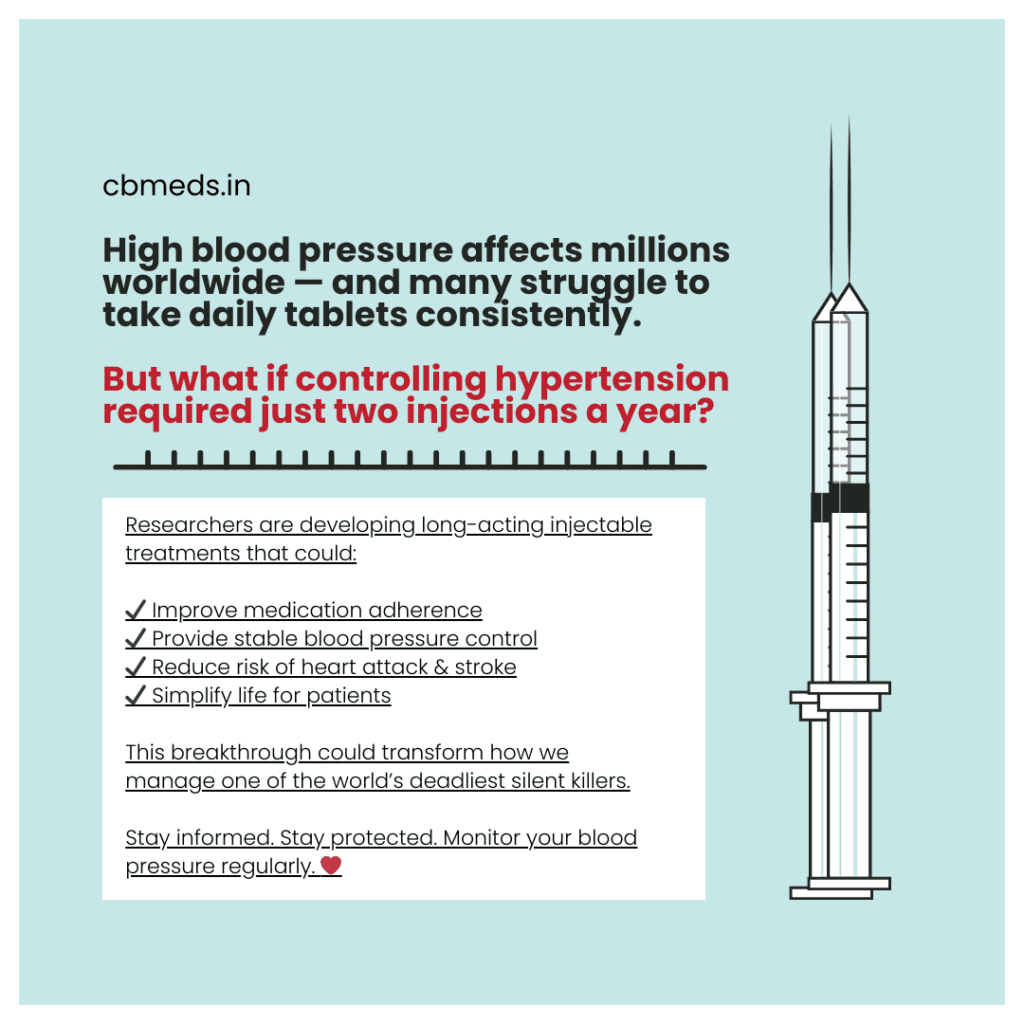
Hypertension, commonly known as high blood pressure, is one of the most widespread and dangerous chronic health conditions globally. Often referred to as the “silent killer,” it frequently shows no symptoms until serious complications such as heart attack, stroke, kidney failure, or heart failure occur.
For decades, the standard treatment approach has involved daily oral medications. While these drugs are effective, a major challenge remains — medication adherence. Many patients forget doses, stop treatment prematurely, or struggle with side effects. This inconsistency significantly reduces treatment effectiveness and increases cardiovascular risk.
Now, a promising medical innovation may change everything: long-acting injectable treatments that require only two doses per year.
The Global Burden of Hypertension
Hypertension affects over 1.2 billion people worldwide. It is a leading risk factor for:
- Stroke
- Heart attack
- Chronic kidney disease
- Heart failure
- Vascular dementia
Despite effective medications being available, only a small percentage of patients achieve optimal blood pressure control. The primary reason is not lack of treatment — it is inconsistent adherence.
Taking a pill every day for life may sound simple, but in reality, many patients:
- Forget doses
- Discontinue due to side effects
- Stop when they “feel better”
- Struggle with complex multi-drug regimens
This is where long-acting injectable therapy could make a significant difference.
How Two-Yearly Injections Could Work
Scientists are developing therapies that target hormonal pathways responsible for blood pressure regulation.
One major system involved in hypertension is the renin–angiotensin–aldosterone system (RAAS). This system regulates:
- Blood vessel constriction
- Fluid balance
- Sodium retention
Traditional medications like ACE inhibitors and ARBs act on this pathway. However, injectable therapies aim to provide longer-lasting suppression of these mechanisms through advanced drug delivery systems or RNA-based technologies.
These injections may:
- Provide steady blood pressure control for months
- Eliminate daily pill burden
- Improve long-term cardiovascular protection
- Reduce healthcare costs associated with complications
Why This Could Be Revolutionary
1️⃣ Improved Medication Adherence
Adherence is one of the biggest challenges in chronic disease management. Studies show that nearly 50% of patients stop taking blood pressure medication within a year.
A twice-yearly injection administered in a clinic ensures:
- Guaranteed dosing
- Reduced forgetfulness
- Fewer missed treatments
This could dramatically improve outcomes.
2️⃣ Better Blood Pressure Stability
Daily pills can cause fluctuations if doses are missed. Long-acting injections may maintain more stable blood pressure levels, reducing the risk of sudden spikes that can trigger heart attacks or strokes.
3️⃣ Reduced Cardiovascular Risk
Consistent blood pressure control directly lowers the risk of:
- Stroke
- Heart attack
- Heart failure
- Kidney damage
Even a small reduction in blood pressure significantly decreases cardiovascular events.
4️⃣ Simplified Treatment for High-Risk Patients
Elderly patients, people with memory issues, or individuals managing multiple medications could benefit tremendously. It reduces complexity and improves overall compliance.
Are These Injections Available Yet?
Long-acting hypertension injections are currently under clinical development and evaluation. Early trials have shown promising results in reducing blood pressure effectively over extended periods.
However:
- Long-term safety data is still being evaluated
- Cost considerations need assessment
- Regulatory approvals are pending in many regions
While not yet widely available, the future looks promising.
Potential Challenges
Despite the excitement, some challenges remain:
- Access and affordability
- Monitoring side effects
- Patient acceptance of injectable therapy
- Infrastructure for administration
Healthcare systems will need adaptation to implement this model efficiently.
The Future of Hypertension Care
The concept of long-acting injectable therapy represents a shift from reactive to proactive chronic disease management.
If successful, it may:
- Reduce global cardiovascular mortality
- Improve quality of life
- Lower hospital admissions
- Transform primary care management
In the coming years, we may see a hybrid model where some patients continue oral therapy while others transition to long-acting injections based on risk profile and preference.
What You Can Do Now
While we await wider availability of these treatments, managing hypertension still relies on:
✔ Regular blood pressure monitoring
✔ Taking prescribed medications consistently
✔ Reducing salt intake
✔ Maintaining a healthy weight
✔ Exercising regularly
✔ Avoiding tobacco
✔ Managing stress
Prevention and early detection remain critical.
Final Thoughts
Two injections per year may soon redefine how we manage hypertension. For millions struggling with daily medication routines, this innovation offers hope for simpler, more effective care.
Hypertension may be silent — but medical science is speaking louder than ever.
Stay informed. Stay proactive. Your heart depends on it. ❤️


