
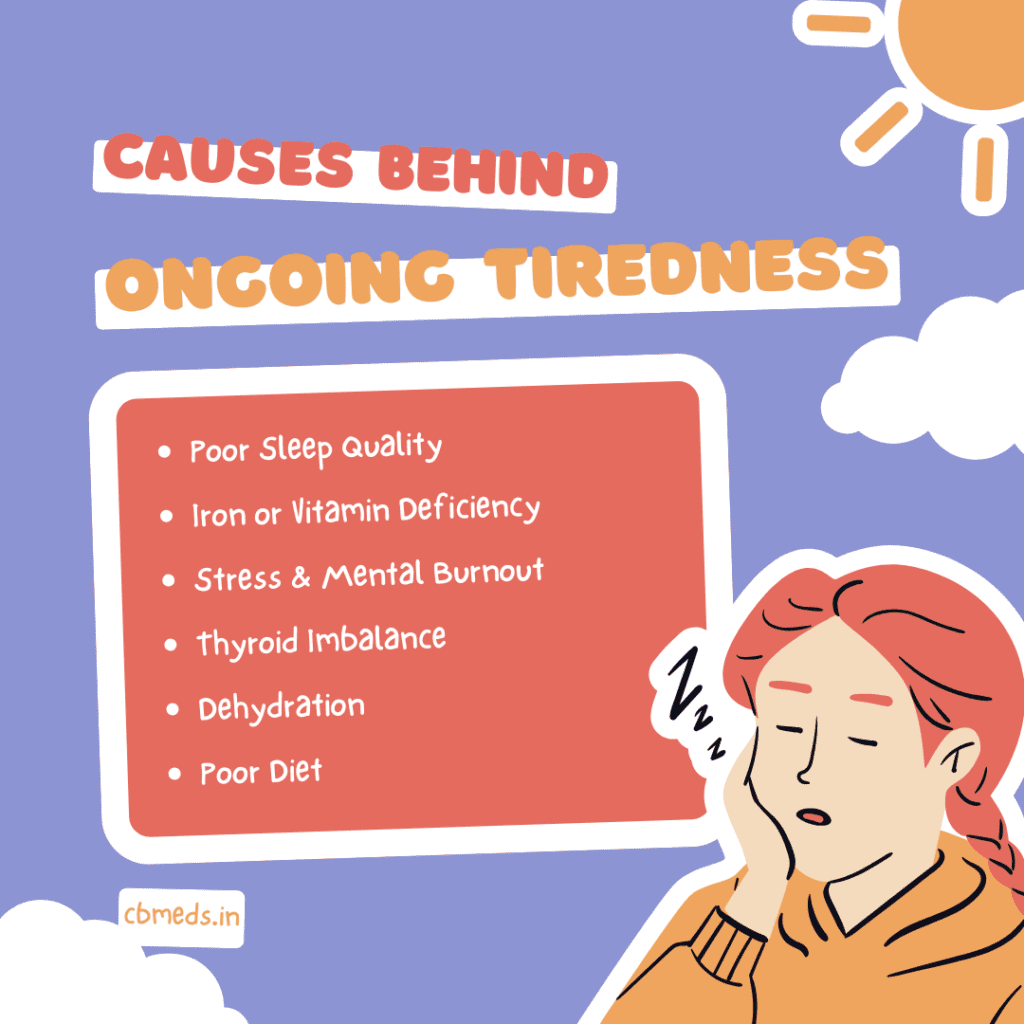
Feeling constantly tired has become one of the most common health complaints today. Many people blame busy schedules, long work hours, or lack of motivation. But when fatigue becomes persistent — lasting weeks or months — it may signal an underlying health issue.
Fatigue is different from simple tiredness. It is an ongoing feeling of exhaustion, low energy, and reduced motivation that doesn’t improve with rest alone. Here are five common medical and lifestyle causes doctors often identify — and what you can do about them.
1. Poor Sleep Quality (Not Just Sleep Quantity)
You might be getting 7–8 hours of sleep, but that doesn’t guarantee good-quality rest. Interrupted sleep, late-night screen use, sleep apnea, or irregular sleep schedules can prevent deep restorative sleep.
Signs:
- Waking up tired
- Brain fog in the morning
- Frequent nighttime awakenings
- Daytime sleepiness
How to Fix It:
- Maintain a consistent sleep schedule
- Avoid screens at least 1 hour before bed
- Limit caffeine after 2 PM
- Keep your bedroom dark and cool
- If snoring or breathing pauses occur, consult a doctor for sleep apnea screening
Quality sleep restores hormones, repairs tissues, and supports mental clarity.
2. Iron or Vitamin Deficiency
Iron deficiency is one of the most common causes of chronic fatigue, especially in women. Low levels of Vitamin B12 and Vitamin D can also lead to weakness and low energy.
Symptoms may include:
- Pale skin
- Hair fall
- Dizziness
- Shortness of breath
- Muscle weakness
How to Fix It:
- Get a blood test to check iron, B12, and Vitamin D levels
- Include iron-rich foods (spinach, lentils, red meat)
- Eat B12 sources (eggs, dairy, fortified cereals)
- Safe sunlight exposure for Vitamin D
- Take supplements only under medical supervision
Correcting deficiencies often improves energy within weeks.
3. Chronic Stress & Mental Burnout
Emotional stress drains energy just as much as physical illness. Work pressure, financial stress, relationship issues, or lack of rest can lead to mental exhaustion.
Stress increases cortisol levels, which over time disrupt sleep, digestion, and immune function.
Warning signs:
- Irritability
- Lack of motivation
- Trouble concentrating
- Headaches
- Poor sleep
How to Fix It:
- Practice mindfulness or meditation
- Take short breaks during work
- Engage in physical activity
- Talk to a therapist if needed
- Set healthy work boundaries
Mental health and physical energy are deeply connected.
4. Thyroid Imbalance
The thyroid gland regulates metabolism and energy production. An underactive thyroid (hypothyroidism) can cause persistent fatigue.
Other symptoms may include:
- Weight gain
- Cold intolerance
- Dry skin
- Constipation
- Slow heart rate
A simple blood test measuring TSH levels can diagnose thyroid disorders.
Treatment:
- Prescription thyroid hormone medication
- Regular monitoring
- Lifestyle adjustments
Proper treatment usually restores energy levels significantly.
5. Dehydration
Even mild dehydration can cause fatigue, headaches, and difficulty concentrating.
Many people mistake thirst for hunger or ignore hydration altogether.
Fix:
- Drink 2–3 litres of water daily (adjust based on climate and activity)
- Add electrolytes if sweating heavily
- Limit excessive caffeine and sugary drinks
Water plays a crucial role in circulation and oxygen delivery — both essential for energy.
When Should You See a Doctor?
Seek medical advice if fatigue:
- Lasts more than 2–3 weeks
- Interferes with daily life
- Comes with unexplained weight loss
- Includes chest pain or breathlessness
- Is accompanied by severe mood changes
Persistent fatigue may also signal diabetes, heart disease, chronic infections, or autoimmune conditions.
Final Thoughts
Constant fatigue is not laziness. It is often your body’s way of signalling imbalance.
The good news? Most causes are manageable and treatable with proper diagnosis and lifestyle adjustments.
Listen to your body. Prioritise sleep, nutrition, hydration, and mental well-being. And if fatigue continues, consult a healthcare professional for proper evaluation.
Your energy is not optional — it’s essential for living fully. 🌿


