
In today’s digital age, health advice spreads faster than ever. Social media, fitness influencers, and word-of-mouth tips often blur the line between science and speculation. While some advice is helpful, many popular beliefs about health and fitness are simply myths.
Let’s uncover the truth behind some of the most common misconceptions and understand what science actually says.
1️⃣ Myth: No Pain, No Gain
This phrase has been repeated in gyms for decades. Many people believe that unless you feel intense pain during or after a workout, it wasn’t effective.
✅ Reality: Pain is Not Always Progress
There’s a major difference between muscle discomfort and actual pain.
- Mild soreness after exercise (Delayed Onset Muscle Soreness – DOMS) is normal.
- Sharp, stabbing, or persistent pain may signal injury.
Pushing through serious pain can lead to muscle tears, joint damage, or long-term injuries. Progress comes from consistent, well-structured workouts, proper recovery, and gradual overload — not from suffering.
Listening to your body is a sign of strength, not weakness.
2️⃣ Myth: Eating Late Causes Weight Gain
Many people avoid dinner after 7 PM believing that food eaten at night automatically turns into fat.
✅ Reality: It’s About What and How Much You Eat
Weight gain depends primarily on total calorie intake versus calories burned, not the clock.
If you consume more calories than your body needs, you’ll gain weight — regardless of the time. Similarly, you can maintain or lose weight even if you eat late, as long as you manage portion sizes and overall nutrition.
However, late-night eating can sometimes lead to:
- Mindless snacking
- Higher calorie choices
- Poor digestion or sleep disturbance
The key is balance and mindful eating, not fear of timing.
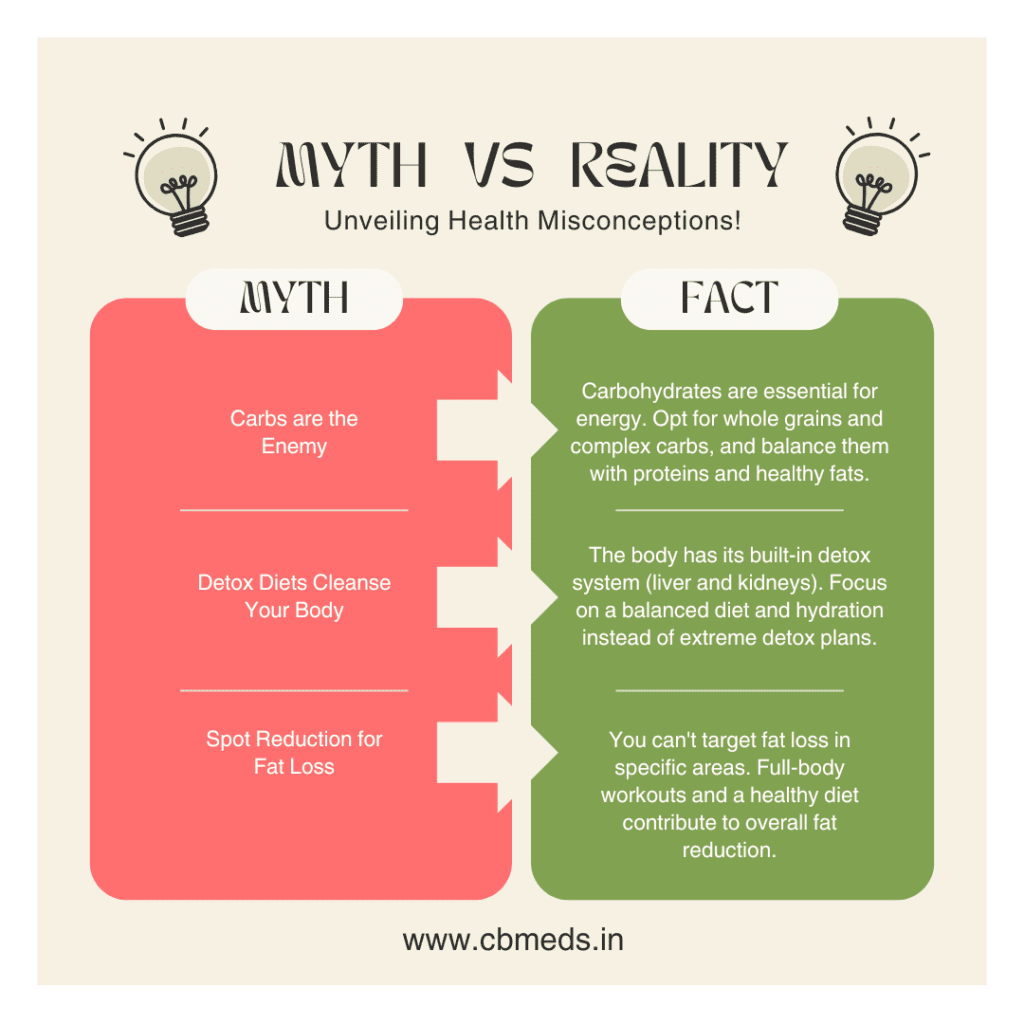
3️⃣ Myth: Carbs Are the Enemy
Low-carb diets have made carbohydrates seem like villains. Many people believe eliminating carbs is the fastest way to lose weight.
✅ Reality: Carbohydrates Are Essential
Carbohydrates are the body’s primary energy source, especially for the brain and muscles.
The real issue isn’t carbs — it’s the type of carbs:
✔ Whole grains
✔ Fruits
✔ Vegetables
✔ Legumes
These provide fibre, vitamins, and sustained energy.
Highly processed sugars and refined carbs, on the other hand, can spike blood sugar and contribute to weight gain if consumed excessively.
Instead of eliminating carbs, focus on quality and balance.
4️⃣ Myth: Detox Diets Cleanse Your Body
Juice cleanses and extreme detox plans promise to “flush out toxins” and reset your body.
✅ Reality: Your Body Already Detoxes Itself
Your liver and kidneys are natural detox systems. They continuously remove waste and toxins from your bloodstream.
There is little scientific evidence that expensive detox drinks or crash diets enhance this process. In fact, extreme detox plans can:
- Cause nutrient deficiencies
- Slow metabolism
- Lead to fatigue and weakness
The best “detox” is simple:
- Drink enough water
- Eat fibre-rich foods
- Exercise regularly
- Sleep adequately
Healthy habits support your body’s natural cleansing system.
5️⃣ Myth: Spot Reduction Works
Many people believe doing endless crunches will remove belly fat or that arm exercises alone will eliminate arm fat.
✅ Reality: You Can’t Target Fat Loss in Specific Areas
Fat loss occurs throughout the body based on genetics, hormones, and overall calorie balance. You cannot choose where your body burns fat first.
While strengthening exercises tone muscles in specific areas, fat loss requires:
- Overall calorie control
- Full-body workouts
- Consistent physical activity
- Balanced nutrition
Over time, the body reduces fat proportionally — not selectively.
Why Health Myths Spread So Easily
Health myths often spread because:
- They offer quick fixes
- They sound simple and dramatic
- They promise fast results
- They are shared by influential personalities
Unfortunately, quick solutions rarely lead to sustainable health.
The Importance of Evidence-Based Health
Good health isn’t about trends — it’s about science-backed decisions. Before believing or sharing health advice, ask:
✔ Is it supported by research?
✔ Does it sound too good to be true?
✔ Is it promoting extreme behaviour?
Sustainable health is built on:
- Balanced nutrition
- Regular physical activity
- Adequate sleep
- Stress management
- Professional medical guidance
Final Thoughts
Your body is intelligent and resilient. It doesn’t need extreme diets, pain-driven workouts, or carb elimination to thrive. What it truly needs is balance, consistency, and informed decisions.
The next time you hear a bold health claim, pause and question it. Because when it comes to your well-being, facts matter more than trends.
Stay informed. Stay balanced. Stay healthy.
🌐 For more health insights, visit: www.cbmeds.in


