
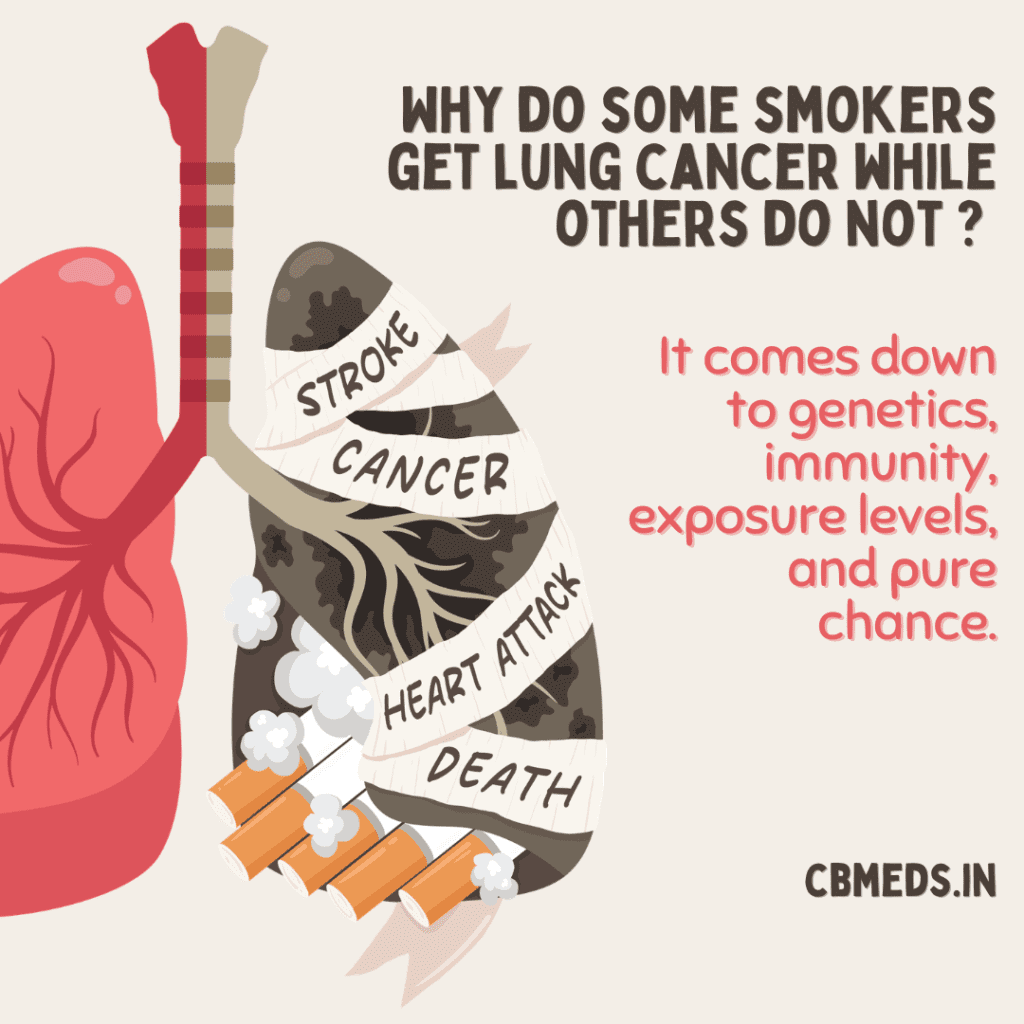
Smoking is widely known as the leading cause of lung cancer. Yet, a puzzling reality remains: not all smokers develop lung cancer, while some non-smokers do. This raises an important question — if smoking is so dangerous, why doesn’t it affect everyone in the same way?
The answer lies in a complex interaction of genetics, environment, lifestyle, and chance. Understanding this can help us better appreciate the risks of smoking and why no one is truly “safe.”
The Strong Link Between Smoking and Lung Cancer
Before exploring why some smokers avoid lung cancer, it’s important to understand how strongly smoking is linked to it.
Cigarette smoke contains over 7,000 chemicals, of which at least 70 are known carcinogens (cancer-causing substances). These chemicals damage the cells lining the lungs, leading to mutations in DNA. Over time, these mutations can accumulate and cause cells to grow uncontrollably — resulting in cancer.
Statistically:
- Around 85–90% of lung cancer cases are caused by smoking.
- Smokers are 15–30 times more likely to develop lung cancer than non-smokers.
So while not every smoker gets lung cancer, the risk is dramatically higher compared to those who don’t smoke.
1. Genetics: The Invisible Factor
One of the biggest reasons why some smokers develop lung cancer and others do not is genetics.
Each person’s body processes toxins differently. Some individuals have genetic variations that:
- Make it easier to detoxify harmful chemicals
- Repair DNA damage more efficiently
- Prevent abnormal cell growth
Others may inherit genes that:
- Increase susceptibility to DNA damage
- Reduce the body’s ability to repair damaged cells
- Promote cancer development
In simple terms, two people can smoke the same number of cigarettes, but their bodies may respond very differently.
2. Differences in Immune System Strength
The immune system plays a key role in identifying and destroying abnormal cells before they turn cancerous.
In some smokers:
- The immune system detects damaged cells early
- Abnormal cells are eliminated before they grow
In others:
- The immune system may be weaker or less efficient
- Cancerous cells may escape detection and grow
Factors like stress, poor diet, lack of sleep, and existing illnesses can weaken immunity, increasing cancer risk.
3. Duration and Intensity of Smoking
Not all smokers have the same exposure. The risk of lung cancer increases with:
- Number of cigarettes per day
- Years of smoking
- Depth of inhalation
This is often measured as “pack-years.” For example:
- Smoking 1 pack a day for 20 years = 20 pack-years
- Smoking 2 packs a day for 10 years = also 20 pack-years
People with higher pack-years have significantly greater risk.
However, even light or occasional smokers are not risk-free. There is no safe level of smoking.
4. Type of Tobacco and Smoking Habits
The type of tobacco product and how it is used also matter.
- Filtered vs unfiltered cigarettes
- Low-tar vs regular cigarettes
- Cigars, bidis, hookah
Some smokers may believe “light” or “filtered” cigarettes are safer, but this is a myth. Smokers often inhale more deeply or smoke more frequently to compensate, increasing exposure.
In India, products like bidis can be even more harmful because they deliver higher levels of toxins.
5. Environmental and Occupational Exposure
Smoking is not the only risk factor for lung cancer. Additional exposures can multiply the risk:
- Air pollution
- Passive smoking (second-hand smoke)
- Exposure to asbestos, radon gas, or industrial chemicals
- Indoor pollution from biomass fuels (common in rural areas)
A smoker exposed to these additional risks is far more likely to develop lung cancer than someone who is not.
6. Random Chance (Bad Luck)
Even after accounting for all known factors, chance still plays a role.
Cancer develops when certain mutations occur in specific genes. Sometimes:
- A smoker may never develop the “right combination” of mutations needed for cancer
- Another person may develop those mutations quickly
This randomness is why some lifelong smokers never develop lung cancer, while others do in a relatively short time.
7. Age and Timing
Age is another important factor.
- The longer someone lives, the more time there is for mutations to accumulate
- Many smokers who appear “healthy” may simply not have developed cancer yet
Lung cancer often takes years or decades to develop. So a smoker in their 30s or 40s may still be at risk later in life.
8. Why Some Non-Smokers Get Lung Cancer
Interestingly, not all lung cancer cases occur in smokers.
Non-smokers can develop lung cancer due to:
- Genetic mutations
- Second-hand smoke exposure
- Air pollution
- Radon gas exposure
- Occupational hazards
This highlights that lung cancer is not caused by a single factor — but smoking remains the most preventable cause.
9. The Myth of “Safe Smokers”
Many smokers believe:
- “My grandfather smoked and lived till 90.”
- “I’ve been smoking for years and I’m fine.”
This creates a false sense of security.
The reality is:
- These are exceptions, not the rule
- Damage from smoking is often silent and accumulative
- Other smoking-related diseases (heart disease, stroke, COPD) may still occur even without lung cancer
Smoking doesn’t just affect the lungs — it impacts the entire body.
10. What Happens Inside the Lungs?
Every time a person smokes:
- Toxic chemicals enter the lungs
- Tiny hair-like structures (cilia) that clean the lungs are damaged
- Inflammation increases
- DNA mutations occur in lung cells
Over time:
- Cells may grow uncontrollably
- Tumours may form
- Cancer may spread to other parts of the body
Even if cancer does not develop, smokers often suffer from chronic lung diseases.
11. Can the Risk Be Reduced?
Yes — the body has an incredible ability to heal once smoking stops.
Benefits of quitting:
- Within weeks: Lung function improves
- Within months: Coughing and breathlessness reduce
- Within years: Risk of lung cancer significantly decreases
After about 10–15 years:
- The risk of lung cancer drops to nearly half that of a current smoker
However, it never returns completely to that of a non-smoker — which is why quitting early is crucial.
12. Early Detection Saves Lives
Lung cancer is often diagnosed late because symptoms appear in advanced stages.
Warning signs include:
- Persistent cough
- Blood in sputum
- Chest pain
- Shortness of breath
- Unexplained weight loss
High-risk individuals (especially long-term smokers) may benefit from low-dose CT scans for early detection.
Conclusion: Risk Is Not Equal, But It Is Real
The reason some smokers get lung cancer while others do not is a combination of genetics, lifestyle, exposure, and chance. But one thing remains clear — smoking dramatically increases the risk.
Not getting lung cancer does not mean smoking is safe. It simply means the disease has not developed — yet.
The most important takeaway is this:
Smoking is a gamble where the odds are heavily stacked against you.
You may not control your genetics or environment completely, but you can control one powerful factor — the decision to quit.


