
Memory is one of the most vital cognitive functions that shapes how we learn, make decisions, and navigate daily life. Whether you’re a student preparing for exams, a professional managing complex tasks, or simply someone who wants to stay mentally sharp, improving memory can significantly enhance your quality of life.
Contrary to popular belief, memory is not a fixed trait. It is dynamic and can be strengthened through consistent habits and scientifically proven methods. Advances in neuroscience have shown that the brain has a remarkable ability to adapt and reorganise itself — a concept known as neuroplasticity. This means that with the right strategies, anyone can improve their memory.
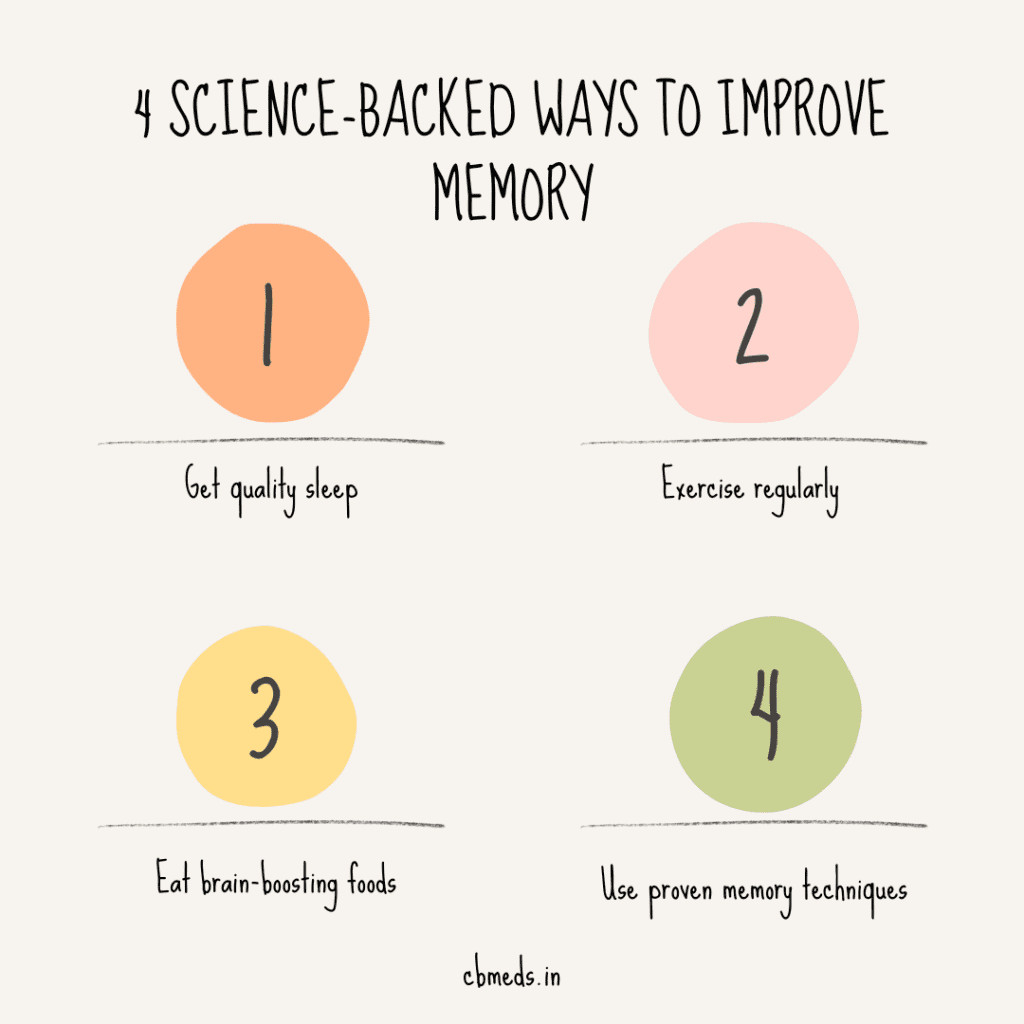
In this article, we explore four science-backed ways to enhance memory and keep your brain functioning at its best.
1. Prioritise Quality Sleep
Sleep is not just about rest — it is essential for memory consolidation. During sleep, particularly deep sleep and REM (rapid eye movement) stages, the brain processes and stores information gathered throughout the day.
How Sleep Affects Memory
When you learn something new, it is initially stored in short-term memory. During sleep, the brain transfers this information into long-term memory. Without sufficient sleep, this process is disrupted, making it harder to retain information.
Research has shown that people who sleep well after learning new information are more likely to remember it compared to those who stay awake.
Tips to Improve Sleep for Better Memory
- Aim for 7–9 hours of sleep each night
- Maintain a consistent sleep schedule
- Avoid screens at least 30–60 minutes before bedtime
- Limit caffeine intake in the evening
- Create a calm, dark, and cool sleeping environment
The Bottom Line
If you’re trying to improve memory, sacrificing sleep is counterproductive. Quality sleep is one of the simplest yet most powerful tools for better cognitive function.
2. Engage in Regular Physical Exercise
Exercise benefits not only your body but also your brain. Physical activity increases blood flow to the brain, delivering oxygen and nutrients that support cognitive functions, including memory.
The Science Behind Exercise and Memory
Regular exercise stimulates the production of brain-derived neurotrophic factor (BDNF), a protein that promotes the growth and survival of brain cells. BDNF plays a crucial role in learning and memory.
Exercise also helps reduce stress and inflammation, both of which can negatively impact memory.
Best Types of Exercise for Memory
- Aerobic exercises (walking, running, cycling)
- Strength training
- Yoga and mindfulness-based movement
Even moderate exercise, such as brisk walking for 30 minutes a day, can significantly improve memory and overall brain health.
Practical Tips
- Start small if you’re new to exercise
- Stay consistent rather than intense
- Choose activities you enjoy to maintain motivation
The Bottom Line
Regular physical activity enhances brain function, improves memory, and reduces the risk of cognitive decline over time.
3. Follow a Brain-Healthy Diet
What you eat has a direct impact on your brain. A balanced diet rich in nutrients can support memory and cognitive performance.
Key Nutrients for Memory
- Omega-3 Fatty Acids Found in fatty fish, walnuts, and flaxseeds, omega-3s are essential for brain health and memory function.
- Antioxidants Foods like berries, dark chocolate, and leafy greens protect the brain from oxidative stress.
- Vitamins and Minerals
- Vitamin B12 supports nerve function
- Vitamin E helps protect brain cells
- Magnesium and zinc play roles in cognitive processes
Brain-Boosting Foods
- Blueberries and strawberries
- Spinach and kale
- Nuts and seeds
- Whole grains
- Fatty fish like salmon
Foods to Limit
- Excess sugar
- Processed foods
- Trans fats
These can impair memory and contribute to inflammation in the brain.
Hydration Matters
Even mild dehydration can affect concentration and memory. Ensure you drink adequate water throughout the day.
The Bottom Line
A nutrient-rich diet fuels your brain, supports memory, and protects against cognitive decline.
4. Use Proven Memory Techniques
Beyond lifestyle habits, specific cognitive techniques can significantly improve how you retain and recall information.
Effective Memory Techniques
1. Spaced Repetition
Instead of cramming information, review it at increasing intervals over time. This method strengthens memory retention by reinforcing neural pathways.
2. Chunking
Break large pieces of information into smaller, manageable chunks. For example, remembering a long number becomes easier when divided into sections.
3. Visualisation
Creating mental images can make information more memorable. The brain processes visuals more effectively than plain text.
4. Association
Link new information to something you already know. This creates stronger connections in the brain.
5. The Method of Loci
Also known as the “memory palace,” this technique involves associating information with specific locations in a familiar space.
Why These Techniques Work
These strategies enhance encoding — the process by which information is stored in the brain. The more meaningful and structured the information, the easier it is to recall.
Practical Application
- Use flashcards for spaced repetition
- Create stories or images to remember facts
- Teach what you learn to someone else
The Bottom Line
Memory techniques are powerful tools that can dramatically improve learning efficiency and recall.
Additional Factors That Influence Memory
While the four methods above are highly effective, other factors also play a role in memory performance.
Stress Management
Chronic stress releases cortisol, a hormone that can damage brain cells involved in memory. Practices like meditation, deep breathing, and mindfulness can help manage stress.
Mental Stimulation
Keeping your brain active through reading, puzzles, learning new skills, or engaging in creative activities can strengthen neural connections.
Social Interaction
Meaningful social engagement has been linked to better cognitive function and memory retention.
Common Myths About Memory
Myth 1: Memory Decline is Inevitable
While some decline may occur with age, lifestyle choices can significantly slow or even reverse memory deterioration.
Myth 2: Multitasking Improves Efficiency
In reality, multitasking reduces focus and weakens memory retention.
Myth 3: Supplements Alone Can Improve Memory
While certain supplements may help, they cannot replace healthy habits like sleep, diet, and exercise.
Conclusion
Improving memory does not require drastic changes or complicated strategies. By focusing on four science-backed methods — quality sleep, regular exercise, a healthy diet, and effective memory techniques — you can significantly enhance your cognitive abilities.
The key lies in consistency. Small, daily improvements can lead to long-term benefits for your brain.
Think of your memory like a muscle — the more you train it, the stronger it becomes. Start incorporating these habits today, and over time, you will notice better focus, sharper recall, and improved mental clarity.


