
Your late 20s are often a time of peak productivity. You’re building your career, managing responsibilities, possibly travelling, working long hours, and pushing your limits. At this stage, your body still feels strong and resilient, which makes it easy to ignore small discomforts—especially back pain.
But here’s the reality: what you do daily in your late 20s directly shapes your spine health in your 30s and beyond.
Back pain doesn’t usually appear overnight. It develops gradually due to repetitive habits that strain your muscles, joints, and spine. The scary part? Many of these habits feel completely normal.
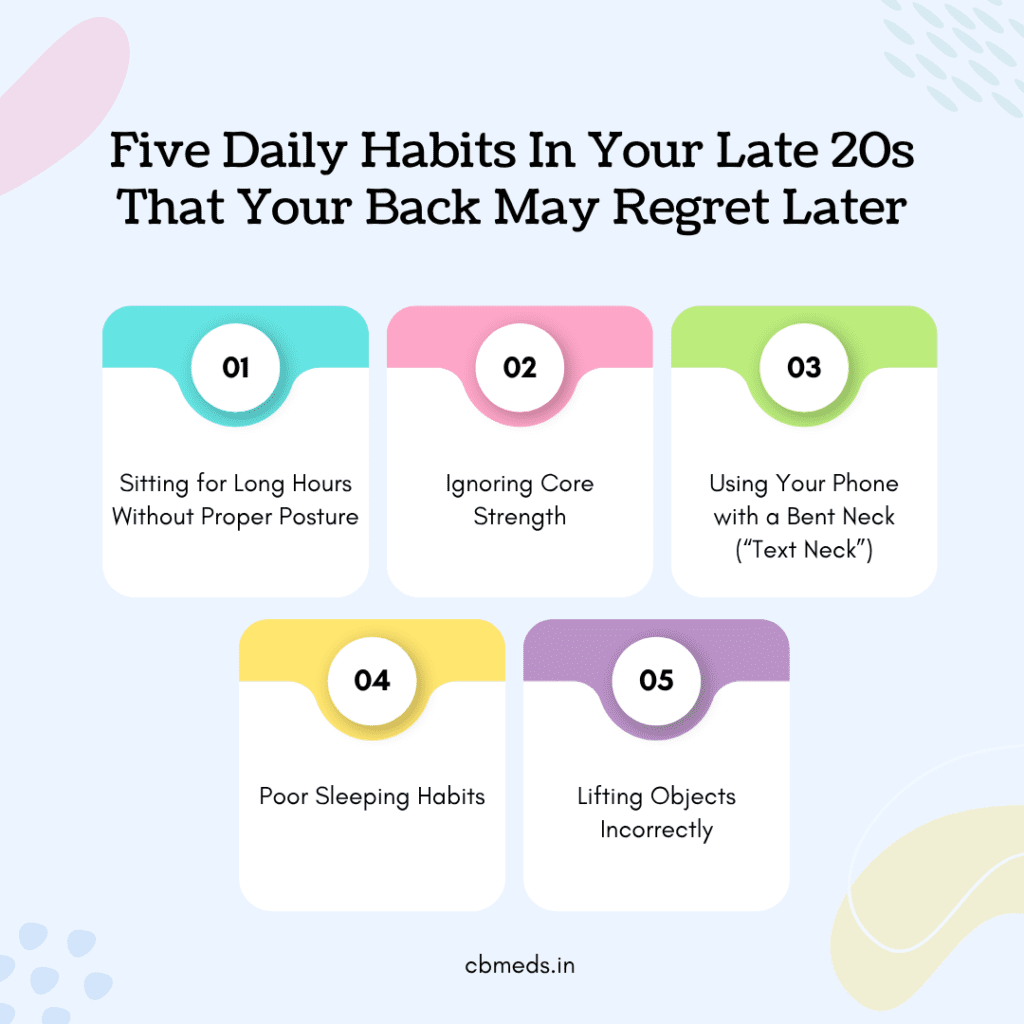
Let’s break down five common daily habits that your future back might regret—and what they really mean for your health.
1. Sitting for Long Hours Without Proper Posture
What You’re Doing:
Spending hours sitting—whether working on a laptop, scrolling your phone, or binge-watching shows—often with a rounded back and forward neck.
What It Means:
Prolonged sitting puts continuous pressure on your spine, especially the lower back (lumbar region). Poor posture leads to:
- Muscle imbalances
- Weak core muscles
- Increased spinal disc pressure
- Early signs of chronic back pain
When you slouch, your spine loses its natural curve, forcing muscles and ligaments to overwork. Over time, this leads to stiffness, pain, and even disc issues.
Long-Term Impact:
If this habit continues, you may experience:
- Herniated discs
- Chronic lower back pain
- Poor posture becoming permanent
What You Should Do:
- Sit with your back straight and shoulders relaxed
- Keep your screen at eye level
- Take breaks every 30–45 minutes
- Use lumbar support if needed
2. Ignoring Core Strength
What You’re Doing:
Skipping core workouts or focusing only on visible muscles like arms and chest.
What It Means:
Your core isn’t just about abs—it includes muscles that stabilise your spine. A weak core means your back has to compensate for basic movements like sitting, standing, and lifting.
This leads to:
- Increased strain on the lower back
- Poor balance and stability
- Higher risk of injury
Long-Term Impact:
Without core strength, even simple movements can cause discomfort. Over time, this can lead to:
- Persistent lower back pain
- Reduced mobility
- Postural issues
What You Should Do:
- Add exercises like planks, bridges, and bird-dogs
- Train your core 3–4 times a week
- Focus on stability, not just aesthetics
3. Using Your Phone with a Bent Neck (“Text Neck”)
What You’re Doing:
Looking down at your phone for long periods—while walking, sitting, or lying down.
What It Means:
Your head weighs around 4–5 kg. When you tilt it forward, the strain on your neck increases significantly—sometimes up to 20–25 kg of pressure.
This affects:
- Neck muscles
- Upper spine
- Shoulder alignment
Long-Term Impact:
- Chronic neck and upper back pain
- Forward head posture
- Reduced spinal alignment
What You Should Do:
- Hold your phone at eye level
- Limit continuous screen time
- Stretch your neck regularly
- Be mindful of posture while using devices
4. Poor Sleeping Habits
What You’re Doing:
Sleeping in awkward positions, using unsupportive mattresses, or staying up late and compromising rest.
What It Means:
Your spine needs proper alignment during sleep to recover from daily stress. Poor sleep posture can strain muscles and misalign the spine.
Common issues include:
- Sleeping on your stomach
- Using very soft or very hard mattresses
- Lack of neck support
Long-Term Impact:
- Morning stiffness
- Persistent back pain
- Poor recovery and fatigue
What You Should Do:
- Sleep on your back or side
- Use a supportive pillow
- Invest in a good-quality mattress
- Maintain consistent sleep timing
5. Lifting Objects Incorrectly
What You’re Doing:
Bending your back instead of your knees while lifting objects—whether it’s gym weights, grocery bags, or luggage.
What It Means:
Incorrect lifting places excessive strain on your spine and discs. Instead of distributing the load through your legs, your back takes all the pressure.
Long-Term Impact:
- Muscle strains
- Disc injuries
- Sudden back pain episodes
What You Should Do:
- Bend your knees, not your back
- Keep the object close to your body
- Avoid twisting while lifting
- Strengthen your legs and core
Why These Habits Matter More Than You Think
In your late 20s, your body has a high tolerance for stress. You may not feel immediate consequences, which is why these habits are often ignored.
But over time:
- Small strains become chronic pain
- Poor posture becomes permanent
- Weak muscles lead to injuries
Your spine is the foundation of your body. Once issues begin, they can affect your productivity, mood, sleep, and overall quality of life.
Simple Daily Routine to Protect Your Back
Here’s a quick routine you can follow:
- Morning: Stretch your back and hips (5–10 minutes)
- Work Hours: Maintain posture + take breaks every 30 minutes
- Evening: Do light core exercises (planks, bridges)
- Night: Sleep in a proper position with good support
Final Thoughts
Your late 20s are the best time to build habits that protect your future health. Back pain is one of the most common problems people face in their 30s and 40s—but it’s largely preventable.
The key is awareness.
Every time you slouch, skip exercise, or ignore posture, you’re either investing in your health—or borrowing pain from your future.
So ask yourself:
Are your daily habits supporting your spine—or silently damaging it?
Make small changes today, and your future self will thank you.


