Water is one of the most essential elements for human survival, yet it is often the most neglected aspect of daily health. Our body is made up of nearly 60% water, and every single system—from the brain to the muscles—depends on proper hydration to function efficiently. Despite this, many people go through their day without drinking enough water, leading to dehydration.
Dehydration occurs when your body loses more fluids than it takes in. This imbalance can affect normal bodily functions and lead to a range of symptoms, some of which may seem mild but can have serious consequences if ignored.
In this article, we will explore the common signs of dehydration, why they occur, their impact on your health, and how you can prevent it effectively.
What Is Dehydration?
Dehydration is a condition where the body does not have enough fluids to carry out its normal functions. This can happen due to several reasons such as:
- Not drinking enough water
- Excessive sweating
- Fever
- Diarrhoea or vomiting
- Hot weather conditions
- Intense physical activity
Even mild dehydration can impact your energy levels, mood, and concentration.
Common Signs That You Are Dehydrated
Let’s break down the key warning signs your body gives when it needs more fluids.
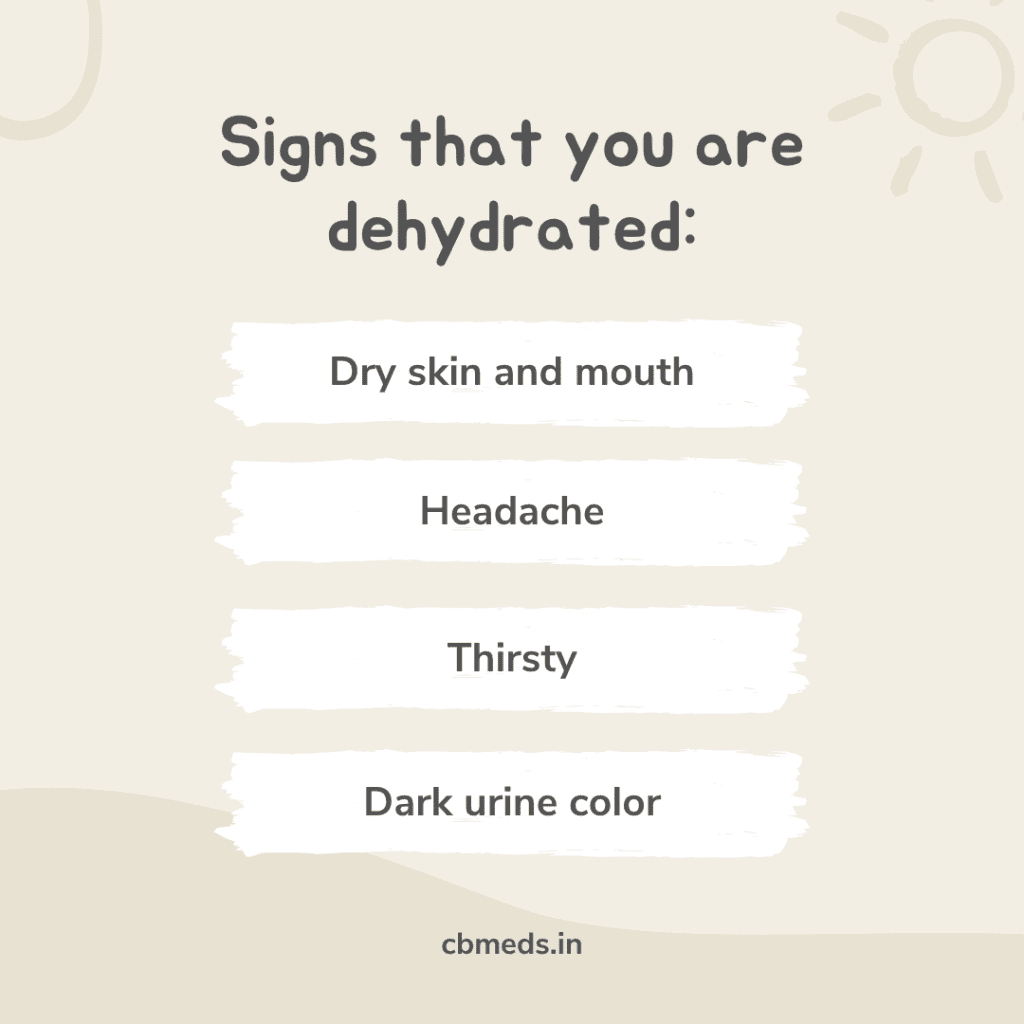
1. Dry Skin and Mouth
One of the earliest signs of dehydration is dryness in the skin and mouth. When your body lacks water, it reduces moisture in less critical areas like the skin to maintain essential functions.
You may notice:
- Dry or flaky skin
- Chapped lips
- Sticky or dry feeling in the mouth
- Reduced saliva production
Your skin may also lose its elasticity. A simple way to check this is by gently pinching your skin—if it doesn’t return quickly to its normal position, you may be dehydrated.
2. Headache
Headaches are a very common but often overlooked symptom of dehydration. When your body loses fluids, the brain can temporarily shrink slightly due to fluid loss, pulling away from the skull. This triggers pain receptors and causes a headache.
Dehydration headaches can feel like:
- Dull, persistent pain
- Pressure around the head
- Increased sensitivity to light
Many people mistakenly take painkillers without addressing the root cause—lack of water.
3. Feeling Thirsty
Thirst is your body’s natural signal that it needs water. However, by the time you feel thirsty, you are already mildly dehydrated.
Relying only on thirst as an indicator is not ideal because:
- The thirst mechanism weakens with age
- Busy routines make people ignore thirst signals
- Some people confuse thirst with hunger
It’s important to drink water regularly throughout the day instead of waiting until you feel thirsty.
4. Dark Urine Colour
Your urine colour is one of the most accurate indicators of hydration.
- Light yellow or clear urine → well hydrated
- Dark yellow or amber urine → dehydrated
When you don’t drink enough water, your kidneys conserve fluids, leading to more concentrated and darker urine.
In severe dehydration, urine output may also decrease significantly.
Other Signs of Dehydration
Beyond the common symptoms, dehydration can also present in several other ways:
Fatigue and Low Energy
Lack of water affects blood circulation and oxygen supply, making you feel tired and sluggish.
Dizziness or Lightheadedness
Reduced blood volume can lead to low blood pressure, causing dizziness.
Muscle Cramps
Electrolyte imbalance due to dehydration can trigger muscle cramps, especially during exercise.
Bad Breath
Less saliva allows bacteria to grow in the mouth, leading to bad breath.
Reduced Concentration
Your brain is highly sensitive to hydration levels. Even slight dehydration can affect focus, memory, and mood.
Why Hydration Is So Important
Water plays a crucial role in maintaining overall health. Here’s why staying hydrated is essential:
1. Regulates Body Temperature
Water helps in sweating and cooling down the body, especially in hot climates.
2. Supports Digestion
Adequate fluids help break down food and prevent constipation.
3. Maintains Joint Health
Water acts as a lubricant for joints, reducing stiffness and pain.
4. Flushes Out Toxins
The kidneys rely on water to remove waste products from the body.
5. Boosts Brain Function
Proper hydration improves concentration, alertness, and cognitive performance.
Who Is at Higher Risk of Dehydration?
Some groups are more prone to dehydration and need to be extra careful:
- Children and infants
- Elderly individuals
- Athletes
- People working in hot environments
- Individuals with illnesses like fever or diarrhoea
How Much Water Should You Drink?
There is no one-size-fits-all answer, but general guidelines suggest:
- Men: Around 3–3.5 litres per day
- Women: Around 2–2.5 litres per day
However, your water needs depend on:
- Climate (hot weather increases need)
- Physical activity
- Health conditions
- Diet (water-rich foods reduce need slightly)
A simple rule: Drink enough so that your urine remains light yellow.
Best Ways to Stay Hydrated
Here are some practical tips to maintain proper hydration:
1. Start Your Day with Water
Drink a glass of water as soon as you wake up.
2. Carry a Water Bottle
Keeping water with you increases your chances of drinking regularly.
3. Set Reminders
Use alarms or apps to remind yourself to drink water.
4. Eat Water-Rich Foods
Include foods like:
- Watermelon
- Cucumber
- Oranges
- Tomatoes
5. Drink Before You Feel Thirsty
Make hydration a habit, not a reaction.
6. Increase Intake During Exercise
Drink water before, during, and after workouts.
7. Limit Dehydrating Drinks
Reduce excessive intake of:
- Caffeine
- Alcohol
- Sugary beverages
When to Seek Medical Help
Mild dehydration can be managed easily, but severe dehydration requires medical attention.
Seek help if you experience:
- Extreme thirst
- Very dark or no urine
- Rapid heartbeat
- Confusion
- Sunken eyes
- Severe dizziness
In such cases, immediate fluid replacement (oral or intravenous) may be required.
Conclusion
Dehydration is a silent issue that many people overlook until symptoms become uncomfortable or severe. The signs—dry skin, headaches, thirst, and dark urine—are your body’s way of asking for help.
The good news is that dehydration is completely preventable. By simply being mindful of your daily water intake and listening to your body, you can maintain optimal health and avoid many unnecessary health problems.
Remember, water is not just a basic necessity—it is a powerful tool for better health, improved energy, and overall well-being.
So the next time you feel tired, unfocused, or irritable, don’t just reach for caffeine—start with a glass of water.
💧 Stay hydrated. Stay healthy.


