
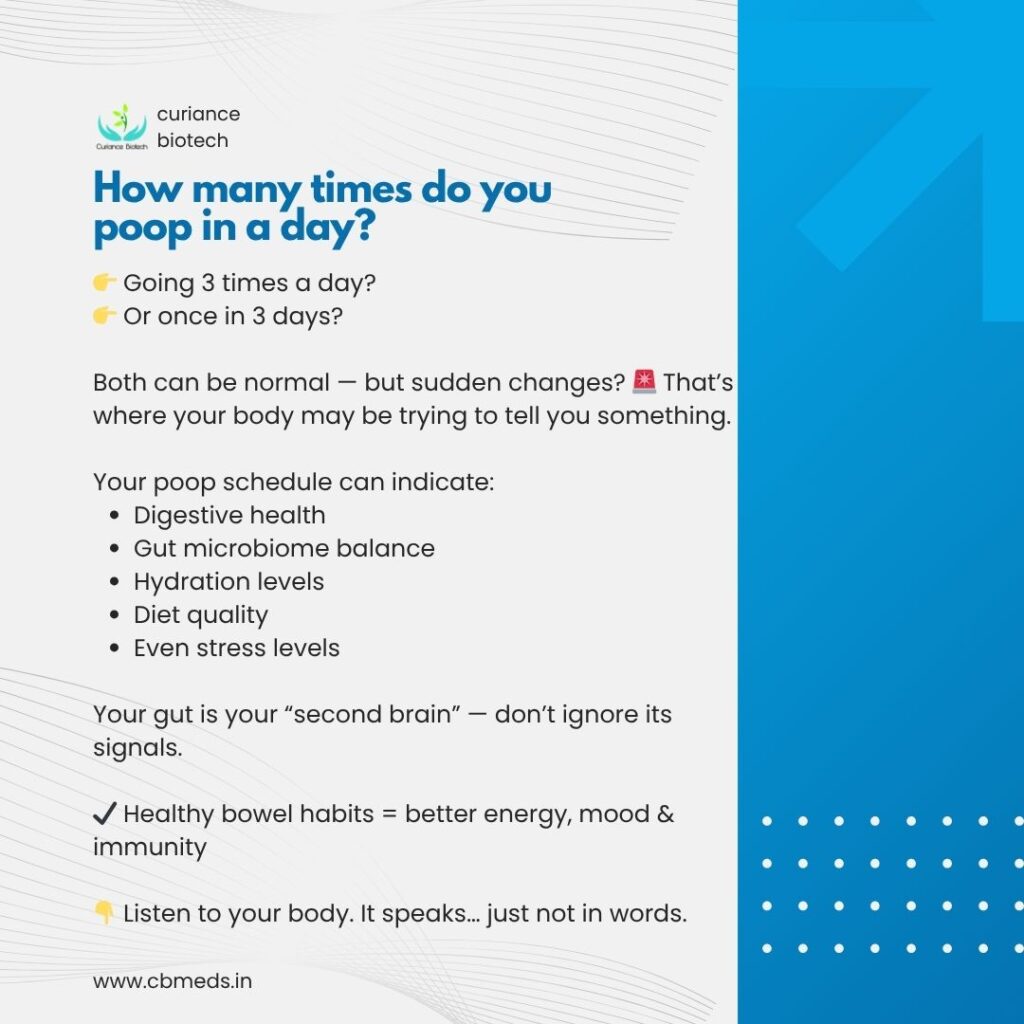
Talking about poop may not be the most glamorous topic, but it is one of the most important indicators of your overall health. Your bowel habits — including how often you go, the consistency of your stool, and any changes in your routine — can reveal a lot about what is happening inside your body.
In fact, doctors often consider bowel movements as a vital sign of digestive health. Yet, many people ignore or feel embarrassed discussing it, even when something is clearly off.
So, how many times should you poop in a day? And what does your poop schedule actually say about your body?
Let’s break it down.
What Is Considered “Normal”?
One of the biggest misconceptions is that there is a fixed “normal” number of bowel movements per day. In reality, normal varies from person to person.
Generally, a healthy range is:
- Anywhere between 3 times a day to 3 times a week
Yes, that’s a wide range — and completely normal.
What matters more than frequency is:
- Consistency in your routine
- Ease of passing stool
- Absence of pain or discomfort
If you typically go once a day and suddenly shift to once every three days (or vice versa), your body might be signaling a problem.
What Determines Your Poop Schedule?
Your bowel habits are influenced by multiple factors:
1. Diet
What you eat plays a major role in how often you poop.
- High-fibre foods (fruits, vegetables, whole grains) → more regular bowel movements
- Low-fibre or processed foods → constipation
Fibre adds bulk to your stool and helps it move smoothly through your digestive tract.
2. Hydration
Water is essential for digestion.
When you don’t drink enough water:
- Stool becomes hard and difficult to pass
- Bowel movements become less frequent
3. Physical Activity
Regular exercise stimulates intestinal movement.
A sedentary lifestyle can slow down digestion, leading to constipation.
4. Gut Microbiome
Your gut is home to trillions of bacteria that influence digestion.
An imbalance in gut bacteria can lead to:
- Irregular bowel movements
- Bloating
- Diarrhea or constipation
5. Stress and Mental Health
Your gut and brain are closely connected.
Stress can:
- Speed up digestion → diarrhea
- Slow it down → constipation
This is why people often experience stomach issues during anxiety or stressful situations.
When Is It Too Much or Too Little?
While variation is normal, certain patterns can signal issues.
🚨 Frequent Bowel Movements (More than 3 times a day)
Possible causes:
- Food intolerance
- Infections
- High caffeine intake
- Irritable bowel syndrome (IBS)
If stools are loose or watery consistently, it could indicate diarrhea or an underlying condition.
🚨 Infrequent Bowel Movements (Less than 3 times a week)
This is typically considered constipation.
Common causes:
- Low fibre diet
- Dehydration
- Lack of exercise
- Certain medications
Chronic constipation can lead to discomfort, bloating, and even complications like hemorrhoids.
The Bristol Stool Chart: What Your Poop Shape Means
Doctors use the Bristol Stool Chart to classify stool types.
Types 1–2:
- Hard lumps → constipation
Types 3–4:
- Smooth, soft → healthy
Types 5–7:
- Soft blobs to watery → diarrhea
Your goal?
👉 Type 3 or 4 — the ideal stool.
Signs Your Poop Is Telling You Something Is Wrong
Pay attention if you notice:
⚠️ Blood in stool
⚠️ Sudden change in frequency
⚠️ Persistent diarrhea or constipation
⚠️ Severe abdominal pain
⚠️ Unexplained weight loss
These symptoms should not be ignored and require medical attention.
How to Improve Your Bowel Health
If your poop schedule is irregular, here are simple ways to improve it:
✔️ Eat More Fibre
Aim for 25–35 grams of fibre daily.
Sources:
- Fruits (apple, banana)
- Vegetables
- Whole grains
- Legumes
✔️ Stay Hydrated
Drink at least 2–3 litres of water daily.
✔️ Move Your Body
Even a 30-minute walk can improve digestion.
✔️ Manage Stress
Try:
- Meditation
- Yoga
- Deep breathing
✔️ Build a Routine
Try to go at the same time every day, especially after meals.
Why You Shouldn’t Ignore the Urge
Holding in your poop regularly can:
- Lead to constipation
- Disrupt your natural rhythm
- Cause discomfort
Your body has a natural timing system — respect it.
The Gut–Health Connection
Your gut does more than just digest food.
It impacts:
- Immunity
- Mental health
- Energy levels
An unhealthy gut can affect your entire body.
Final Thoughts
Your poop schedule might seem like a small detail, but it is actually a powerful insight into your overall health.
There is no “perfect” number of times to poop daily — what matters is consistency, comfort, and awareness of changes.
So next time you go to the bathroom, don’t just flush and forget.
👉 Pay attention. Your body is talking to you.
And sometimes… the message is right there in your poop.


