
In today’s fast-paced, digitally driven world, physical movement has become optional rather than essential. Many people spend long hours sitting—working on laptops, scrolling through phones, or binge-watching content. Among all forms of physical activity, walking is one of the simplest and most accessible. Yet, it is also one of the most neglected.
You may think skipping a daily walk doesn’t make much of a difference. However, your body relies on regular movement to function optimally. When you stop walking regularly, subtle changes begin to occur—many of which can develop into serious health concerns over time.
Let’s explore what really happens to your body when walking is no longer part of your routine.
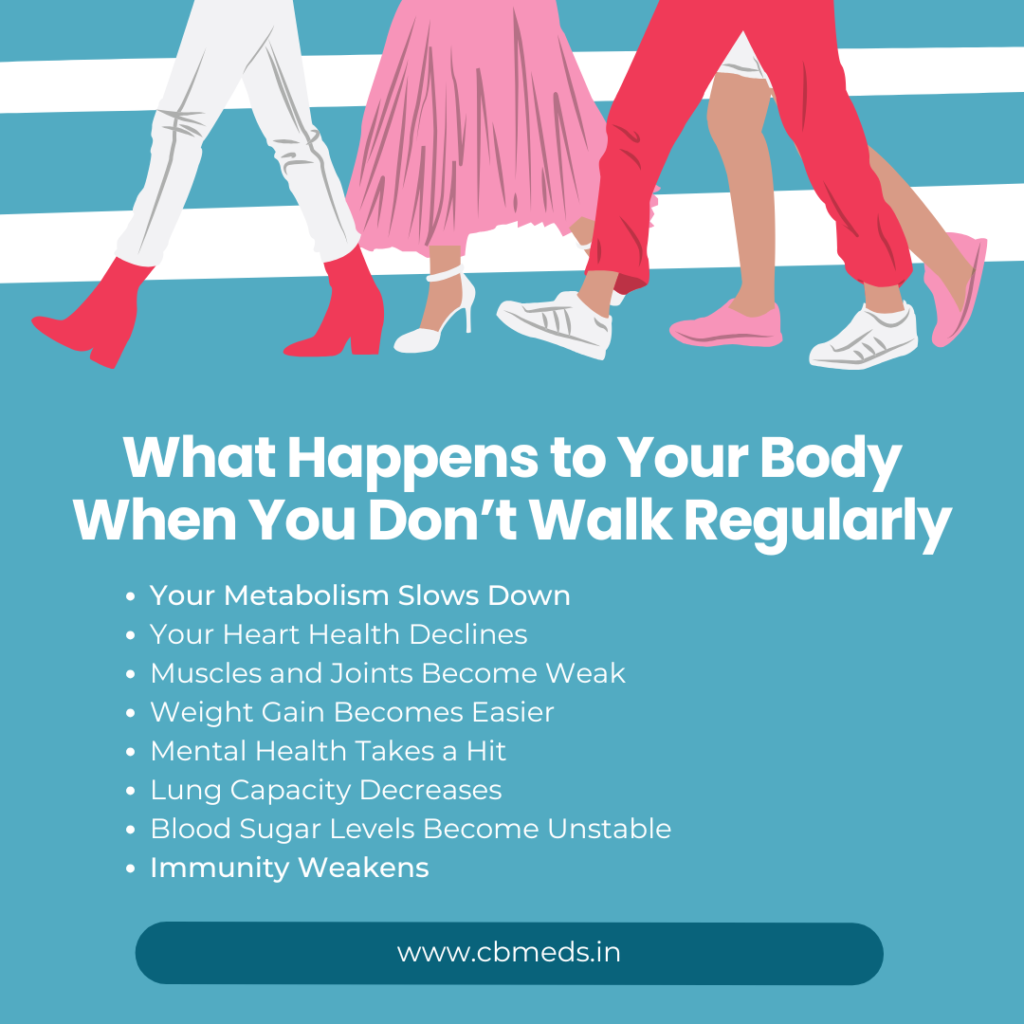
🚶♂️ 1. Your Metabolism Slows Down
Walking plays a key role in maintaining your metabolism—the process by which your body converts food into energy. When you stop walking regularly, your metabolic rate drops.
A slower metabolism means:
- Fewer calories burned
- Increased fat storage
- Higher chances of weight gain
Over time, this can contribute to obesity and related conditions such as Type 2 Diabetes.
❤️ 2. Your Heart Health Declines
Your heart is a muscle that thrives on movement. Regular walking helps improve blood circulation, regulate blood pressure, and strengthen cardiovascular endurance.
Without consistent walking:
- Blood circulation becomes sluggish
- Risk of high blood pressure increases
- Cholesterol levels may rise
This significantly raises the risk of cardiovascular diseases such as Heart Disease.
Even a 30-minute daily walk can lower your risk—but without it, your heart gradually becomes less efficient.
🦴 3. Muscles and Joints Become Weak
Walking keeps your muscles active and your joints flexible. When you stop:
- Muscles begin to lose strength (muscle atrophy)
- Joints become stiff
- Mobility decreases
Over time, this can lead to joint pain and conditions like Arthritis.
Your body is designed to move—without regular use, it starts to “rust.”
⚖️ 4. Weight Gain Becomes Easier
One of the most noticeable effects of not walking is weight gain. Walking helps burn calories and regulate fat storage.
Without it:
- Calorie expenditure drops
- Fat accumulation increases
- Belly fat becomes more prominent
This not only affects appearance but also increases the risk of metabolic disorders.
🧠 5. Mental Health Takes a Hit
Walking is not just physical—it’s deeply connected to your mental well-being. It helps release endorphins (feel-good hormones) and reduces stress.
Without regular walking:
- Stress and anxiety levels increase
- Mood swings become more frequent
- Risk of Depression rises
A simple walk outdoors can significantly improve clarity, creativity, and emotional balance.
🫁 6. Lung Capacity Decreases
Walking encourages deeper breathing and improves oxygen supply to your body.
When you’re inactive:
- Lung efficiency decreases
- Oxygen intake reduces
- You may feel fatigued more easily
Over time, even simple physical tasks can feel exhausting.
🩸 7. Blood Sugar Levels Become Unstable
Regular walking helps regulate blood sugar by improving insulin sensitivity.
Without it:
- Blood sugar spikes become more frequent
- Insulin resistance increases
- Risk of Diabetes Mellitus rises
Even short walks after meals can significantly improve blood sugar control.
🧬 8. Immunity Weakens
Moderate physical activity like walking strengthens your immune system.
Without it:
- Your body becomes more vulnerable to infections
- Recovery from illness slows down
- Inflammation levels increase
In simple terms, your body loses its natural defence strength.
😴 9. Sleep Quality Worsens
Walking helps regulate your circadian rhythm and improves sleep quality.
Without regular movement:
- You may struggle to fall asleep
- Sleep becomes lighter and less restorative
- Daytime fatigue increases
Poor sleep further affects mental and physical health, creating a negative cycle.
🧍♂️ 10. Posture and Mobility Decline
Long hours of sitting combined with lack of walking lead to poor posture.
You may experience:
- Back pain
- Neck stiffness
- Reduced flexibility
Over time, this can cause chronic pain and limit daily activities.
🔁 11. Increased Risk of Chronic Diseases
A sedentary lifestyle is strongly linked to several long-term conditions, including:
- Obesity
- Hypertension
- Stroke
Regular walking acts as a preventive shield against these health issues.
🧩 Why Walking Matters More Than You Think
Walking is often underestimated because it’s simple. But that simplicity is its strength. It doesn’t require a gym, equipment, or training—just consistency.
Benefits of regular walking include:
- Improved heart health
- Better digestion
- Stronger muscles and bones
- Enhanced mood
- Better weight management
🕒 How Much Walking Do You Really Need?
You don’t need extreme fitness routines to stay healthy.
Start with:
- 20–30 minutes daily
- 5,000–10,000 steps per day
- Short walks after meals
Even small, consistent efforts can bring significant results.
🚀 Easy Ways to Add Walking to Your Routine
If you’ve been inactive, don’t worry—it’s never too late to start.
Try these simple tips:
- Take phone calls while walking
- Use stairs instead of elevators
- Park a little farther away
- Go for a walk after meals
- Schedule walking like a daily meeting
⚠️ The Silent Danger of Inactivity
The biggest problem with not walking is that the effects are gradual. You don’t feel the damage immediately—but over months and years, it builds up.
What starts as “just skipping a walk” can slowly turn into serious health problems.
🌿 Final Thoughts
Your body is built for movement. Walking is one of the most natural and effective ways to keep it functioning at its best.
When you stop walking regularly, your body doesn’t shut down instantly—but it begins to decline quietly. From your heart to your mind, every system depends on regular activity.
The good news? You don’t need a complicated fitness plan. Just start walking.
Because in the end, your health is shaped by the small choices you make every day—and sometimes, the simplest step is the most powerful one.


