
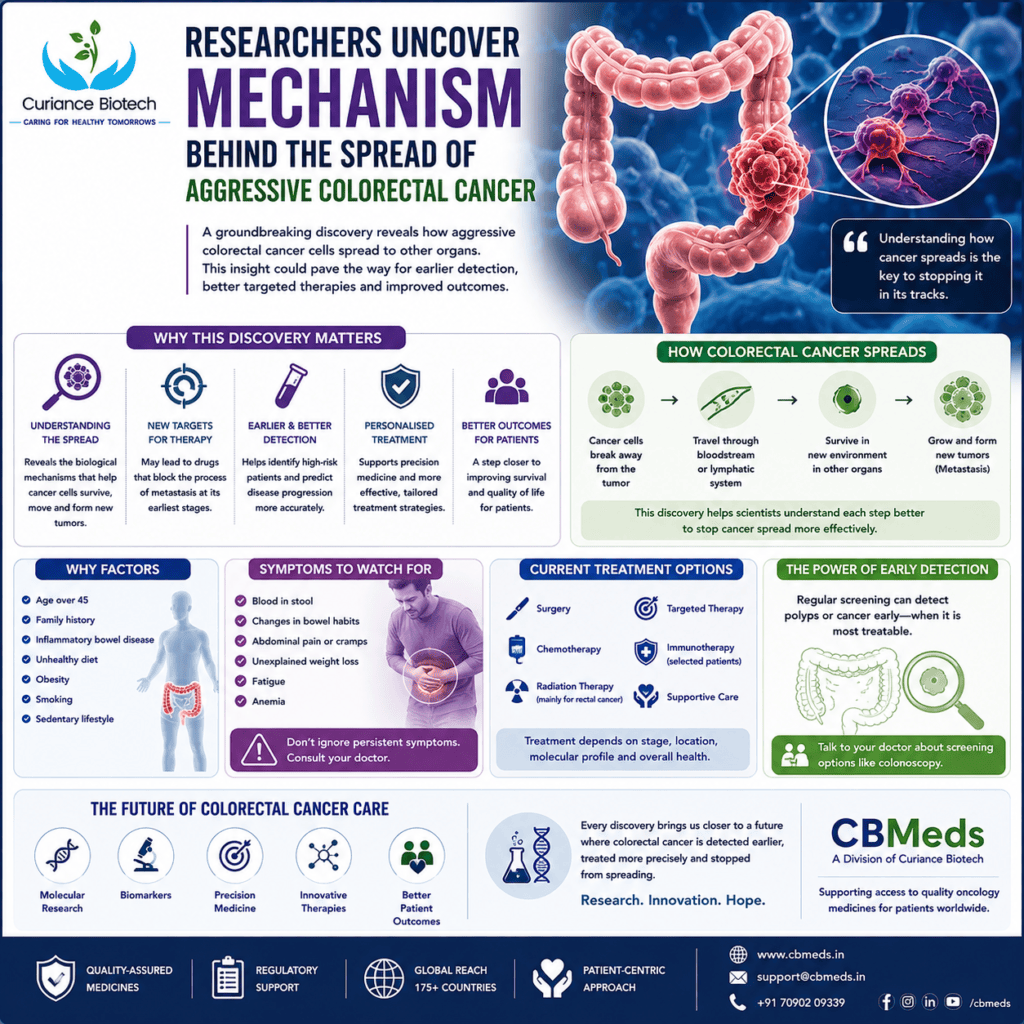
Introduction
Colorectal cancer is one of the most common cancers worldwide and a leading cause of cancer-related deaths. While many patients respond well to treatment when the disease is detected early, aggressive forms of colorectal cancer can spread rapidly to other parts of the body, making treatment significantly more challenging.
A recent scientific discovery has shed new light on how aggressive colorectal cancer spreads, offering researchers valuable insights that could help improve future diagnosis, targeted therapies, and patient outcomes.
Although the findings are still part of ongoing research, they represent another important step toward understanding one of the most complex aspects of cancer—metastasis.
At CBMeds, a division of Curiance Biotech, we believe that sharing evidence-based research helps patients and healthcare professionals stay informed about advances in oncology.
Understanding Colorectal Cancer
Colorectal cancer begins in the colon or rectum, which form the final part of the digestive system.
It usually develops from small growths called polyps, which can become cancerous over time if left untreated.
When detected early, colorectal cancer is often highly treatable. However, once it spreads beyond the colon or rectum, treatment becomes more complex.
Why Does Cancer Spread?
Cancer becomes more dangerous when tumour cells leave their original location and travel to other organs through the bloodstream or lymphatic system.
This process, known as metastasis, is responsible for the majority of cancer-related deaths.
Common sites where colorectal cancer may spread include:
- Liver
- Lungs
- Lymph nodes
- Peritoneum (lining of the abdomen)
Understanding what enables cancer cells to spread is one of the biggest priorities in cancer research.
The New Discovery
Researchers have recently identified a biological mechanism that appears to help aggressive colorectal cancer cells survive, move, and establish new tumours in other parts of the body.
Although further studies are needed, the findings suggest that specific molecular pathways may influence:
- Tumour growth
- Cell migration
- Communication between cancer cells
- Interaction with surrounding tissues
- Formation of secondary tumours
Understanding these mechanisms may eventually lead to new therapeutic targets.
Why This Research Matters
Discovering how aggressive cancers spread could help researchers develop treatments that focus not only on shrinking tumours but also on preventing cancer from spreading in the first place.
Potential future benefits include:
- Earlier identification of high-risk patients
- More personalised treatment strategies
- Improved targeted therapies
- Better prediction of disease progression
- Reduced risk of metastasis
While these possibilities are promising, they will require further laboratory and clinical research.
The Role of Precision Medicine
Modern oncology increasingly relies on precision medicine, where treatment is tailored to the biological characteristics of each patient’s cancer.
Rather than treating every colorectal cancer the same way, doctors may evaluate:
- Genetic mutations
- Molecular biomarkers
- Tumour behaviour
- Patient health status
This personalised approach helps guide treatment decisions and improve outcomes for eligible patients.
Current Treatment Options
Treatment depends on the stage and location of the cancer and may include:
- Surgery
- Chemotherapy
- Radiation therapy (mainly for rectal cancer)
- Targeted therapy
- Immunotherapy (for selected patients)
- Supportive care
Researchers hope that future discoveries will expand these options even further.
Importance of Early Detection
Although research into metastasis continues, early diagnosis remains one of the most effective ways to improve survival.
People should discuss colorectal cancer screening with their healthcare provider, particularly if they:
- Are over 45 years of age
- Have a family history of colorectal cancer
- Have inflammatory bowel disease
- Experience persistent digestive symptoms
Early detection often allows treatment before cancer has spread.
Symptoms That Should Not Be Ignored
Possible warning signs include:
- Blood in the stool
- Persistent changes in bowel habits
- Abdominal pain or cramping
- Unexplained weight loss
- Fatigue
- Iron-deficiency anaemia
- Feeling that the bowel does not empty completely
These symptoms do not always indicate cancer but should be evaluated by a healthcare professional if they persist.
The Future of Colorectal Cancer Research
Scientists around the world continue to study:
- Tumour genetics
- Cancer cell communication
- Immune system interactions
- Drug resistance
- Biomarkers for early detection
- New targeted therapies
Each discovery adds another piece to the puzzle and may eventually lead to more effective, less toxic treatments.
How CBMeds Supports Patients
CBMeds, a division of Curiance Biotech, supports patients, hospitals, and healthcare professionals by facilitating responsible international access to prescribed oncology medicines.
Our services include:
- Quality-assured oncology medicines
- Regulatory documentation support
- International logistics
- Patient assistance
- Healthcare professional coordination
- Support across 175+ countries
We remain committed to improving access to quality cancer treatments while supporting awareness of the latest advances in oncology.
Frequently Asked Questions
What is colorectal cancer?
Colorectal cancer is a cancer that starts in the colon or rectum and may develop from precancerous polyps over time.
Why is metastasis important?
Metastasis is the process by which cancer spreads to other organs. It is one of the main reasons advanced cancers become more difficult to treat.
Does this discovery change current treatment?
Not yet. The findings improve scientific understanding but require additional research and clinical validation before influencing routine patient care.
Can colorectal cancer be detected early?
Yes. Regular screening, including stool-based tests and colonoscopy, can help detect colorectal cancer or precancerous polyps before symptoms appear.
Final Thoughts
Understanding how aggressive colorectal cancer spreads is one of the most important challenges in modern oncology.
This new research provides valuable insight into the biological processes that may drive metastasis and opens the door to future advances in diagnosis, targeted therapy, and personalised cancer care.
While the discovery is still at the research stage, it highlights the rapid progress being made in cancer science and the ongoing commitment of researchers worldwide to improve patient outcomes.
At CBMeds, a division of Curiance Biotech, we remain dedicated to sharing reliable medical information and supporting responsible access to quality oncology medicines for patients around the world.
About CBMeds
CBMeds, a division of Curiance Biotech, facilitates responsible international access to quality-assured oncology medicines. Supporting patients and healthcare professionals in 175+ countries, CBMeds is committed to improving access to prescribed cancer treatments through trusted logistics, regulatory compliance, and patient-focused care.
Medical Disclaimer
This article is intended for educational purposes only and should not replace professional medical advice. Always consult a qualified healthcare professional regarding colorectal cancer symptoms, screening, diagnosis, or treatment.


