
Introduction
Chronic nerve pain, also known as neuropathic pain, affects millions of people worldwide. Unlike temporary pain caused by an injury, nerve pain can persist for months or even years, significantly affecting daily life, sleep, mobility, and mental well-being.
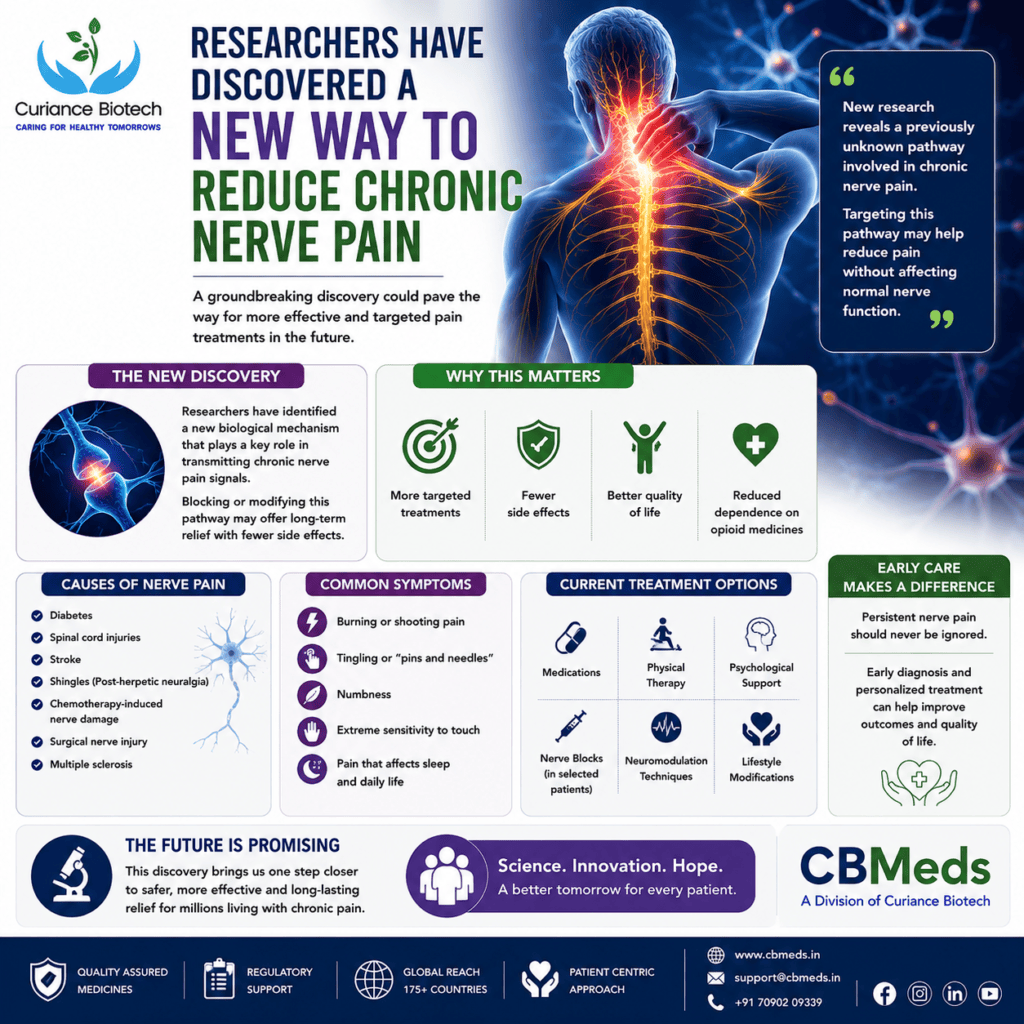
Researchers have now identified a new biological mechanism that may help reduce chronic nerve pain, offering hope for the development of more targeted and effective treatments in the future.
While this discovery is still in the research stage, it represents another important step toward understanding how chronic pain develops and how it may one day be treated more effectively.
At Curiance Biotech, we are committed to sharing evidence-based healthcare innovations that may shape the future of medicine.
What Is Chronic Nerve Pain?
Chronic nerve pain occurs when the nerves themselves become damaged or dysfunctional.
Unlike normal pain, which warns the body of injury, neuropathic pain may continue even after the original injury has healed.
Common causes include:
- Diabetes
- Spinal cord injuries
- Stroke
- Shingles (Post-herpetic neuralgia)
- Multiple sclerosis
- Chemotherapy-induced nerve damage
- Surgical nerve injury
Why Is Nerve Pain Difficult to Treat?
Nerve pain behaves differently from ordinary pain.
Patients often describe it as:
- Burning
- Shooting pain
- Electric shock-like sensations
- Tingling
- Numbness
- Extreme sensitivity to touch
Because multiple biological pathways are involved, existing treatments may not completely relieve symptoms for every patient.
The New Discovery
Researchers have uncovered a previously unknown biological pathway involved in transmitting chronic nerve pain signals.
The study suggests that blocking or modifying this pathway could reduce abnormal pain signalling without affecting normal nerve function.
Although the research is still experimental, it provides scientists with a promising new target for future pain medicines.
Why This Research Matters
Better understanding of how nerve pain develops could lead to:
- More targeted pain treatments
- Fewer side effects
- Improved long-term pain control
- Better quality of life
- Reduced dependence on opioid medicines
While additional studies and clinical trials are required, discoveries like this expand the possibilities for future treatment.
Current Treatment Options
Today, chronic nerve pain is managed using a combination of treatments, depending on the underlying cause.
These may include:
- Prescription medications
- Physical therapy
- Lifestyle modifications
- Psychological support
- Nerve blocks (in selected patients)
- Neuromodulation techniques
Treatment plans should always be tailored by a qualified healthcare professional.
The Importance of Early Diagnosis
Persistent nerve pain should not be ignored.
Early evaluation can help identify the underlying cause and allow treatment to begin before symptoms become more severe.
Seek medical advice if you experience:
- Pain lasting longer than three months
- Burning or electric shock-like sensations
- Persistent tingling or numbness
- Pain that interferes with sleep or daily activities
- Weakness associated with nerve symptoms
Living With Chronic Nerve Pain
Managing chronic pain often requires more than medication alone.
Helpful strategies include:
- Regular physical activity (as advised)
- Healthy sleep habits
- Stress management
- Balanced nutrition
- Following prescribed treatment plans
- Attending regular medical follow-ups
A comprehensive approach can improve both physical and emotional well-being.
The Future of Pain Research
Scientists continue to explore:
- New molecular targets
- Gene-based therapies
- Regenerative medicine
- Precision medicine
- Non-opioid pain treatments
- Advanced neuromodulation
Each discovery brings researchers closer to safer and more effective long-term pain management.
Frequently Asked Questions
What is chronic nerve pain?
It is pain caused by damage or dysfunction of the nervous system rather than ongoing tissue injury.
Does this new discovery mean a cure is available?
No. The research is still in its early stages and requires further laboratory studies and clinical trials before it could become a routine treatment.
Can chronic nerve pain be managed?
Yes. Many patients benefit from a personalised treatment plan that may include medications, physical therapy, and lifestyle changes.
Should I stop my current medication?
No. Never stop or change prescribed treatment without consulting your healthcare provider.
Final Thoughts
The discovery of a new biological mechanism involved in chronic nerve pain is an encouraging development in medical research.
Although it is too early to change current treatment practices, the findings may help researchers develop more precise therapies that provide better pain relief with fewer side effects.
As science continues to advance, patients living with chronic nerve pain can remain hopeful that future treatments will become more effective and personalised.
At Curiance Biotech, we remain committed to sharing trusted medical information and highlighting innovations that have the potential to improve patient care.
Medical Disclaimer
This article is intended for educational purposes only and should not replace professional medical advice. Always consult a qualified healthcare professional regarding persistent pain, diagnosis, or treatment.


