
Introduction
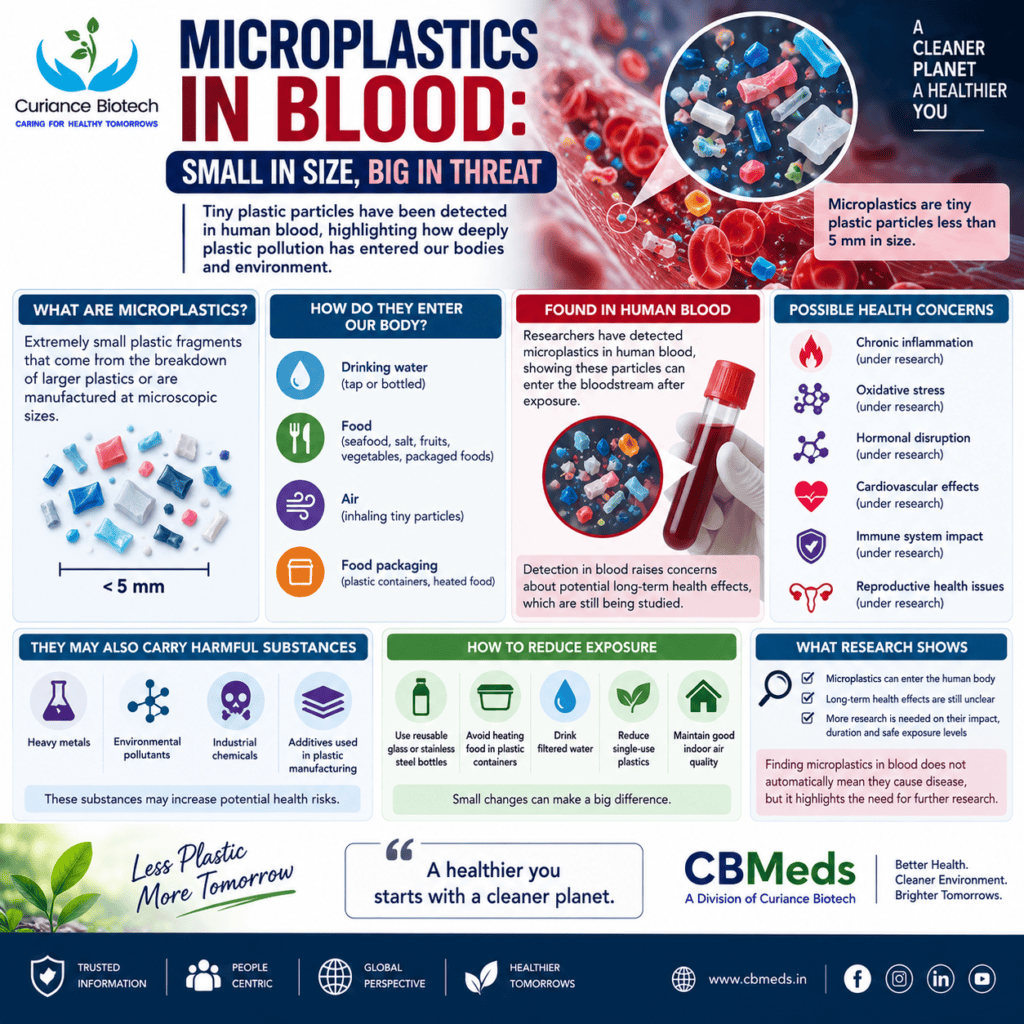
Microplastics—tiny plastic particles measuring less than 5 millimetres—have become one of the world’s fastest-growing environmental concerns. Once thought to remain only in oceans and soil, researchers have now detected microplastics in human blood, highlighting how widespread plastic pollution has become.
Although scientists are still studying their long-term effects, this discovery has raised important questions about how microplastics enter the human body and what they may mean for future health.
At Curiance Biotech, we believe understanding emerging health risks is essential for protecting both people and the environment.
What Are Microplastics?
Microplastics are extremely small plastic fragments that originate from:
- Breakdown of larger plastic waste
- Synthetic clothing fibres
- Cosmetic products
- Food packaging
- Plastic bottles
- Vehicle tyre wear
- Industrial manufacturing
Because they are so small, they can spread through air, water, soil, and even the food chain.
How Do Microplastics Enter the Human Body?
Researchers believe microplastics can enter our bodies through several routes:
Drinking Water
Both bottled water and tap water may contain small amounts of microplastics.
Food
Microplastics have been detected in:
- Seafood
- Salt
- Honey
- Fruits and vegetables
- Packaged foods
Air
Tiny plastic particles can become airborne and may be inhaled indoors and outdoors.
Food Packaging
Plastic containers and packaging materials may contribute to exposure, particularly when heated.
What Does It Mean That Microplastics Were Found in Blood?
The detection of microplastics in blood shows that these particles can enter the bloodstream after exposure.
However, finding microplastics in blood does not automatically mean they cause disease.
Researchers are still investigating:
- How long they remain in the body
- Whether they accumulate in organs
- How the immune system responds
- Their long-term health effects
More high-quality research is needed before firm conclusions can be drawn.
Possible Health Concerns
Although evidence is still developing, scientists are studying whether long-term exposure could contribute to:
- Chronic inflammation
- Oxidative stress
- Hormonal disruption
- Cardiovascular disease
- Reproductive health issues
- Effects on the immune system
At present, these are areas of active research, not confirmed health outcomes.
Why Scientists Are Concerned
Microplastics are not simply pieces of plastic.
They may also carry:
- Heavy metals
- Environmental pollutants
- Industrial chemicals
- Additives used during plastic manufacturing
Researchers are studying whether these substances could influence human health after long-term exposure.
How Can You Reduce Exposure?
Completely avoiding microplastics may not be possible, but practical steps can help reduce exposure.
Use Reusable Glass or Stainless Steel Bottles
Reduce reliance on single-use plastic bottles where practical.
Avoid Heating Food in Plastic Containers
Heat may increase the release of tiny plastic particles from some containers.
Choose glass or ceramic containers for hot foods whenever possible.
Drink Filtered Water
Some water filtration systems may help reduce certain particles, although effectiveness varies by filter type.
Reduce Single-Use Plastics
Using reusable bags, containers, and utensils can reduce both personal exposure and environmental pollution.
Maintain Good Indoor Air Quality
Regular cleaning and proper ventilation may help reduce airborne dust, including synthetic fibres.
What Research Is Happening?
Scientists around the world are investigating:
- How microplastics move through the body
- Their interaction with organs
- Long-term health outcomes
- Safe exposure limits
- Better methods for measuring exposure
Large-scale studies are expected to improve understanding over the coming years.
What Can Governments and Industry Do?
Reducing plastic pollution requires collective action, including:
- Better recycling systems
- Sustainable packaging
- Reduced plastic waste
- Stronger environmental policies
- Investment in biodegradable alternatives
- Public awareness campaigns
Protecting human health begins with protecting the environment.
Frequently Asked Questions
What are microplastics?
Microplastics are plastic particles smaller than 5 mm that result from the breakdown of larger plastics or are manufactured at microscopic sizes.
Are microplastics dangerous?
Scientists are actively studying their potential health effects. Although microplastics have been detected in human blood and other tissues, more research is needed to determine whether they directly cause disease.
Can microplastics be completely avoided?
Probably not. Because they are widespread in the environment, complete avoidance is difficult. However, practical lifestyle changes may help reduce exposure.
Should I stop drinking bottled water?
There is no universal recommendation to avoid bottled water altogether. Using safe drinking water sources and reducing unnecessary plastic use where practical may help lower exposure.
Final Thoughts
The discovery of microplastics in human blood highlights how deeply plastic pollution has become embedded in our environment.
While researchers continue to investigate the long-term health implications, the findings reinforce the importance of reducing plastic waste, supporting environmental sustainability, and adopting practical habits that may reduce exposure.
As scientific understanding continues to evolve, informed public health decisions and responsible environmental practices will play a key role in protecting future generations.
At Curiance Biotech, we remain committed to sharing reliable, evidence-based health information that empowers individuals to make informed choices.
Medical Disclaimer
This article is intended for educational purposes only and should not replace professional medical or environmental health advice. Scientific research on microplastics is ongoing, and recommendations may evolve as new evidence becomes available.


