
Introduction
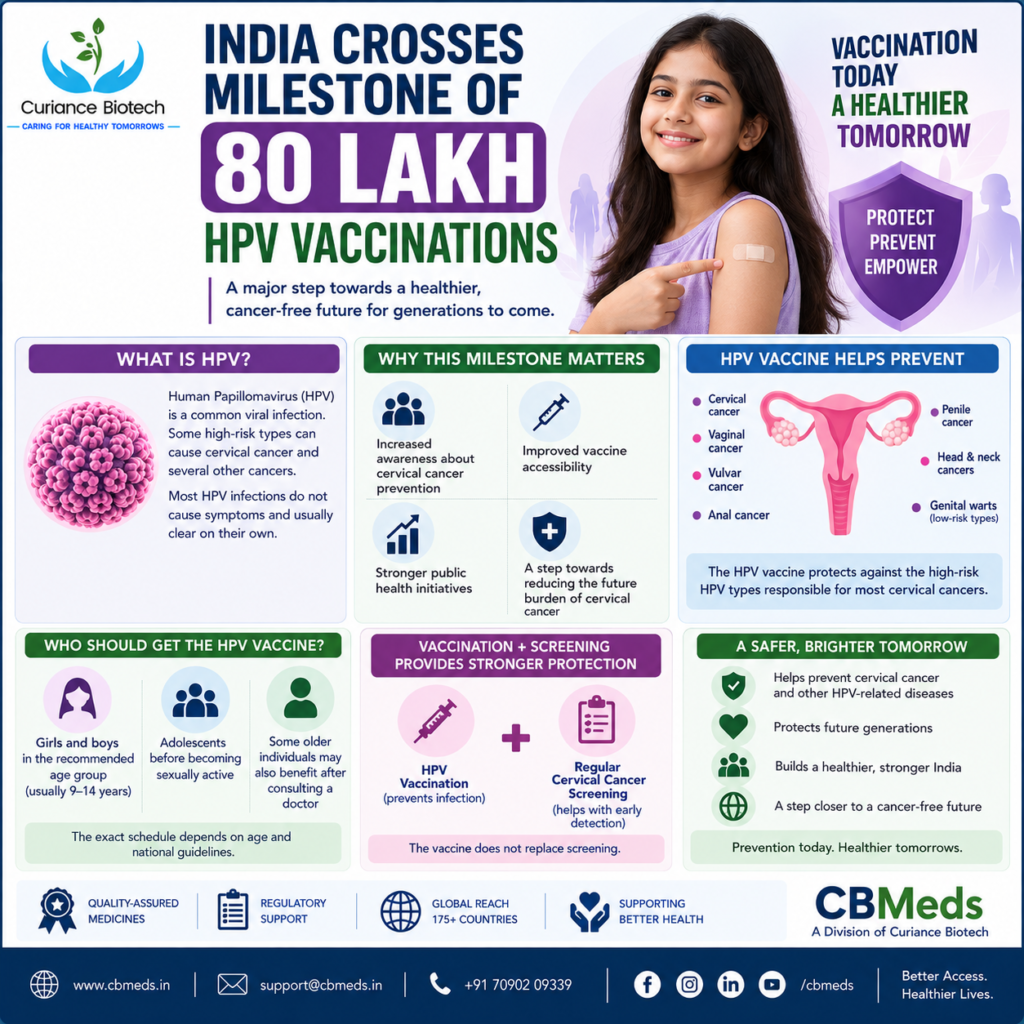
India has achieved an important public health milestone by administering more than 80 lakh (8 million) Human Papillomavirus (HPV) vaccine doses. This achievement reflects the country’s growing commitment to preventing cervical cancer, one of the most common cancers affecting women.
The expansion of HPV vaccination programmes is expected to reduce the future burden of cervical cancer and other HPV-related diseases through early prevention.
At Curiance Biotech, we believe that awareness, vaccination, and regular screening are essential components of women’s healthcare.
What Is HPV?
Human Papillomavirus (HPV) is one of the most common viral infections worldwide.
There are more than 100 types of HPV.
While many HPV infections resolve naturally without causing problems, some high-risk types can lead to:
- Cervical cancer
- Vaginal cancer
- Vulvar cancer
- Anal cancer
- Penile cancer
- Certain head and neck cancers
- Genital warts (caused by low-risk HPV types)
Most people infected with HPV never develop symptoms.
Why Is the HPV Vaccine Important?
The HPV vaccine helps protect against the high-risk HPV types responsible for the majority of cervical cancer cases.
Vaccination works best before exposure to the virus, which is why it is recommended during adolescence.
The vaccine is an important preventive tool but does not treat existing HPV infections or cervical cancer.
India’s 80 Lakh Vaccination Milestone
Crossing 80 lakh HPV vaccinations represents a significant achievement for India’s public health system.
The milestone demonstrates:
- Increased awareness about cervical cancer prevention
- Improved vaccine accessibility
- Expansion of immunisation programmes
- Greater focus on preventive healthcare
- Progress toward reducing future cancer burden
Continued vaccination efforts can help protect millions of young people in the years ahead.
Who Should Receive the HPV Vaccine?
National recommendations may vary, but HPV vaccination is generally recommended for:
- Girls and boys before becoming sexually active
- Adolescents within the recommended age group
- Certain older individuals after consultation with their healthcare provider
The exact vaccination schedule depends on age and local health guidelines.
Can Adults Still Benefit?
Some adults may still benefit from HPV vaccination, depending on:
- Age
- Previous vaccination status
- Individual risk factors
- Medical advice from a healthcare professional
Anyone considering vaccination should discuss eligibility with their doctor.
Vaccination Does Not Replace Screening
Although the HPV vaccine offers strong protection against several high-risk HPV types, it does not eliminate the need for cervical cancer screening.
Women should continue routine screening as recommended by their healthcare provider, including:
- Pap smear (where appropriate)
- HPV testing (where available)
Early detection remains one of the most effective ways to prevent cervical cancer.
Is the HPV Vaccine Safe?
The HPV vaccine has been extensively studied and is monitored continuously for safety.
Like all vaccines, mild side effects may occur, including:
- Pain at the injection site
- Mild fever
- Headache
- Fatigue
Serious side effects are rare, and the benefits of vaccination generally outweigh the risks for eligible individuals.
Why Prevention Matters
Cervical cancer is one of the few cancers that is largely preventable through:
- HPV vaccination
- Regular screening
- Early diagnosis
- Timely treatment of precancerous changes
Combining vaccination with screening provides the best protection.
Frequently Asked Questions
What is HPV?
HPV (Human Papillomavirus) is a common virus that can infect the skin and mucous membranes. Certain high-risk types are associated with cervical cancer and several other cancers.
Does the HPV vaccine prevent all cervical cancers?
No. The vaccine protects against the HPV types responsible for most cervical cancers but does not protect against every type. Regular screening remains important.
Is the vaccine only for girls?
No. In many countries, HPV vaccination is recommended for both girls and boys because HPV can affect everyone.
Can the vaccine treat HPV infection?
No. The HPV vaccine helps prevent future HPV infections but does not treat existing infections or cancer.
Final Thoughts
India’s achievement of 80 lakh HPV vaccinations marks an important step toward reducing the future burden of cervical cancer and other HPV-related diseases.
Vaccination, combined with regular cervical cancer screening and public awareness, has the potential to save thousands of lives in the coming years.
As healthcare continues to focus on prevention, milestones like this demonstrate the positive impact of immunisation programmes in protecting future generations.
At Curiance Biotech, we remain committed to promoting evidence-based healthcare education and raising awareness about cancer prevention and women’s health.
Medical Disclaimer
This article is intended for educational purposes only and should not replace professional medical advice. Consult your healthcare provider regarding HPV vaccination schedules, eligibility, and cervical cancer screening recommendations.


