
Introduction
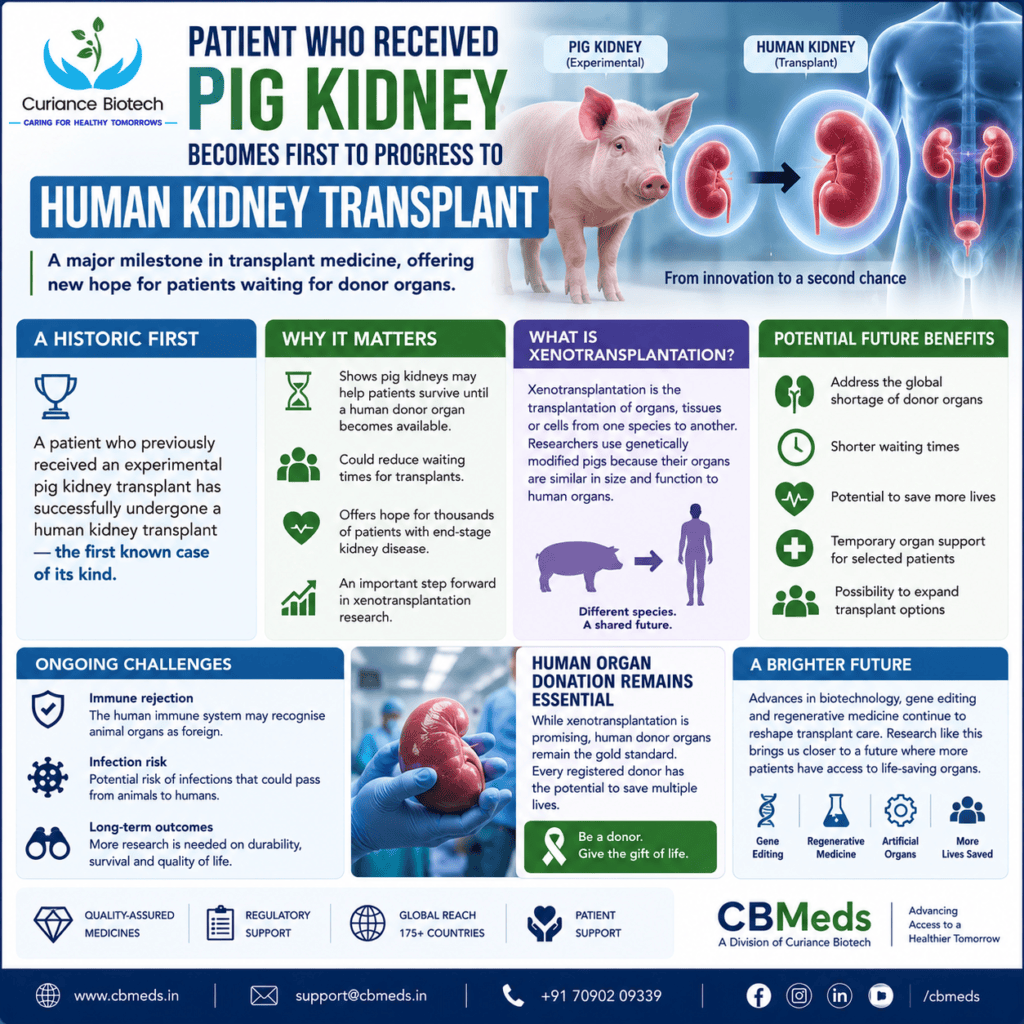
In a remarkable milestone for transplant medicine, a patient who previously received an experimental pig kidney transplant has successfully gone on to receive a human donor kidney transplant.
The achievement represents an important step in the evolving field of xenotransplantation—the transplantation of organs from animals into humans. While pig organ transplants remain experimental, this case demonstrates how such procedures may one day serve as a temporary bridge for patients waiting for a human donor organ.
Although more research is needed before xenotransplantation becomes routine, this development offers hope for addressing the global shortage of donor organs.
At Curiance Biotech, we are committed to sharing evidence-based medical innovations that have the potential to transform patient care.
What Is Xenotransplantation?
Xenotransplantation is the process of transplanting living cells, tissues, or organs from one species into another.
In recent years, researchers have focused on genetically modified pigs because their organs are similar in size and function to human organs.
Scientists modify pig genes to reduce the risk of rejection and improve compatibility with the human immune system.
Why Are Pig Kidneys Being Studied?
Worldwide, thousands of patients are waiting for kidney transplants.
Unfortunately:
- Demand for donor kidneys greatly exceeds supply.
- Many patients remain on dialysis for years.
- Some patients die while waiting for a suitable donor.
Researchers hope pig kidneys could one day:
- Reduce waiting times
- Save more lives
- Provide temporary organ support
- Expand transplant options
Why This Case Is Significant
This patient became the first known individual to successfully transition from an experimental pig kidney transplant to a human kidney transplant.
The case demonstrates that:
- Experimental pig kidney support may help selected patients survive until a human organ becomes available.
- Future xenotransplantation research may complement—not replace—human organ donation.
- Continued innovation could improve outcomes for patients with end-stage kidney disease.
It is important to note that this remains an individual medical case rather than an established standard of care.
How Xenotransplantation Could Change Medicine
If future research proves safe and effective, xenotransplantation could help address one of healthcare’s biggest challenges—the shortage of donor organs.
Potential future applications include:
- Kidney transplantation
- Heart transplantation
- Liver support
- Pancreatic cell transplantation
- Tissue replacement
However, extensive clinical trials and regulatory approval will be required before widespread use.
Current Challenges
Despite exciting progress, xenotransplantation still faces several challenges:
Immune Rejection
The human immune system naturally recognises animal organs as foreign.
Advanced genetic engineering is helping reduce—but not eliminate—this risk.
Infection Risk
Researchers carefully monitor the possibility of infections that could potentially pass from animals to humans.
Strict safety protocols remain essential.
Long-Term Outcomes
Scientists are still studying:
- Organ durability
- Long-term survival
- Quality of life
- Lifelong immune suppression
More data from clinical research are needed.
Human Organ Donation Remains Essential
Although xenotransplantation is promising, human organ donation remains the gold standard for transplantation today.
Increasing awareness about organ donation continues to be one of the most effective ways to save lives.
Every registered donor has the potential to help multiple patients.
The Future of Kidney Transplantation
Advances in biotechnology continue to reshape transplantation through:
- Gene editing
- Precision medicine
- Artificial organs
- Regenerative medicine
- Stem cell research
- Xenotransplantation
Together, these innovations may dramatically improve transplant medicine over the coming decades.
Frequently Asked Questions
What is a pig kidney transplant?
It is an experimental procedure in which a genetically modified pig kidney is transplanted into a human as part of carefully monitored clinical research.
Is xenotransplantation available to everyone?
No. It remains experimental and is currently limited to approved research studies.
Does this replace human organ donation?
No. Human donor organs remain the standard treatment for eligible patients.
Why is this case important?
It demonstrates that an experimental pig kidney may help support a patient until a suitable human donor kidney becomes available, highlighting the potential future role of xenotransplantation.
Final Thoughts
The successful transition from an experimental pig kidney transplant to a human kidney transplant marks another exciting chapter in transplant medicine.
While xenotransplantation is still in the research phase, achievements like this demonstrate how scientific innovation may one day help address the global shortage of donor organs.
Continued research, careful clinical evaluation, and ethical oversight will be essential before these technologies become part of routine medical practice.
At Curiance Biotech, we remain committed to sharing trusted medical information and highlighting breakthroughs that have the potential to improve lives around the world.
Medical Disclaimer
This article is intended for educational purposes only and should not replace professional medical advice. Xenotransplantation remains experimental and should only be performed within approved clinical research programs.


