Author name: Admin

osimertinib resistance

Osimertinib Resistance — Causes and What Happens Next

For patients doing well on Osimertinib, the possibility that it might eventually stop working can be a source of anxiety. This is a valid concern — like most targeted cancer therapies, Osimertinib resistance can develop over time. This guide explains why resistance happens, how it is detected, and importantly, what treatment options exist afterward. Understanding […]

Osimertinib Resistance — Causes and What Happens Next Read More »

named patient medicine

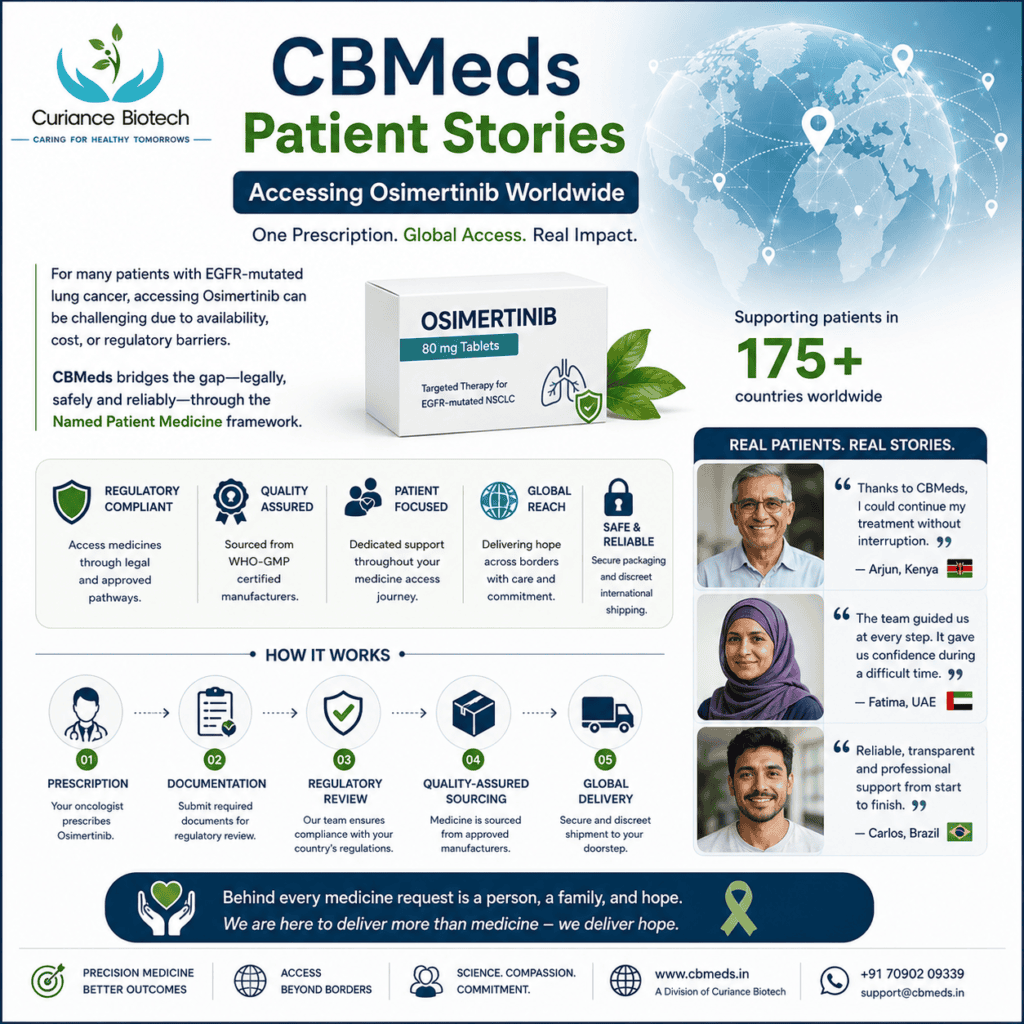
Named Patient Medicine Explained — How Patients Legally Access Unavailable Medicines

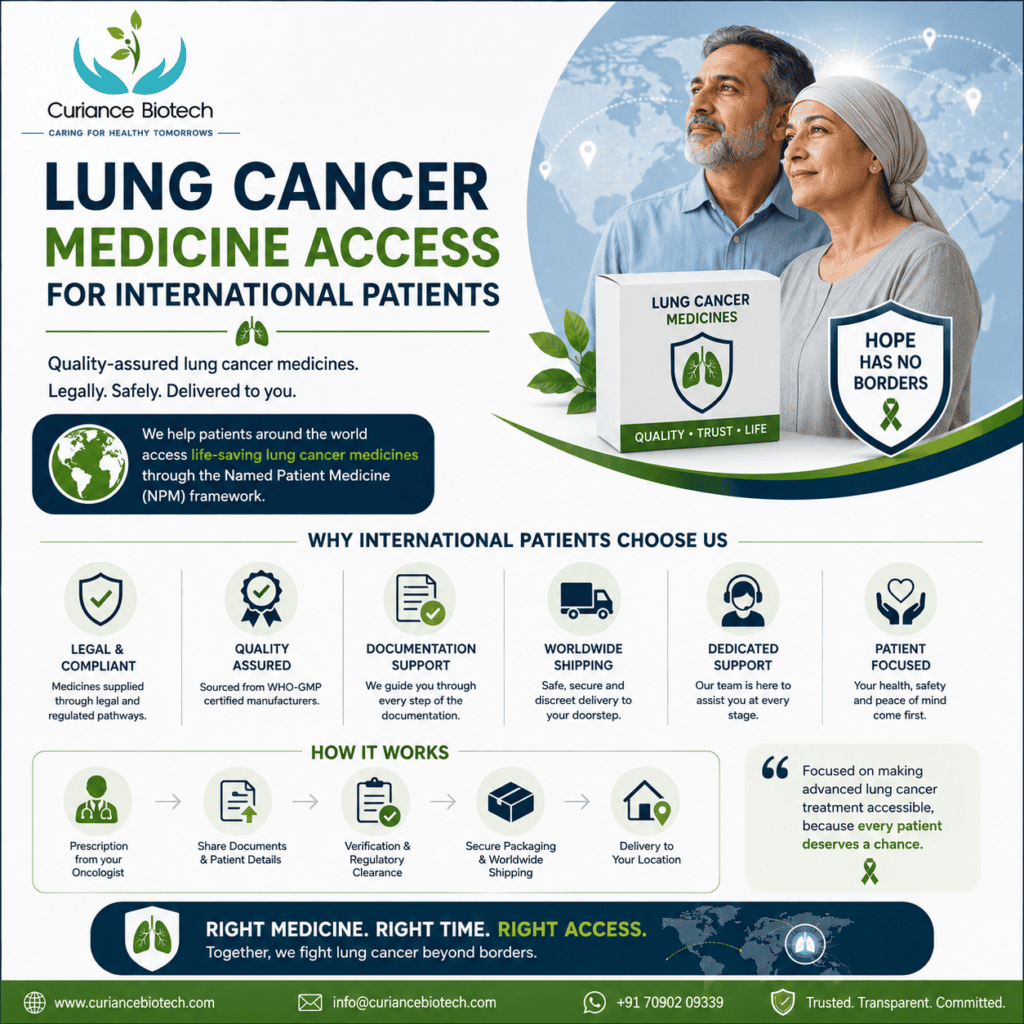
If you have been researching how to access a medicine like Osimertinib that isn’t available or affordable in your country, you have likely come across the term “Named Patient Medicine.” This guide explains exactly what it means, why it exists, and how it works in practice. What is Named Patient Medicine? Named Patient Medicine (NPM)

Named Patient Medicine Explained — How Patients Legally Access Unavailable Medicines Read More »

osimertinib brain metastasis

Osimertinib and Brain Metastasis — What the Research Shows

For patients with EGFR-mutated NSCLC, one of the most worrying possibilities is that the cancer could spread to the brain. Brain metastases occur in a significant proportion of advanced lung cancer patients, and historically, treating cancer that has spread to the brain has been particularly difficult. This is where Osimertinib has made a genuine difference.

Osimertinib and Brain Metastasis — What the Research Shows Read More »

osimertinib dosage

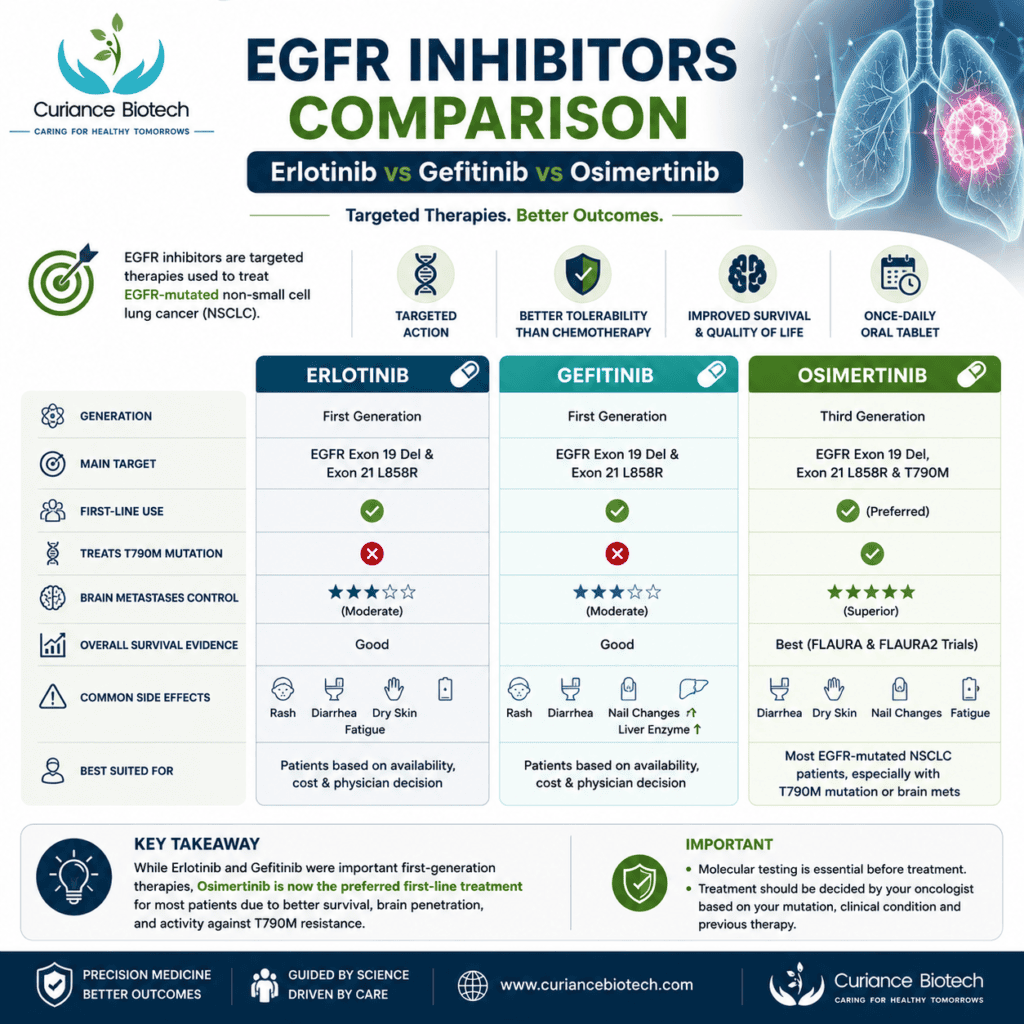
Osimertinib 40mg vs 80mg: Which Dose Is Right for You? (2026 Guide)

One of the most common questions patients and caregivers ask after a new prescription is simple: why this dose, and not the other one? Osimertinib is available in two strengths — 40 mg and 80 mg — and the choice between them depends on several factors specific to each patient. This guide explains how Osimertinib

Osimertinib 40mg vs 80mg: Which Dose Is Right for You? (2026 Guide) Read More »

Higher BMI Raises Risk for 19 Cancers as Global Review Expands the Obesity-Cancer Link

Introduction A growing body of scientific evidence continues to reinforce a concerning reality: excess body weight is linked to an increased risk of cancer. A recent global review has expanded our understanding of this relationship, finding that a higher Body Mass Index (BMI) is associated with a greater risk of developing at least 19 different

Higher BMI Raises Risk for 19 Cancers as Global Review Expands the Obesity-Cancer Link Read More »

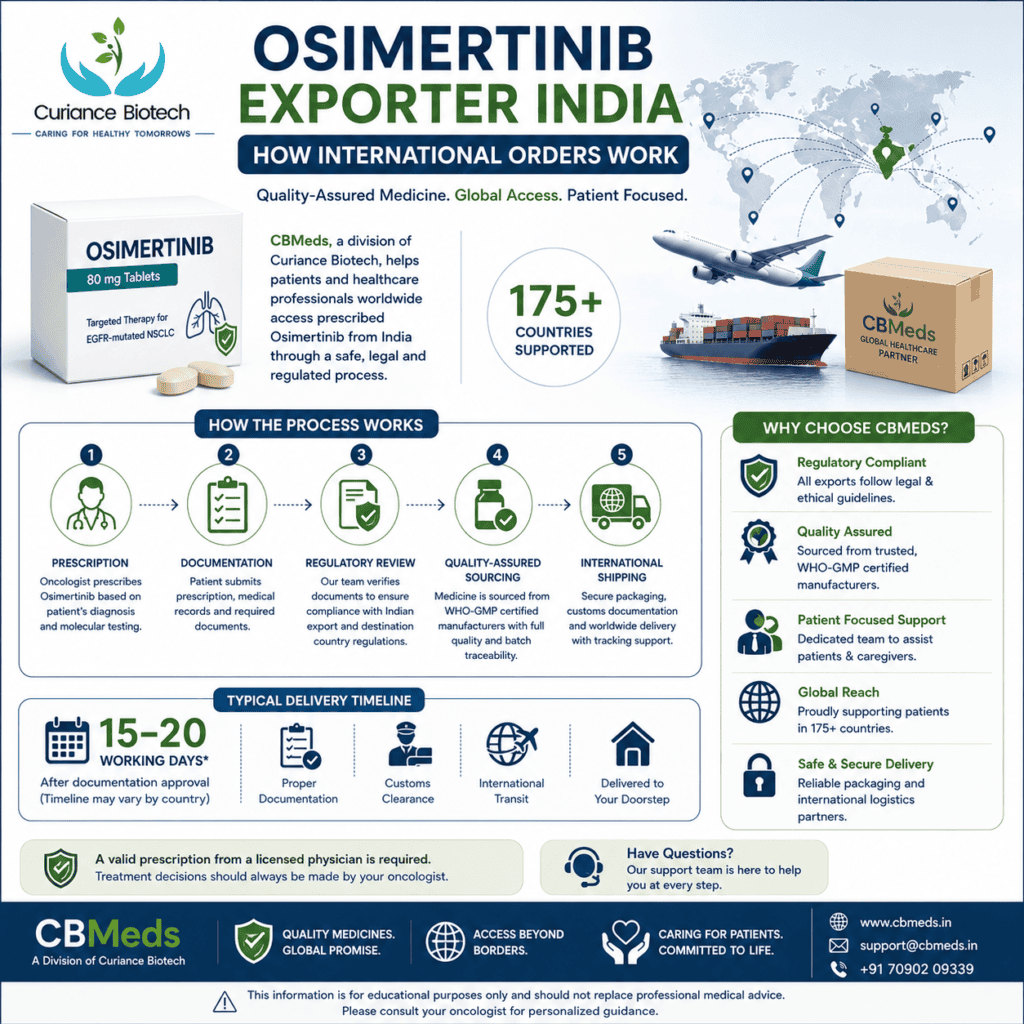
How to Access Osimertinib in India Legally — A Step-by-Step Guide

One of the most common questions we receive at CBMeds is: “Is it legal to get Osimertinib from India?” The answer is yes. This guide explains exactly how it works, what documents you need, and what the process looks like from first inquiry to doorstep delivery. Whether you are a patient, a family member, or

How to Access Osimertinib in India Legally — A Step-by-Step Guide Read More »

EGFR Positive Lung Cancer — A Complete Guide for Patients and Families

Being told you have EGFR positive lung cancer can feel overwhelming. But here is something important to know from the start: an EGFR mutation in lung cancer is not just a diagnosis — it is a specific piece of information that opens the door to some of the most effective targeted treatments available in oncology

EGFR Positive Lung Cancer — A Complete Guide for Patients and Families Read More »

AI-Designed Miniproteins Unlock Control of GPCR Signaling: A New Frontier in Drug Discovery

Introduction Artificial intelligence is rapidly transforming healthcare and biomedical research. From analysing medical images to accelerating drug discovery, AI is helping scientists solve problems that once required years of laboratory work. One of the latest breakthroughs involves AI-designed miniproteins capable of controlling G protein-coupled receptor (GPCR) signaling, a development that could revolutionise modern medicine. GPCRs

AI-Designed Miniproteins Unlock Control of GPCR Signaling: A New Frontier in Drug Discovery Read More »